

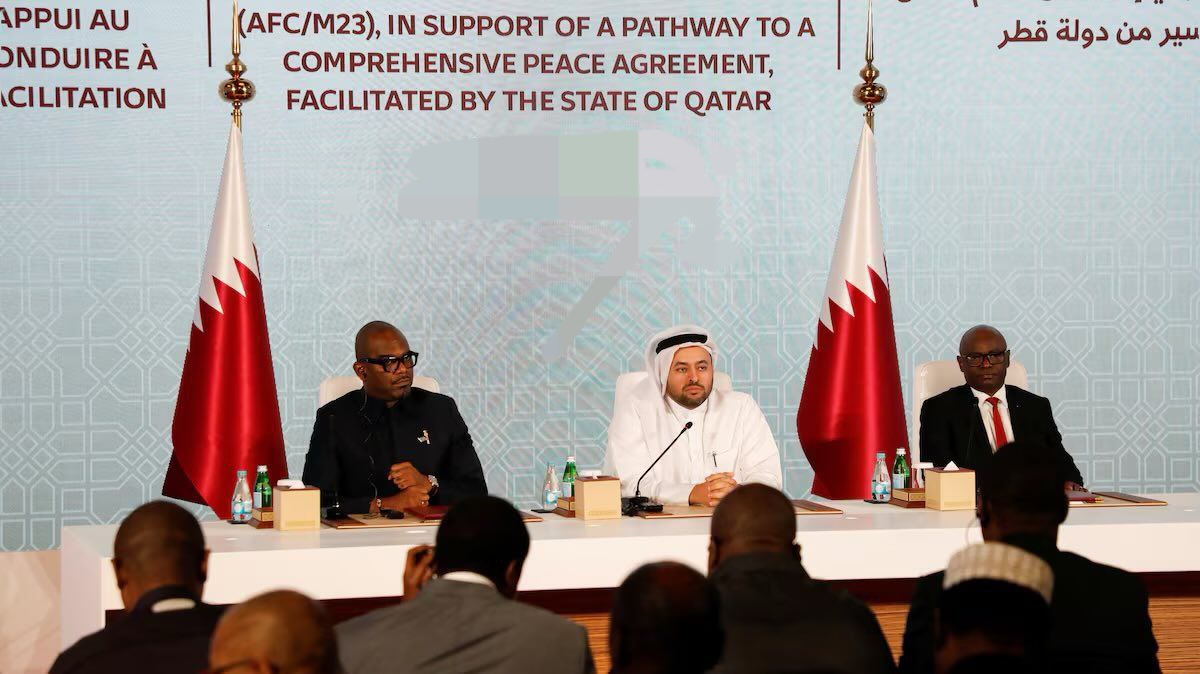
The government of the Democratic Republic of Congo (DRC) and the M23 rebel group have signed a deal in Doha, Qatar, aiming to bring an end to years of conflict in the eastern part of the country. The agreement, brokered by Qatari mediators with support from regional partners, marks a potentially significant step toward restoring peace in a region plagued by instability and humanitarian crises.
The deal comes after months of shuttle diplomacy and discreet negotiations. Representatives from both sides agreed to a cessation of hostilities, withdrawal of fighters from occupied territories, and a framework for political dialogue and reintegration. Specific terms of disarmament and reintegration of rebel forces into civilian life or national structures will be coordinated with the support of regional bodies and the United Nations.
For years, the M23 rebel group has operated in North Kivu province, citing government neglect and the need to protect ethnic minorities. The Congolese government has accused the group of destabilizing the region with foreign backing, particularly from neighboring Rwanda, an allegation Rwanda denies. Previous attempts at peace have collapsed amid mutual mistrust and renewed fighting, displacing hundreds of thousands of civilians.
Qatar’s role in facilitating the talks has been widely praised, with observers noting Doha’s growing influence in African diplomacy. By hosting both parties and mediating behind closed doors, Qatari officials helped navigate delicate political terrain where regional players have previously struggled.
The deal’s success will depend on how swiftly and sincerely both sides implement the agreed terms. The Congolese government has pledged to allow humanitarian access to areas affected by conflict and to initiate reconstruction projects. M23 leaders, in turn, have promised to respect the ceasefire and cooperate with international observers.
The people of eastern Congo remain cautious but hopeful. Years of war have eroded trust in peace agreements, many of which were signed only to be broken. Yet this latest deal presents a rare chance to reverse the cycle of violence and rebuild shattered communities.
As international attention turns to the DRC once again, much will depend on whether the promises made in Doha translate into lasting change on the ground. For now, the deal offers a fragile but necessary glimmer of hope.