Ethiopia’s northern crisis is not a sideshow. It is where territorial integrity, internal security and access to the sea meet The record shows a serious confrontation with Eritrea. But the strongest case for Ethiopia is the one it can prove The question is whether the Horn’s future can be decided without Ethiopia The Horn of Africa is being rearranged, and Ethiopia risks being left out. Its northern frontier is hardening, four regional states have declared Red Sea governance the preserve of coastal states, and Ethiopia’s security and maritime interests are increasingly at stake.
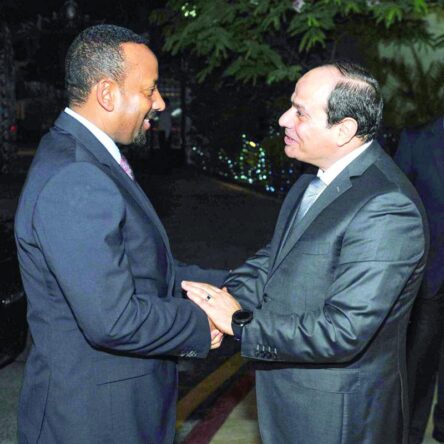
On 14 November, Field Marshal Birhanu Jula, Chief of General Staff of the Ethiopian National Defence Force, accused Eritrea of leading an offensive against federal positions in Amhara and Afar, with weapons and logistical support from Egypt, Anadolu Agency reported. He said Ethiopian forces repelled the attack. These remain claims by Ethiopia’s military leadership. Eritrea and Egypt have rejected earlier accusations, and the alleged Egyptian support has not been independently verified. What is documented, however, is a serious diplomatic and military confrontation between Ethiopia and Eritrea, now before the UN Security Council.
On 1 October, Ethiopia closed its embassy in Asmara and expelled ten Eritrean diplomats, citing national security concerns. Eritrea subsequently cut diplomatic ties. On 9 October, Ethiopia informed the Security Council that it was acting in self-defence under Article 51 of the UN Charter, accusing Eritrea of deploying troops on Ethiopian territory and supporting insurgent groups. The UN Secretary-General expressed deep concern over reports of Eritrean forces inside Ethiopia. ACLED also reported an Eritrean crossing at Zalambessa on 7 October. Asmara denies the allegations.
International law distinguishes between the use of force and unlawful intervention. Article 2(4) of the UN Charter prohibits the threat or use of force against another state’s territorial integrity or political independence. In Nicaragua v. United States, the International Court of Justice distinguished between military assistance, such as arming and training opposition groups, and financial support, which does not by itself amount to the use of force. The legal question depends on the nature of the assistance and the evidence establishing it.
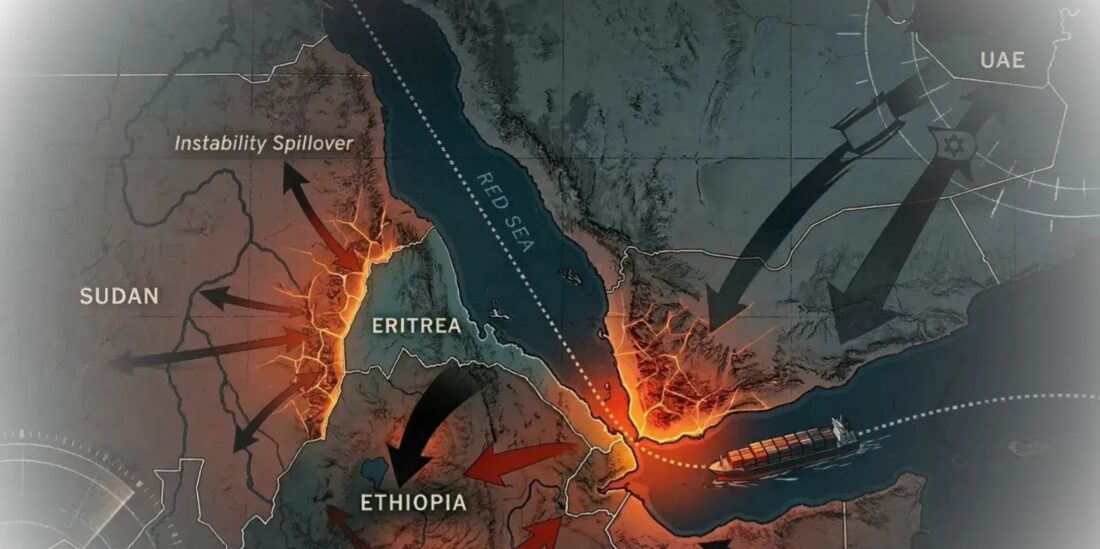
On 4 October, Egypt, Eritrea, Sudan and Somalia issued the El Alamein Declaration, stating that Red Sea governance is the exclusive responsibility of littoral states. The declaration does not name Ethiopia. But its implications matter: a framework centred on coastal states leaves landlocked Ethiopia outside formal Red Sea governance, despite its substantial economic and security interests. This came days after Ethiopia accused Eritrea, Egypt and Sudan of supporting the TPLF-led opposition.
Ethiopia’s interest in maritime access is not a provocation. Landlocked since Eritrea’s independence, the country faces trade costs and transport vulnerabilities. The UN Convention on the Law of the Sea recognises landlocked states’ right of access to and from the sea, subject to arrangements agreed with transit states. Ethiopia has maintained its commitment to dialogue. Eritrea, meanwhile, characterises Ethiopia’s position as an attempt to seize access by force. But a legitimate interest in negotiated access should not automatically be equated with aggression.
Evidence remains central to Ethiopia’s case. The Associated Press noted that Ethiopia’s Security Council letter did not identify the occupied areas or provide supporting evidence. Eritrea responded the following day, accusing Ethiopia of using the allegations to justify aggression. Documented proof of incursions and external support would give Ethiopia greater diplomatic leverage before the African Union and the Security Council.
Meanwhile, tensions around Badme have intensified. ACLED reported that on 12 November Ethiopian drones targeted suspected Eritrean positions, while Eritrean forces fired artillery towards Ethiopian positions. It also reported direct engagements the following day, although Reuters could not independently confirm them, and a source close to the Tigray Peace Force denied that such clashes occurred. ACLED subsequently reported Eritrean forces retaking Badme around 15 November, Tigray Defence Force units operating alongside Eritrean troops near Gual Gemhalo, and an Ethiopian drone strike on Badme. It assesses the risk of a wider confrontation as high.
Ethiopia has also made significant advances in Tigray. On 3 October, federal forces and allied Tigray Peace Force fighters took control of Mekelle after the TPLF withdrew. Prime Minister Abiy Ahmed later appointed a six-month caretaker administration. The TPLF said it would continue fighting elsewhere, and control of the wider region remains contested. Ethiopia has recovered its regional capital, not yet its region.
Territorial integrity, internal security and access to the sea are interconnected national interests. No regional declaration or political grouping can erase their importance to Ethiopia The Horn will not be stable while its most populous state is excluded from decisions affecting its own security. Ethiopia’s sovereignty is not on the table.