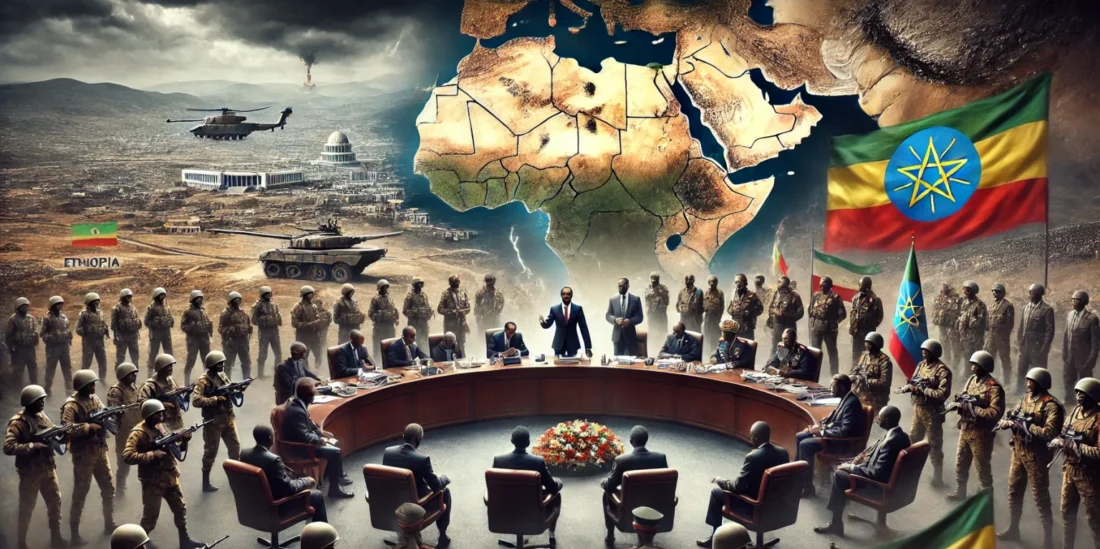
In a region often associated with civil wars, insurgency, famine, and mass displacement, Ethiopia is attempting something rare: progress without applause. Quietly but deliberately, it is positioning itself as a rising power in the Horn of Africa, even as its neighborhood sinks further into chaos.
Sudan is being torn apart by civil war. Millions have fled the fighting, with over 4 million internally displaced and thousands more spilling across borders into Ethiopia and South Sudan. Somalia continues its decades-long struggle against al-Shabaab and instability. Eritrea remains a militarized fortress state. In the Red Sea, Houthi rebel attacks have disrupted global shipping lanes, increasing trade costs for Ethiopia, which relies on sea access through Djibouti. Egypt watches uneasily, concerned about its water security. In the middle of all this sits Ethiopia, landlocked, pressured, and still recovering from internal conflict, but moving forward with surprising speed.
One of the most visible signs of this ambition is in the skies. Addis Ababa’s Bole International Airport is already Africa’s third-busiest airport. But the government has bigger plans. Just outside the capital, construction has begun on the Abusera Mega-Airport, a $7.8 billion project designed to handle over 100 million passengers a year, more than Dubai’s main hub. With four runways and a footprint rivaling the world’s largest airports, Ethiopia is aiming to make Addis Ababa a global transit hub, competing with Doha, Istanbul, and Johannesburg.
Infrastructure doesn’t stop at runways. The Grand Ethiopian Renaissance Dam (GERD), the largest in Africa, is now operational. This massive hydroelectric project will double Ethiopia’s energy output, lighting up homes and factories across the country. For Ethiopians, it’s a matter of pride and progress. For Egypt and Sudan, it’s a source of deep anxiety. Ethiopia has tried to project openness, inviting officials from both countries to witness the dam’s early operations, but tensions remain. Still, the GERD is a symbol of Ethiopia’s broader agenda: energy independence, regional influence, and national confidence.
The capital itself is changing fast. Addis Ababa has undergone a dramatic transformation. New roads, shopping malls, industrial parks, and skyscrapers are reshaping the city’s skyline. A second
ring road is under construction. The new Friendship Square, the Unity Park, and the Entoto Art District are redefining public space. Smart parking systems, electric buses, and tree-planting campaigns are signs of a modernizing state apparatus. Even critics admit the changes are visible. But they also warn about displacement, inequality, and the risks of authoritarian urban planning. The poorest still struggle with inflation, limited public services, and rising living costs. The modernization of Addis is not without human cost.
On the diplomatic front, Ethiopia has made a bold move: joining BRICS. In January 2024, Ethiopia officially became a member, along with Egypt, the UAE, Saudi Arabia, and Iran. This group, originally Brazil, Russia, India, China, and South Africa, is evolving into an alternative to Western-led global structures. For Ethiopia, BRICS offers access to new funding, trade deals, and political partnerships. It also complicates Ethiopia’s balancing act. Egypt, a fellow BRICS member, remains a fierce critic of Ethiopia’s water policies. The UAE, another new member, has deep interests in Red Sea ports and Somali politics. Ethiopia will have to navigate these rivalries carefully, even as it benefits from the bloc’s growing influence.
At the same time, Ethiopia is trying to lead on climate action. Since 2019, the government has planted over 40 billion trees as part of its Green Legacy Campaign. This isn’t just about aesthetics, it’s a response to soil erosion, deforestation, and climate stress. The campaign is one of the largest reforestation efforts in history and has gained international praise. While experts debate the long-term ecological success, the symbolism is clear: Ethiopia wants to be seen not just as a victim of climate change but as a leader in fighting it.
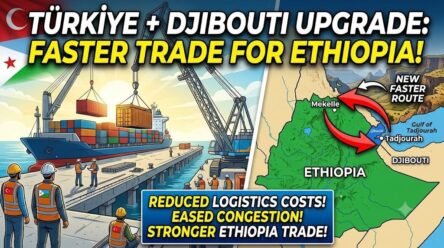
But Ethiopia’s biggest geopolitical vulnerability remains unchanged: it is landlocked. Over 90% of its trade flows through Djibouti, leaving it dependent and exposed. In January 2024, Ethiopia signed a controversial memorandum with Somaliland, offering diplomatic recognition in exchange for naval and commercial access to the Red Sea. Somalia, which claims sovereignty over Somaliland, condemned the deal. Egypt, sensing a shift in Red Sea geopolitics, also expressed concern. Eritrea and the UAE, both with military and economic stakes in nearby ports, are watching closely. Ethiopia insists it is pursuing peaceful access to the sea. But in a region where every coastline is strategic, the stakes are high.
Despite all of this, Ethiopia keeps moving. Its economy is growing. Its infrastructure is expanding. Its cities are transforming. Its diplomats are working overtime. Yes, there are real challenges: inflation, food insecurity, high debt, security threats in some regions. But there is also determination. Ethiopia is not waiting for permission or applause. It is acting like a country that believes its time has come.
The Horn of Africa remains turbulent. But Ethiopia, against the odds, is trying to build. It is not yet a success story, but it is no longer just a crisis story. In the years ahead, what happens in Ethiopia may shape the future of East Africa more than any war or peace deal. And while the world may not be watching closely, Ethiopia is writing a new chapter, on its own terms.