A strategic town ringed by militants. A decade old security buffer erased overnight. And a UN mission quietly selling off its own furniture The withdrawal of Ethiopian troops from Burhakaba marks more than a routine handover of a forward operating base it is the first visible fracture in Somalia’s international security architecture since the African Union Support and Stabilization Mission in Somalia (AUSSOM) was reconfigured.
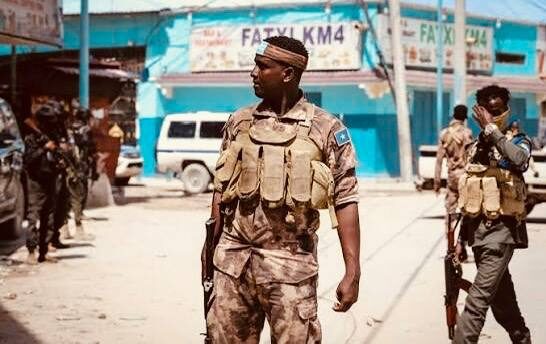
Burhakaba, lying 185 kilometers northwest of Mogadishu on the critical supply route to Baidoa, is now surrounded on every side by Al-Shabaab. For nearly twelve years, Ethiopian National Defense Forces anchored the town’s defense. Now, they are gone and the Somali National Army’s 60th Division has been left to hold a position that military observers describe as dangerously exposed The pullout is not driven by strategic calculation or Somali readiness. It is driven by money or rather, the absence of it.
The United States has signaled it will not fund the UN logistical backbone of AUSSOM beyond December 2026. With no replacement financing in sight, troop contributing countries are being forced into an uncoordinated retreat. The Kampala summit called to resolve the crisis instead exposed its depth, with one think tank noting that each contributing nation is now effectively planning to “save itself individually.”
The official statement from AUSSOM described the Burhakaba handover on 8 August as a milestone in Somalia’s journey toward assuming lead responsibility for its own security a gradual transfer of duties to national forces in the mission’s own words On paper, the transfer followed protocol. The UN Support Office in Somalia (UNSOS) provided logistical support. The Ethiopian contingent formally ceded the base to the Somali National Army’s 60th Division. The handover was described as orderly On the ground the reality was different.
Somali journalists reported that Ethiopian peacekeepers withdrew overnight, in the hours immediately following the handover. Several Somali officials were said to have accompanied them, reportedly out of fear of insurgent attack. Somali Guardian has not independently verified these accounts, but the pattern is consistent with a force that is pulling back faster than the handover timeline suggests.
Burhakaba’s geography makes the stakes unmissable. Every direction out of the district is held by Al-Shabaab. The town is the gateway between Mogadishu and Baidoa, the interim capital of South West State a vital artery for both civilian supply lines and military logistics. With the Ethiopian anchor removed the insurgents now hold a ring of territory around a garrison that has lost its most experienced defenders.
Local Somali officials have expressed serious doubts about whether national forces are equipped to hold the line alone. The concern is not theoretical. Al-Shabaab has a history of exploiting exactly such transitions, testing newly deployed Somali units within weeks sometimes days of international troops departing.
And the retreat may not stop at Burhakaba. Separate accounts suggest Ethiopian forces intend to vacate several more Bay region towns in the coming weeks, with Radio Dalsan reporting a planned handover of at least three major towns to Somali forces. The pattern is unmistakable a phased withdrawal that is being accelerated by financial pressure rather than operational readiness.
The Burhakaba withdrawal did not happen in a vacuum. It was the direct consequence of a diplomatic reckoning that unfolded in Uganda’s capital at the end of July The Second Extraordinary Summit of AUSSOM’s troop contributing countries and the Federal Government of Somalia convened in Kampala on 31 July. The ostensible purpose was to forge a collective plan for the mission’s future. The outcome according to analysts who tracked the proceedings was to expose the absence of any such plan.
The trigger was a notification from the United States Mission to the African Union on 1 July. Washington made clear that it would not support extending UNSOS the UN-funded logistical backbone of AUSSOM beyond the mission’s current mandate, which expires on 31 December 2026. The US indicated it would not object to renewing AUSSOM’s mandate itself, but it would oppose any Security Council resolution that preserved UNSOS For a mission that depends entirely on UN logistics for transport, fuel, medical evacuation, engineering support and supply deliveries, this was not a technicality. It was a death sentence by a thousand cuts.
The Kampala summit communiqué, endorsed by contributing states Burundi, Djibouti, Egypt, Ethiopia, Kenya and Uganda called on the Security Council to extend the mission for 18 to 24 months. But as Amani Africa, the Addis Ababa based think tank that closely tracks the AU Peace and Security Council, observed in a stark analysis, that appeal was unmoored from any financing or logistics plan that actually exists.
Uganda’s Chief of Defense Forces used the gathering to press for what he called African-led alternative arrangements to sustain the mission beyond 2026 a proposal Amani Africa noted depends entirely on the United States reversing a decision it has shown no sign of reversing.
Absent that reversal, the think tank argued the more honest planning horizon is not 18 to 24 months but a compressed six-to-twelve-month wind-down, run alongside bilateral deployments rather than the longer transition the summit has no visible means of funding.
The communiqué did direct troop contributing countries’ foreign ministers to form a joint task force and pursue a donors’ conference in search of predictable financing. But that effort remains at an early stage and with the US position firm, the prospects of filling a multi-hundred-million-dollar gap through voluntary contributions appear dim.
If the Kampala summit was the public face of the crisis, a quieter signal emerged this week from UNSOS itself one that speaks more loudly than any communiqué. On 6 August, the UN Support Office in Somalia posted a request for expressions of interest on the UN Global Marketplace, seeking licensed auctioneers to run the commercial sale of a wide inventory of UN-owned property in Somalia.
The list is exhaustive computers, phones and other IT equipment, shipping containers, security watchtowers, wastewater treatment plants, vehicles, generators, prefabricated accommodation units and medical and laboratory equipment The initial contract would run three months with three optional three month extensions. Submissions close on 11 August a strikingly narrow five day window that has itself drawn comment among observers watching the mission’s finances unravel.
The sale of equipment is standard practice during mission drawdowns. But the timing, the scope and the urgency of the auction window suggest a logistical machine that is preparing for a complete exit not a transition. A mission that expects to continue operating for another 18 to 24 months does not begin selling its wastewater treatment plants and generators in August.
The Ethiopian drawdown in the Bay region raises a question that analysts are now debating openly Is the pace of withdrawal calibrated, at least in part to pressure Washington into reconsidering before December? The logic is straightforward. If Al-Shabaab is seen visibly reclaiming towns across southern and central Somalia as international forces pull back, the Trump administration could find itself pulled toward the deeper involvement it has so far tried to avoid.
The US has already invested heavily in Somali counterterrorism, with drone strikes, intelligence sharing and support for elite Somali units. But it has drawn a firm line at underwriting the wider African Union mission logistics that keep the broader force in the field. The Burhakaba handover and the Ethiopian retreats that may follow could be read as a demonstration of what that line costs.
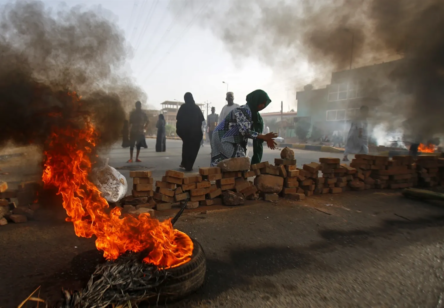
For the Federal Government of Somalia, the calculus is different. It has formally asked for a two year delay to the withdrawal of foreign troops, but the funding shortfall has made that request increasingly difficult to accommodate. President Hassan Sheikh Mohamud’s government now faces a military vacuum in the Bay region just as it is still struggling to contain the political crisis in Mogadishu where a disputed constitutional term extension has already triggered violent street clashes.
The convergence of the two crises the political meltdown in the capital and the security collapse in the hinterland presents a compound threat that Somalia has not faced since the height of Al-Shabaab’s territorial expansion a decade ago The immediate future of Burhakaba will be determined in the coming weeks. If Al-Shabaab tests the Somali National Army’s 60th Division and finds it wanting, the town could fall cutting the supply route to Baidoa and potentially unravelling South West State’s security architecture.
The medium term outlook is even more precarious. With Ethiopian forces expected to vacate several more towns and with no clear financing plan for AUSSOM beyond December the pattern of uncoordinated national pullouts is likely to accelerate. Each troop contributing country will face its own calculations about risk, cost and political will The Amani Africa assessment captured the grim reality most succinctly With no viable collective plan emerging from the AU and Kampala summit, it falls on each AUSSOM TCC to plan for saving itself individually.That is not a transition plan. It is a fragmentation plan The Ethiopian flag no longer flies over Burhakaba. The UN is auctioning its equipment. And Al-Shabaab watches from every direction.
The crisis in Somalia is no longer just about political term extensions in Mogadishu it is about whether the international community is willing to pay the price of preventing a security vacuum that the insurgency is poised to fill The Kampala summit produced communiqués but no cash. The Security Council may extend mandates, but without logistics, mandates are just paper. And on the ground, the soldiers who have held the line for twelve years are packing up.
What is certain is that the retreat from Burhakaba is not the end of the story. It is the beginning of a new and dangerous chapter one in which Somalia’s fragile federal state faces both a political fracture in the capital and a military collapse in the countryside with Al-Shabaab waiting to exploit both.