
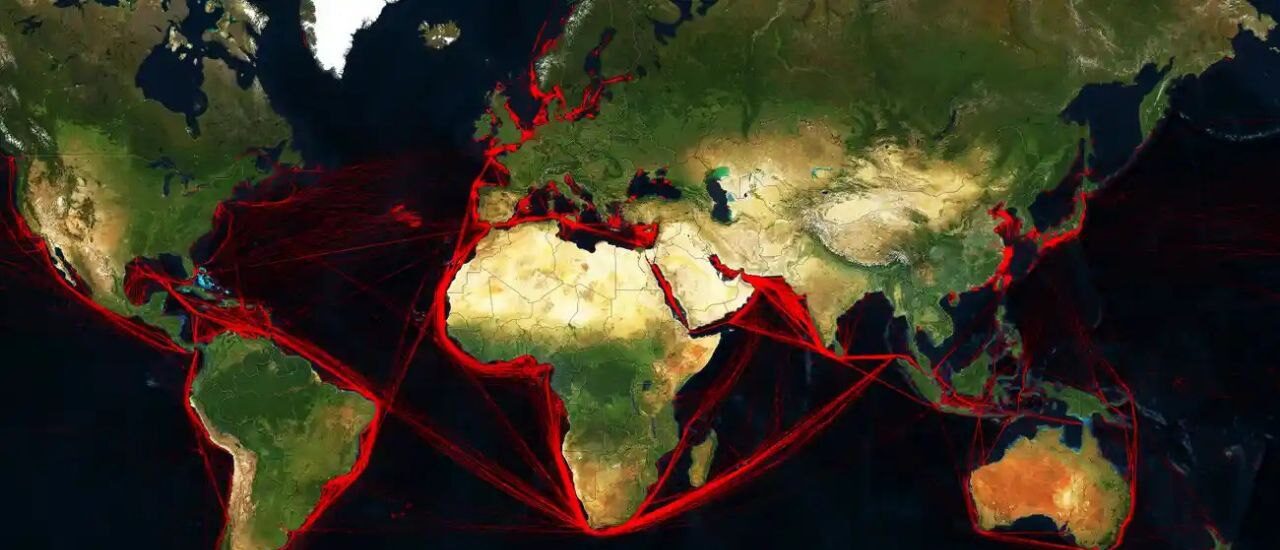

In the early hours of June 18, 2025, a rust-colored oil tanker crept through the narrow waters of the Bab el Mandeb Strait, its hull shuddering under the distant boom of a missile trail streaking overhead. This wasn’t a scene from a war movie—this was the new reality of the Red Sea, where global energy arteries now crossfire with hypersonic warfare.
What once were strategic talking points on the Middle East map—Strait of Hormuz, Bab el Mandeb—are now sites of anxiety for traders, governments, and civilians alike. As tensions between Israel and Iran morph into open conflict, the implications ripple across markets, sea routes, and geopolitical alliances. Hypersonic missiles may strike cities, but their shockwaves now disturb the very currents of global commerce and stability.
Missiles, Civilians, and Escalation
The latest chapter in the Israel-Iran rivalry began with a chilling new development: the reported launch of Iran’s Fattah-1 hypersonic missiles toward Israeli targets. Designed to evade interception and reduce response time, these missiles marked a perilous departure from the conventional tit-for-tat exchanges of years past.
Israeli defense systems—Iron Dome, David’s Sling, and Arrow—scrambled to intercept the barrage. While some missiles were shot down over Tel Aviv, others struck closer to home. The human toll was immediate: at least 24 dead, scores injured, and families shaken from sleep by sirens and explosions.
Iran, in turn, faced retaliation. Israeli airstrikes targeted military and nuclear-linked sites, with Tehran’s outskirts becoming flashpoints. Over 200 Iranian fatalities were reported, and the capital’s routine collapsed into crisis—bakeries ran dry, fuel lines stretched for blocks, and the atmosphere turned tense with both grief and anticipation.
Beneath the missile trails lies a sobering truth: hypersonic capabilities raise the stakes, shorten decision windows, and risk dragging regional powers into deeper, deadlier confrontations.
Energy Markets on Edge
Iran’s geography gives it disproportionate power over global energy flows, especially oil. A flare-up in hostilities doesn’t just affect Tehran or Tel Aviv—it touches gas stations from Mumbai to Manchester.
Oil markets reacted swiftly. On June 17, Brent crude surged over 4% amid fears of infrastructure damage or a potential Iranian move to block the Strait of Hormuz, through which nearly a fifth of global oil passes daily. Prices touched $76.70 for Brent and $75.20 for WTI, reflecting a sudden war premium in oil futures.
These spikes threaten to ripple into broader economies. Nations dependent on energy imports, like India and China, now brace for rising inflation. Meanwhile, Western markets saw dips as investors recalibrated risks tied to consumer spending and shipping disruptions.
A cyberattack on Iran’s state-owned Bank Sepah further complicated matters, cutting off financial lifelines just as Tehran sought to sustain both war efforts and oil exports. As both kinetic and digital warfare converge, the financial system itself becomes part of the battlefield.
Chokepoints in Crisis
Hormuz has long been a geopolitical pressure valve, but in 2025, Bab el Mandeb joins the shortlist of critical chokepoints at risk.
If Iran were to follow through on threats to obstruct Hormuz, tankers would be forced into costly detours around the Cape of Good Hope. But this re-routing isn’t without consequence. It pushes more maritime traffic into the already tense Red Sea corridor, where Houthi threats and piracy loom.
Bab el Mandeb, a strategic pinch point between Djibouti and Yemen, channels Red Sea shipping into the Gulf of Aden and toward the Suez Canal. Any disruption here—not just to oil but to global container traffic—could cascade into delays for goods from electronics to agricultural staples.
Insurance costs are rising. Naval patrols are on alert. The stakes are no longer just regional—they’re logistical, financial, and global.
Shifting Alliances, Global Calculations
Israel’s latest offensive appears focused on dismantling Iran’s nuclear and missile infrastructure. But in doing so, it has opened new fronts: cyber warfare, proxy threats from Yemen to Lebanon, and a recalibration of regional alliances.
In Washington, hawkish rhetoric escalates, with U.S. carrier groups repositioned and demands issued for Iran’s “unconditional surrender.” Meanwhile, European leaders scramble for a diplomatic off-ramp—one that might prevent a broader regional war and preserve what’s left of the Iran nuclear deal framework.
Gulf states walk a fine line. While some may privately cheer Tehran’s setbacks, they also fear the economic fallout. Turkey and Qatar, with ties to both Iran and the West, find themselves in a delicate balancing act.
Beyond the visible flashpoints, the cyber domain is rapidly becoming a frontline. The attack on Bank Sepah is a signal that future conflicts may be fought not only with missiles but with malware, targeting financial systems and infrastructure.
The Human Cost
Geopolitics can sometimes feel abstract—until the price hits the pump or your shipping invoice triples. But the cost of this conflict is personal and immediate for many.
For the residents of Tel Aviv and Tehran, it means nights spent in bunkers. For seafarers rerouted through volatile seas, it’s long journeys under stress. For families worldwide, it may mean higher fuel bills and delayed goods.
National budgets that should fund schools and hospitals are being diverted to missiles and cyber defenses. Iran, already battered by sanctions and inflation, faces deeper economic pain. And countries investing in regional development now find themselves scrambling to protect shipping lanes.
Once again, conflict commodifies suffering. And once again, those least responsible bear the brunt.
What the World Needs Instead
There is no victory in escalation—only deeper entrenchment. What’s needed now is strategy, not sabers.
De-escalation begins with dialogue: regional summits, back-channel diplomacy, and global mediation led by the UN or EU. The nuclear question must be addressed—but so too must maritime security, cyber norms, and humanitarian corridors.
Naval cooperation should focus on protecting trade, not projecting power. Energy policies must diversify to blunt the impact of regional turmoil. And cyber resilience should become a top priority, not an afterthought.
In the end, peace depends not on missiles but on trust, governance, and cooperation. Stability will not be forged through war but through hard, persistent diplomacy.
Conclusion: A Strait Choice
As hypersonic missiles darken the skies over the Middle East and tankers divert from their usual routes, the message is clear: the world cannot afford another protracted war in its most strategic corridors.
This is more than a regional clash—it’s a global inflection point. Will nations double down on militarism, or will they chart a course toward inclusive, durable security?
The answer, like the waters of Hormuz and Bab el Mandeb, remains turbulent.