The Langley Visit That Raised Eyebrows
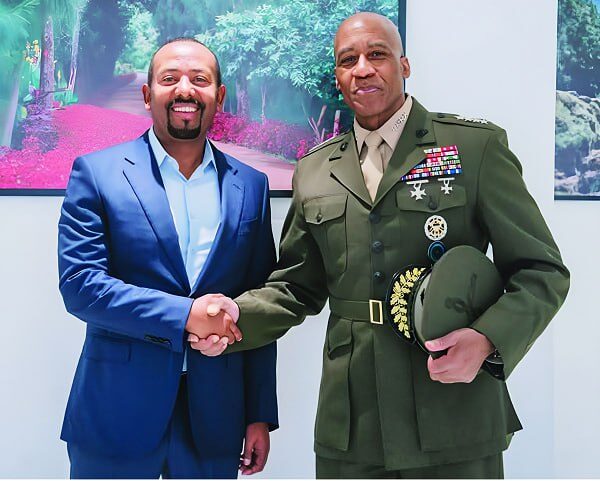
As tensions flare in the Middle East and U.S. fighter jets strike Iranian targets, a seemingly unrelated visit drew quiet but significant attention. General Michael Langley, the outgoing commander of U.S. Africa Command (AFRICOM), touched down in Ethiopia—a landlocked nation with no coastline, but big maritime dreams. Just days before, he had toured the port of Berbera in Somaliland.
Coincidence? Highly unlikely.
Langley’s trip is more than a diplomatic courtesy call. It reveals the evolving chessboard of security, access, and influence in the Horn of Africa.
Why AFRICOM Matters
AFRICOM was established in 2008 to oversee American military interests across Africa. Ironically, it remains based in Stuttgart, Germany—echoing colonial legacies of remote control. AFRICOM’s most active operational base on the continent is in Djibouti, strategically located at the entrance to the Red Sea.
The Red Sea’s importance cannot be overstated. Nearly 12% of global trade passes through its waters. Stability here is critical—not just for regional actors but for global markets. While the U.S. has traditionally leaned on Djibouti and Kenya, rising instability and limited capacity have sparked interest in alternatives.
Ethiopia’s Ambition Meets AFRICOM’s Agenda
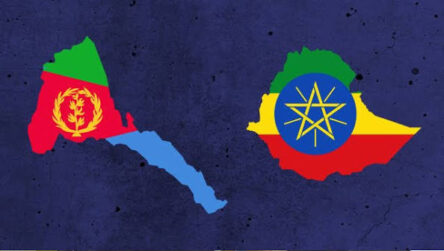
Ethiopia, a long-time American partner in counterterrorism, especially against al-Shabaab in Somalia, has consistently proven its strategic importance. But Prime Minister Abiy Ahmed wants more. Ethiopia remains landlocked since the 1993 Eritrean secession—and the lack of sea access has increasingly shaped its foreign policy.
In 2023, Ethiopia signed a controversial Memorandum of Understanding with Somaliland, granting it port access in exchange for political recognition. The deal angered Mogadishu and triggered backlash across the region. But it also shifted the geopolitical calculus.
Suddenly, Ethiopia, the U.S., and Somaliland found overlapping interests: securing Red Sea trade, countering militant threats, and ensuring military readiness.
Washington’s Strategic Realignment
Langley’s visit may reflect the U.S. adapting to this new reality. AFRICOM has been under budgetary scrutiny. A proposed merger with European Command would diminish Africa’s prominence within U.S. strategic planning. Yet, paradoxically, U.S. operations in Africa—especially in the Horn—are intensifying.
Houthi attacks in the Red Sea and Iranian proxies expanding influence have reshaped the U.S. threat map. Djibouti’s limitations, Kenya’s overburdened forces, and Somalia’s fragility demand fresh solutions. Somaliland, with its functioning port and political stability, emerges as a potential linchpin.
Congressional moves toward recognizing Somaliland—once considered fringe—are now part of mainstream security conversations. A recent bill seeks to formalize ties, citing its strategic value and democratic credentials. Ethiopia’s push for port access may have inadvertently boosted Somaliland’s international legitimacy.
Winners, Watchers, and Warnings
Not everyone is cheering. Somalia views Ethiopia’s deal with Somaliland as a violation of its sovereignty. Eritrea, historically wary of foreign troops in the region, remains quiet but watchful. Egypt, still locked in a Nile water dispute with Ethiopia, is tightening its ties with Mogadishu and other Gulf actors.
The regional board is shifting rapidly—and not always predictably.
Langley’s engagements in Ethiopia and Somaliland signal more than symbolic gestures. They point to a new U.S. strategy: transactional, tactical, and driven by operational necessity.
The Horn Is Now a Frontline
In geopolitics, timing is everything. As AFRICOM evolves, and Red Sea tensions mount, Ethiopia is maneuvering to position itself as an indispensable actor.
But this alignment is fraught with risks. Old rivalries, contested borders, and fragile state structures make the Horn one of the most volatile regions in the world.
Still, if Ethiopia can balance ambition with diplomacy—and if the U.S. can calibrate its interests without igniting further unrest—this new axis could redefine Red Sea security for the next decade.
AFRICOM may be downsizing, but in the Horn of Africa, the American footprint is not fading. It’s refocusing.