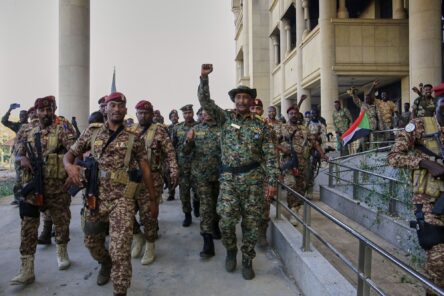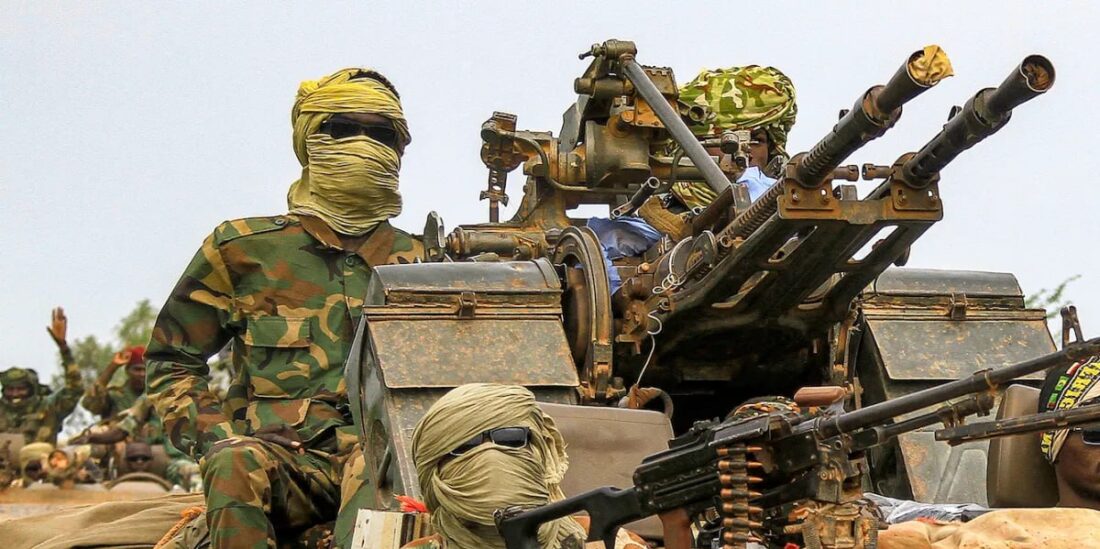
In a world where silence often proves deadlier than bombs, Sudan’s civil war has rapidly evolved into one of Africa’s most devastating humanitarian crises. Yet the gravest threat may not simply be the conflict itself, but the emergence of an armed militia—the Rapid Support Forces (RSF)—that now seeks to transition from insurgent group to governing authority.
For more than a year, Sudan has been locked in a brutal internal war. What began as a political power struggle between the Sudanese Armed Forces (SAF), led by General Abdel Fattah al-Burhan, and the RSF, under Mohamed Hamdan Dagalo (widely known as Hemedti), has devolved into widespread violence, mass displacement, and state fragmentation. Over 12 million people have been uprooted from their homes, while an estimated 25 million face hunger and humanitarian collapse, according to the United Nations.
The roots of this conflict trace back to April 15, 2023, when open hostilities broke out. But its origins run far deeper. The RSF evolved from the notorious Janjaweed militias, which played a central role in the Darfur conflict of the early 2000s. Backed by the Sudanese government at the time, these militias were responsible for the deaths of over 300,000 people and the displacement of millions. In 2013, they were formally reconstituted as the RSF—gaining official status, financial strength through gold mining, and military experience through foreign deployment in the Yemen war.
By the time longtime dictator Omar al-Bashir was overthrown in 2019, the RSF had become a powerful actor in Sudanese politics. When the fragile civilian-military transition collapsed in 2023, war became inevitable.
As of June 2025, the conflict has intensified across multiple regions, including Darfur, Kordofan, and the capital Khartoum. UN estimates suggest that over 150,000 people may have died, and 60,000 more are battling a growing cholera outbreak. Just this month, 16,000 Sudanese were displaced in a single week. Reports of ethnic cleansing, particularly targeting the Masalit people, have drawn widespread condemnation. In El-Fasher, one of the worst atrocities of 2025 left over 30 civilians dead.
What distinguishes this war from previous conflicts in Sudan is the RSF’s growing assertion of state-like authority. In April 2025, the group signed a charter in Nairobi announcing the formation of a so-called “Government of Peace and Unity” alongside allied factions. This move marks a deliberate challenge to the Sudanese state and the African Union’s (AU) principle of territorial integrity.
The RSF’s strategy now appears clear: to legitimize its authority through control of territory, natural resources, and political alliances. With access to Sudan’s gold mines, the RSF has secured a sustainable financial base, allowing it to operate independently of the state and international aid. Its attempts to present itself as a governing force—not merely a militia—introduce a dangerous precedent for other armed groups on the continent.
The consequences extend far beyond Sudan’s borders. The humanitarian fallout has overwhelmed neighboring countries such as Chad, Ethiopia, and Egypt, with refugee inflows stretching local infrastructure and resources. Moreover, the RSF’s rise poses a profound test to regional norms and the African Union’s credibility as a guarantor of peace and unity.
Efforts at mediation have so far proven ineffective. While the United States has officially classified RSF atrocities as genocide, international responses have remained largely symbolic. Real diplomatic momentum remains elusive.
This leaves Africa at a crossroads.
If the continent allows warlords to gain recognition and reward through force, it risks legitimizing the use of violence as a political strategy. The very notion of “African solutions to African problems” is on trial. What is needed now is coordinated African-led diplomacy—with strong backing from the AU, IGAD, and key regional actors—to isolate and pressure those undermining peace, while re-centering legitimate civilian governance.
Sudan’s civil war is no longer a national issue. It is a continental crisis. One that threatens not only the people of Sudan, but the foundations of African unity itself. If militias are permitted to redraw borders and rewrite legitimacy through violence, then the African project of post-colonial sovereignty, stability, and self-determination faces existential risk.
The rise of the RSF must be understood as a warning—one that calls for resolve, accountability, and renewed commitment to African unity through diplomacy, not fragmentation.