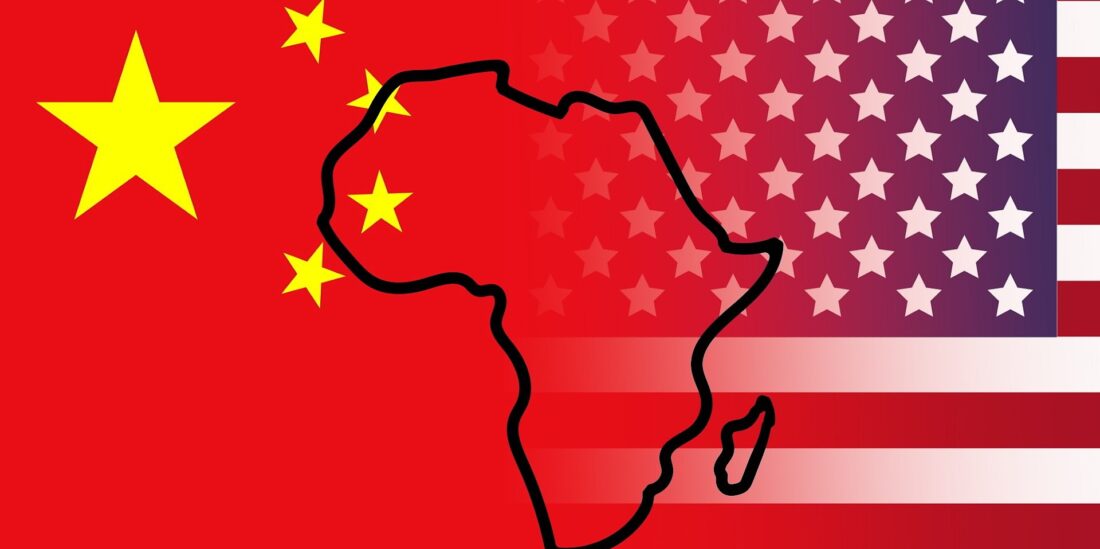
In a world where global power isn’t just shifting but colliding, Africa finds itself no longer on the sidelines, it’s at the center. Two superpowers, the United States and China, are engaged in an intensifying competition for influence, wealth, and political loyalty across the continent. But beneath the surface of new trade pacts, summits, and photo ops lies a deeper question: who’s actually winning this geopolitical tug-of-war, and at what cost to Africans themselves?
For much of the 20th century, Africa was cast in the Western imagination as a recipient of aid, a place to be helped rather than partnered with. Washington poured in billions through USAID and other programs, built sprawling embassies, and launched global health and education campaigns. Africa, in that narrative, was a charity case. But over the past two decades, that framing has collapsed. China arrived with a different pitch, not aid, but infrastructure, trade, and partnership. By 2025, China had become Africa’s largest trading partner, investing billions in railways, ports, roads, and dams. Chinese diplomats tour the continent regularly, and Beijing’s strategy, centered on the Belt and Road Initiative, has made long-term inroads not just economically but politically.
This year alone, China-Africa trade surged by 14%, reaching $165 billion. Beijing announced zero-tariff access for goods from 53 African nations and accelerated investments in local manufacturing, solar power, and industrial parks. At massive summits hosted in Beijing, Chinese leaders have declared “all-weather” partnerships with African states, promising loyalty even during times of global turbulence. At the same time, China has grown more assertive in the security realm, conducting joint military drills with Egypt, selling arms across the continent, and quietly exploring new naval outposts in key areas like Gabon and Djibouti. The message is clear: China is here to stay, and not just to trade.
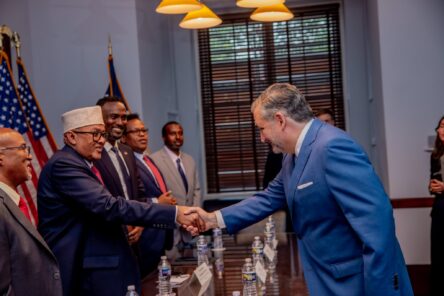
Meanwhile, America’s role is changing, often awkwardly. Under the Trump administration, the U.S. shifted from the traditional aid-heavy model to a more transactional one. Aid programs like USAID were dismantled or defunded. The tone from Washington changed to “business first,” but it wasn’t extended evenly. Only a handful of countries, Gabon, Senegal, Mauritania, Guinea-Bissau, and Liberia, were invited to the latest White House gathering, sending a message that only certain partnerships matter. Major players like Nigeria, South Africa, and Ethiopia were conspicuously absent, penalized, it seems, for cozying up to China or joining groupings like BRICS. Instead of open arms, the U.S. has leaned on tariffs, travel bans, and selective investment tied to strict conditions around governance, mineral access, or geopolitical alignment.
America’s new approach is laser-focused on securing critical minerals, lithium, cobalt, and manganese, for its tech and defense industries. In mineral-rich regions like Congo and Gabon, peace negotiations are increasingly tethered to extraction deals. But these deals come with expectations, sometimes even ultimatums: align politically, open your markets, and keep competitors like China and Russia at bay.
For African nations, this escalating rivalry offers both opportunities and dangers. The continent is no longer a blank canvas, it’s become a complex arena where governments are being courted, pressured, and, in some cases, manipulated. China’s easy credit has been a lifeline for infrastructure development, but rising debt levels have sparked concern. Some governments fear that in the fine
print of their loan agreements, they’ve traded away sovereignty over critical assets. The U.S., meanwhile, promises investment with fewer long-term risks, but only if African governments “play ball” on everything from foreign policy to trade rules.
In the middle of this new great game are the people of Africa. Ordinary citizens aren’t asking for alliances, they’re asking for jobs, schools, and dignity. The closure of aid programs in countries like Liberia has left fragile healthcare systems reeling. In places like Mauritania and Gabon, mineral wealth now invites outside interference more than internal empowerment. Still, the game has changed. African leaders are more strategic than ever. Some are pitting powers against each other, others are walking tightropes, balancing short-term deals with long-term national interests.
The future isn’t scripted. China’s Belt and Road Initiative is expanding, but not without resistance. In Zambia, Kenya, and elsewhere, pushback has grown against unsustainable debt and foreign ownership. Beijing is adapting, emphasizing local employment and joint ventures, but questions remain. Washington’s pivot to investment without aid may appeal to certain leaders but alienate younger, urban Africans who see little personal benefit from mineral contracts or top-down diplomacy. Countries like Rwanda, Nigeria, and Botswana are charting independent paths. With bold industrialization plans, green energy strategies, and new education investments, they’re showing that homegrown solutions can stand tall even amid global competition.
And that may be the real shift. For the first time in a long time, Africa is not just reacting, it’s dictating terms. Leaders are setting agendas, demanding equity in partnerships, and challenging old hierarchies. Africa isn’t asking whether to choose between Washington and Beijing. Increasingly, it’s asking how both can be leveraged, or sidelined, for Africa’s own benefit.
As the world’s superpowers knock on Africa’s door, the stakes are clear: influence, resources, and strategic alliances. But the bigger story is the one Africans themselves are writing, a story not about choosing sides, but about reclaiming agency. Because in this clash of titans, the continent with the youngest population, the fastest growth, and the richest reserves may well hold all the cards. The real question is: will Africa settle for the cards it’s dealt, or start dealing its own?