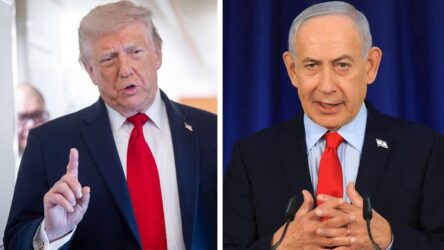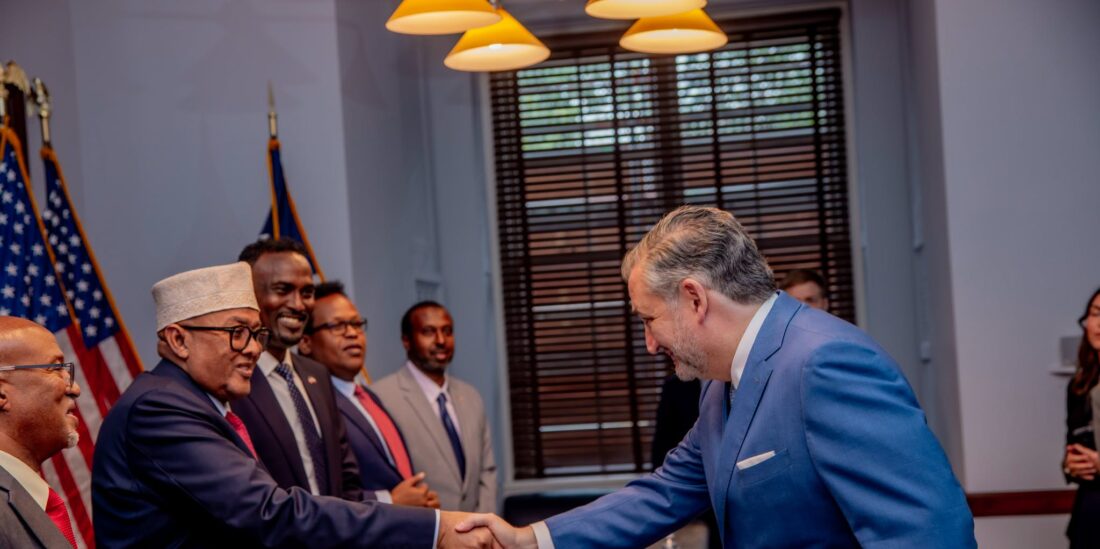
A high-stakes clash between the U.S. Senate Foreign Relations Committee and career diplomats at the State Department has brought Washington’s Horn of Africa strategy into sharp focus Centered on the confirmation of the administration’s nominee for Ambassador to Somalia, the standoff underscores a widening rift between President Donald Trump’s explicit public positions and Foggy Bottom’s stubborn adherence to legacy foreign policy frameworks.
During recent Senate hearings, direct questions posed to the ambassadorship nominee highlighted an institutional reluctance to align with presidential direction. While President Trump plainly observed that Somaliland operates as “a totally different country” from Somalia, the diplomatic establishment continues to treat Somaliland’s legal status as an extension of Mogadishu’s sovereignty The message from Capitol Hill was clear: the nominee’s confirmation depends directly on whether the State Department makes meaningful progress toward formal recognition of Somaliland’s independence.
As commentary in the New York Sun noted, this push “makes sense.” It challenges a decades-old policy that no longer reflects conditions on the ground or serves U.S. national security interests The Reality on the Ground: A Contrast in Stability
For over three decades, the distinction between Somaliland and Somalia has not been a matter of abstract political theory, but of tangible reality Democratic Self-Governance: Since reasserting its sovereignty in 1991, Somaliland has developed a functioning constitutional democracy, holding regular multi-party elections and executing peaceful transfers of executive power.
Institutional Autonomy: Hargeisa manages its own judicial system, security forces, currency, and border controls without relying on administrative authority from Mogadishu Maritime and Border Security: Somaliland maintains operational control over 500 miles of coastline along the critical Gulf of Aden corridor, acting as an indispensable firewall against piracy, illicit trafficking, and regional terror groups.
By contrast, the Federal Government of Somalia remains heavily reliant on international security forces to maintain basic administrative control. Continuing to insist that Somaliland is legally subordinate to Mogadishu penalizes a stable, self-sufficient partner while rewarding chronic governance failures Institutional Inertia vs. Executive Guidance
Senate advise-and-consent authority exists precisely to keep executive agencies accountable to presidential priorities When executive leadership outlines a clear direction, policy officials are expected to execute it.
Instead, career diplomats routinely retreat into traditional international frameworks, fearing that recognizing Somaliland would disrupt regional norms. Yet this institutional inertia ignores the evolution of broader international dynamics, including growing regional moves toward formal diplomatic engagement with Hargeisa. Conditioning key diplomatic confirmations forces Foggy Bottom to reconcile its entrenched habits with actual presidential guidance.
U.S. Strategic Imperatives in the Horn of Africa Shifting U.S. policy toward Somaliland recognition is not merely a legal reclassification; it aligns directly with fundamental national security goals:
- Securing Maritime Chokepoints Somaliland’s Port of Berbera occupies vital strategic real estate along the Red Sea and Gulf of Aden transit routes. Establishing formal diplomatic and defense ties with Hargeisa guarantees the U.S. reliable maritime access near the Bab-el-Mandeb strait, safeguarding vital trade routes against disruption.
- Countering Great Power Competition
Somaliland has demonstrated a strong commitment to democratic allies, notably maintaining formal relations with Taiwan despite severe economic and diplomatic pressure. A formal U.S. alliance strengthens a democratic actor in a region where rival global powers actively seek naval and economic footholds. - Incentivizing Democratic Governance
A foreign policy rooted in realism should reward countries that build functional, accountable democratic institutions. Extending diplomatic recognition to Somaliland sends an unequivocal signal that stability and democratic rule yield concrete international partnerships.
The Path Forward
The debate over the Somalia ambassadorship exposes a broader crisis of alignment within U.S. foreign policy. When a self-governing republic demonstrates 30 years of democratic success and strategic alignment with Western interests, diplomatic precedent must yield to strategic reality.
By pressing the State Department to honor executive guidance, lawmakers are taking a necessary step toward an effective, clear-eyed Horn of Africa strategy. Moving toward formal recognition of Somaliland is the logical, overdue choice for American diplomatic and security policy.