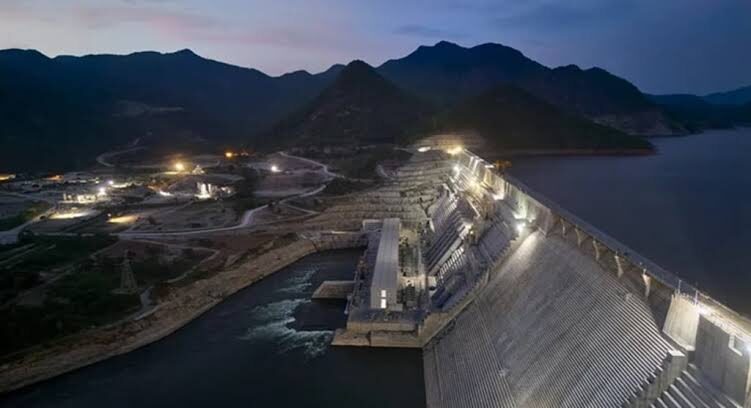
Italy once helped shape agreements that restricted Ethiopia’s use of the Nile. Now Rome wants to mediate the very dispute those historical arrangements helped create. As the U.S. signals a return to GERD diplomacy, Italy is stepping in but can Ethiopia accept another Western-led process over a dam it has already built and financed itself?
During World War II, Italy invaded Ethiopia and neighboring countries and imposed numerous coercive agreements without the countries’ consent. At the time, the British government, seeking to pull Italy away from its alliance with Nazi Germany, cooperated with Italy as it prepared agreements concerning the Nile River and borders that were unfavorable to Ethiopia.
Agreements prepared and signed by the Italian and British governments restricted Ethiopia from using the Abay River, a natural resource of its own, and effectively transferred control over it toward Egypt.
As a result, the dispute has persisted to this day, contributing to a situation in which Ethiopia is expected to rely on Western mediation and Egyptian approval to utilize the Abay River, despite it being a resource within its territory.
The Grand Ethiopian Renaissance Dam (GERD), construction of which began 12 years ago and was recently completed and began generating electricity, was built on the Abay River, which contributes approximately 85 percent of the Nile’s total water flow.
Africa’s largest hydropower dam project is located about 30 kilometers south of Ethiopia’s border with Sudan. It is more than 1.6 kilometers long and, according to the article, 145 meters high The dam, into which approximately $4.2 billion of Ethiopia’s national and public resources have been invested, covers an area comparable to London. Ethiopia built the GERD primarily to provide electricity to its population, around 60 percent of whom have historically lacked access to electricity.
Beyond that, the project is expected to double Ethiopia’s electricity-generating capacity, provide reliable power to institutions, and accelerate economic development. It is also expected to supply electricity to neighboring countries such as Sudan, South Sudan, Kenya, Djibouti and Eritrea From the foundation stage through completion and the beginning of operations, the GERD has faced significant pressure from Egypt, Sudan and Western countries, creating a major challenge for Ethiopia.
Italy, which once cooperated with Britain in preparing restrictive agreements aimed at limiting Ethiopia’s ability to decide how to use the Abay River, is now expressing interest in facilitating dialogue between Egypt and Ethiopia over the Nile waters. Italy has called on the two countries to reach a fair and sustainable negotiated solution based on international law.
According to the Middle East Monitor, Italian Foreign Minister Antonio Tajani made the proposal during a joint press conference following discussions with Egyptian Foreign Minister Badr Abdelatty in El Alamein, Egypt. Tajani said that if both countries agree, Rome is ready to mediate or facilitate dialogue.
He also pointed to Italy’s relationship with Ethiopia as a potentially positive contribution to efforts to resolve the long-running dispute the Italian minister said Italy recognizes the importance of the Nile waters to Egypt and emphasized the need for an agreement that protects Egypt’s “water interests” while respecting international law.
The remarks came during the first meeting of the Egyptian-Italian Joint Committee, where the two sides discussed water, energy, migration, as well as economic and trade cooperation. Abdelatty described the Nile water issue as Egypt’s “top priority” and an “existential issue,” saying it has direct implications for more than 110 million Egyptians Abdelatty called for full respect for international law, including the principle of avoiding harm to other countries, and opposed what he described as unilateral actions concerning the Nile waters.
The GERD was constructed by the Italian engineering and construction company Webuild, the project’s main contractor. In 2026, Webuild received the Samoter Innovation Award at the Samoter international construction machinery exhibition in Verona, Italy, for its work on the Renaissance Dam. The company said the award recognized the project’s engineering complexity, technological achievements, and its broader economic and social significance for Ethiopia’s energy and industrial development.
Webuild describes the dam as Africa’s largest hydropower project, with a height of 170 meters, a length of 1.8 kilometers, and an installed capacity of 5,150 megawatts. Once fully operational, the dam is expected to significantly increase Ethiopia’s renewable electricity-generation capacity According to the company, more than 25,000 people most of them Ethiopians participated in the construction and acquired specialized technical skills. Supporting infrastructure developed around the project includes health facilities, schools, roads and other services.
The GERD has been at the center of a long-running disagreement between Egypt and Ethiopia. Ethiopia considers the dam central to its development and electricity-generation plans, while Egypt has repeatedly called for binding agreements governing the operation of the dam and Ethiopia’s use of Nile waters Italy’s proposal comes shortly after the United States indicated that it was prepared to revive its previous mediation efforts between Ethiopia and Egypt over the Grand Ethiopian Renaissance Dam.