Israel’s October 27, 2026, election has produced a familiar but acute political impasse. Benjamin Netanyahu’s right-wing and religious bloc secured 53 seats in the 120-member Knesset, while the opposition camp led by former IDF chief Gadi Eisenkot’s Yashar party and its allies took 48. Arab-led parties, the Joint List and Ra’am, surged to a record 19 seats. Neither major bloc holds the 61 seats required for a majority, leaving President Isaac Herzog to begin consultations and assign the mandate to form a government.
Netanyahu remains caretaker prime minister in the interim, a position that preserves significant executive power even as coalition talks unfold or the prospect of new elections looms Egypt has long viewed Netanyahu’s governments with particular wariness Relations between Cairo and Jerusalem, anchored in the 1979 peace treaty, have endured repeated strains during Netanyahu’s tenure.
Egyptian officials have privately and publicly signaled preference for more predictable Israeli partners less inclined toward maximalist positions on Gaza, the West Bank, and the risk of Palestinian displacement toward Sinai Egyptian President Abdel Fattah el-Sisi has emphasized that Egypt will never pose a threat to Israel while maintaining a strong military for its own security. Cairo’s core interests remain clear: preservation of the peace treaty, prevention of any mass influx of Gazans into Sinai, and regional stability that does not undermine Egypt’s role as a mediator.
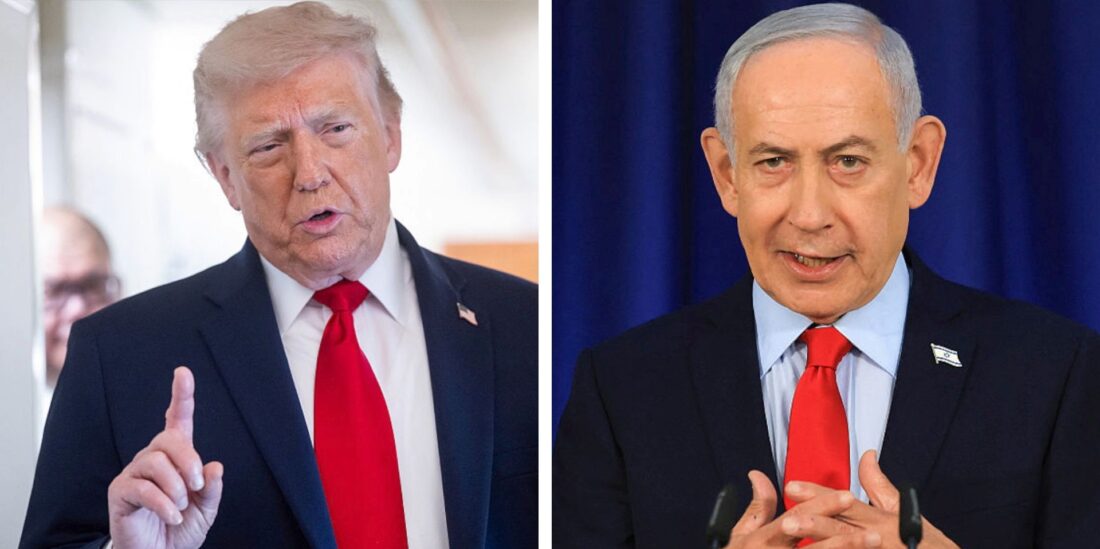
An Eisenkot-led government, even one relying on external Arab parliamentary support rather than formal coalition partners, is widely seen in Egyptian circles as potentially less disruptive than a continued Netanyahu-led coalition that includes hardline figures The United States under President Donald Trump has taken a more explicit side. Trump publicly endorsed Netanyahu ahead of the election, praising him as a “Great Warrior Prime Minister” and linking his leadership to unfinished business against Iran.
The endorsement broke with longstanding American practice of avoiding overt interference in Israeli domestic politics. At the same time, elements within the administration and regional partners have explored the possibility of a broader unity arrangement that might sideline the far right while keeping Netanyahu in a transitional role. Trump has indicated he will “take a look” at involvement in coalition talks.
American interests center on containing Iran, managing the residual Gaza conflict, advancing broader normalization, and maintaining Israel’s qualitative military edge A prolonged Israeli caretaker period or another election cycle introduces uncertainty into those priorities Layered onto this Middle Eastern chessboard is the question of Somaliland. In December 2025, Israel became the first United Nations member state to formally recognize the self-declared Republic of Somaliland as a sovereign independent state, framing the move in the spirit of the Abraham Accords.
Diplomatic relations advanced rapidly. Somaliland opened an embassy in Jerusalem, Israeli Foreign Minister Gideon Sa’ar visited, and in late October 2026 Israel’s first ambassador, Michael Lotem, presented credentials in Hargeisa and participated in a cornerstone-laying ceremony for an Israeli embass The development marks a tangible expansion of Israel’s diplomatic footprint in the Horn of Africa and the Red Sea region.
Egypt, along with Somalia, Eritrea, Sudan and others, has rejected the recognition, insisting on Somalia’s territorial integrity and viewing unilateral recognition of breakaway entities as a dangerous precedent. Cairo’s opposition is consistent with its broader emphasis on state sovereignty and regional order The United States has not followed Israel’s lead. Washington continues to recognize Somalia’s territorial integrity as a matter of formal policy, though President Trump has made informal comments distinguishing Somaliland as “a totally different country.”
Somaliland’s strategic location along the Gulf of Aden, its relative stability, and its potential role in countering Houthi threats and securing maritime routes have fueled debate in Washington about deeper engagement, short of full recognition for now These threads Israel’s unresolved government formation, Egypt’s preference for a less confrontational Israeli partner, America’s dual track of endorsing Netanyahu while managing wider regional goals, and Israel’s pioneering recognition of Somaliland illustrate how domestic political outcomes in Jerusalem ripple outward.
A Netanyahu caretaker government or renewed right-wing coalition would likely sustain current trajectories on both Gaza and Somaliland. An Eisenkot-led arrangement, particularly one dependent on external Arab support, might open modest space for recalibration with Egypt while still facing the same structural constraints on Palestinian statehood and Red Sea strategy.
Meanwhile, Somaliland’s partial diplomatic breakthrough remains isolated, opposed by key Arab states and unendorsed by the United States, even as practical cooperation with Israel deepens The coming weeks of Israeli coalition negotiations will not resolve these tensions. They will, however, determine the tone and tempo with which Israel, Egypt, the United States, and the Horn of Africa navigate an already crowded and contested regional landscape.