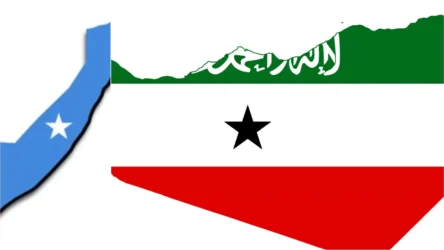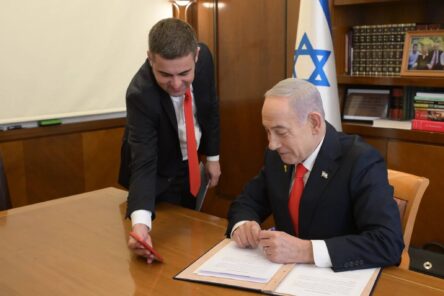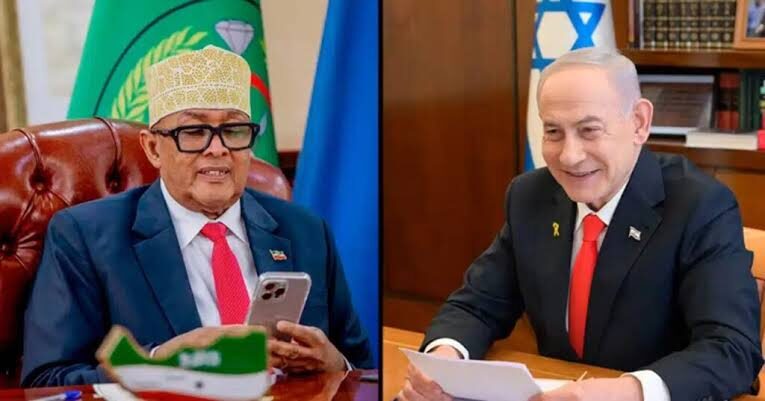
In December 2025, Israel became the first United Nations member state to formally recognize the Republic of Somaliland as a sovereign and independent country. The move, announced jointly by Israeli Prime Minister Benjamin Netanyahu and Somaliland’s leadership and framed in the spirit of the Abraham Accords, ended more than three decades of international isolation for the self-declared state in the Horn of Africa. Since then, relations have advanced with unusual speed.
Somaliland opened an embassy in Jerusalem during a presidential visit in June 2026. Israeli Foreign Minister Gideon Sa’ar traveled to Hargeisa. And in late October 2026, Israel’s first ambassador, Michael Lotem, presented his credentials to President Abdirahman Mohamed Abdullahi and participated in a cornerstone-laying ceremony for a new Israeli embassy. For Somaliland, which restored its independence in 1991 after the collapse of the Somali state and has maintained its own government, currency, security forces, and democratic elections ever since, the recognition represents the most significant diplomatic achievement in its history.
Yet the breakthrough remains incomplete and contested. No other UN member has followed Israel’s lead. Somalia continues to regard Somaliland as an integral part of its territory. Egypt, Eritrea, Sudan, and several other regional states have explicitly rejected the recognition, insisting on the principle of territorial integrity and warning against precedents that could encourage separatism.
Cairo’s opposition is particularly firm. Egypt has long prioritized the unity of Somalia and views unilateral recognition of breakaway entities as destabilizing, especially in a region already strained by Red Sea insecurity, Houthi threats, and competing external influences Egyptian officials have coordinated with Mogadishu and other partners to reaffirm support for a single Somali state, underscoring that recognition by one country does not create broader legitimacy.
The United States has also withheld formal recognition. Washington’s official policy continues to treat Somaliland as part of Somalia. President Donald Trump has made informal comments distinguishing Somaliland as “a totally different country,” remarks welcomed in Hargeisa as an acknowledgment of reality on the ground. Somaliland’s leadership has used high-level visits to Washington and engagement with American think tanks and lawmakers to argue that formal recognition would serve U.S.
interests in maritime security, counterterrorism, and access to the strategically located port of Berbera near the Bab e Mandeb Strait So far, those arguments have produced closer practical cooperation but not a change in formal status. The gap between Israel’s recognition and the continued non-recognition by the United States and most of the international community leaves Somaliland in a peculiar position: diplomatically validated by one important partner yet still largely outside the formal state system.
Israel’s decision did not occur in a vacuum. It took place under Netanyahu’s government and aligned with a broader Israeli strategy of expanding ties beyond traditional partners, particularly in Africa and along critical maritime routes. The timing also coincided with heightened focus on Red Sea security following regional conflicts. Whether the recognition would have proceeded under a different Israeli government remains an open question.
Israel’s own politics are now in flux after the inconclusive October 27, 2026, election. Netanyahu’s bloc won 53 seats, the opposition camp led by Gadi Eisenkot secured 48, and Arab-led parties reached a record 19. Neither major bloc holds a majority. Netanyahu continues as caretaker prime minister while coalition negotiations or the possibility of new elections unfold.
Egypt has long preferred more predictable Israeli leadership less associated with the hardline policies of recent years, particularly on Gaza and the risk of displacement toward Sinai. An alternative Israeli government could recalibrate tone with Cairo, but there is little indication it would reverse the Somaliland recognition already in place For Somaliland, the immediate priority is consolidating the gains with Israel while pressing others to follow. The new embassy in Hargeisa, the exchange of ambassadors, and cooperation in security, water, and health sectors provide tangible benefits.
Yet the absence of wider recognition limits access to international financial institutions, formal defense partnerships, and full participation in global forums. Regional opposition, led in part by Egypt’s insistence on Somali unity, continues to constrain the process. American hesitation, despite Trump’s informal comments and strategic interest in the Horn of Africa, reinforces the sense that Israel’s move remains an outlier rather than the start of a cascade.
Somaliland’s case tests the boundaries of recognition in a system that privileges existing borders and majority consent. Israel’s decision has given the republic a powerful diplomatic foothold and a high-profile partner. Whether that foothold expands into broader legitimacy will depend on decisions in Washington, Cairo, and other capitals and on whether the political uncertainty in Israel produces continuity or change in the partnership that made the breakthrough possible. For now, Somaliland stands recognized by one state, opposed by several of its neighbors, and still waiting for the rest of the world to decide.