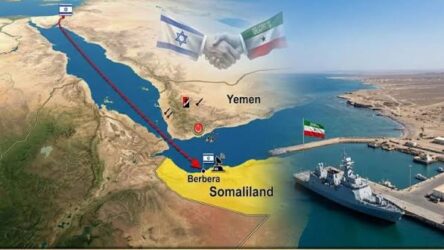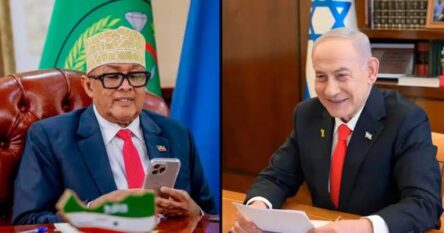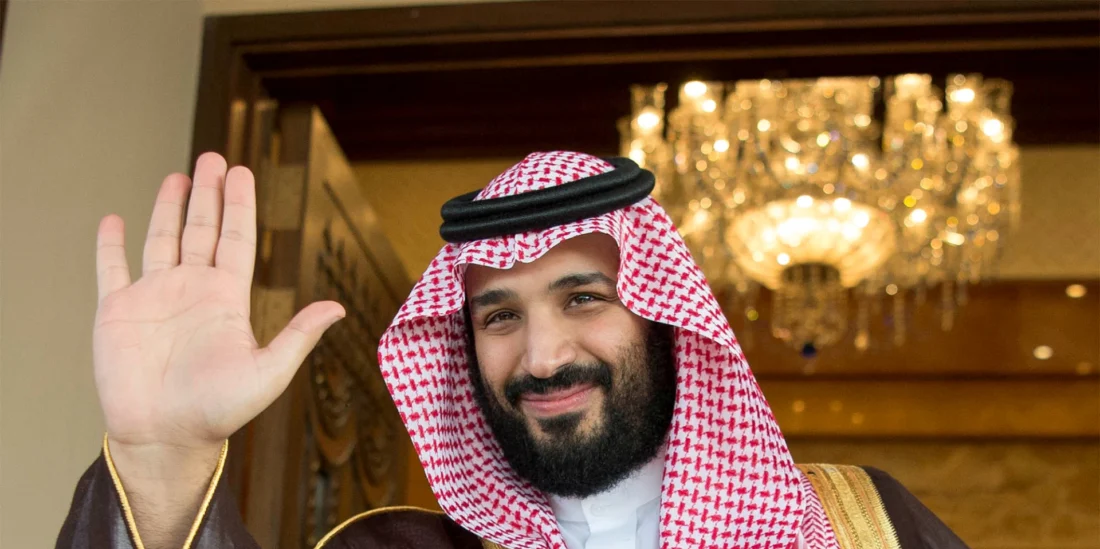
Welcome back to AnalyticaToday. Today we dissect a blunt Saudi diplomatic warning that has sparked fierce debate across social media and foreign-policy circles. The statement, issued in response to growing international interest in Somaliland, reads: “Any country that recognizes the breakaway entity from Somalia will place itself in the same position as Israel, in opposition to Arab and Islamic states.”
Let’s be clear about what this message actually does. It does not debate Somaliland’s governance, security record, or the will of its people. Instead, it instantly reframes an African sovereignty question as a loyalty test for the entire Arab and Islamic world. Recognize Somaliland? You are no longer a neutral actor — you have joined “Israel” in opposing the collective Arab-Islamic consensus. This is textbook zero-sum regional politics. In this worldview, there is no room for nuance, no space for case-by-case analysis, and certainly no tolerance for African agency. If you step outside the approved line on any issue touching Arab or Islamic solidarity, you are automatically cast as an enemy of the bloc. The logic is simple and destructive: collective opposition historically centered on Israel becomes the litmus test for every other dispute. Somaliland’s 34-year quest for recognition is not judged on its merits; it is weaponized as another front in the same ideological battle.
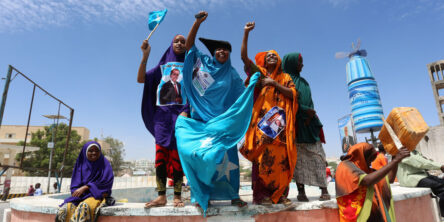
Consider the facts on the ground that this framing conveniently erases. Somaliland, the northern region of what was once British Somaliland, declared independence in 1991 after the collapse of Somalia’s central government. Its people have built a functioning democracy with regular elections, its own currency, passports, and security forces. Multiple polls and referendums show the overwhelming majority of Somalilanders reject rule from Mogadishu. They argue they were never truly integrated under the 1960 union and have suffered decades of marginalization. Yet in Riyadh’s statement, none of this matters. The aspirations of roughly 5 million Somalilanders are subordinated to the imperative of preserving Somalia’s territorial integrity a position Somalia itself champions within the Arab League, of which it is a member. Where, then, is Somalilanders’ voice? Where is African agency? The African Union has long grappled with the Somaliland question under its own principles of self-determination and border stability. Several African states have already engaged pragmatically with Hargeisa. Yet Saudi Arabia’s intervention elevates the issue into a pan-Arab/Islamic red line, effectively telling African nations and the wider world: your local realities must yield to our collective narrative.
This approach reveals a deeper pattern in Arab diplomatic strategy. It exports the uncompromising “with us or against us” mindset forged in the Israel-Palestine conflict and applies it to unrelated crises. The result is a foreign policy that prioritizes bloc solidarity over practical outcomes whether that means ignoring successful de-facto states, refugee burdens, or regional stability. It leaves no room for compromise, no incentive for dialogue, and no respect for the very principle of self-determination that Arab states demand elsewhere.
Saudi Arabia’s warning is not merely about Somaliland. It is a window into a rigid, identity-driven diplomacy that treats deviation as betrayal. Somaliland’s fate should be decided by Somalilanders, by African mechanisms, and by those willing to engage with facts on the ground not by an external consensus that equates African self-rule with enmity toward the Arab and Islamic world.
The statement may rally the base, but it risks alienating partners who see a more complex, multi-polar reality. True regional leadership would acknowledge local agency instead of demanding ideological conformity. Until then, Somaliland remains the inconvenient proof that not every conflict fits the zero-sum script.