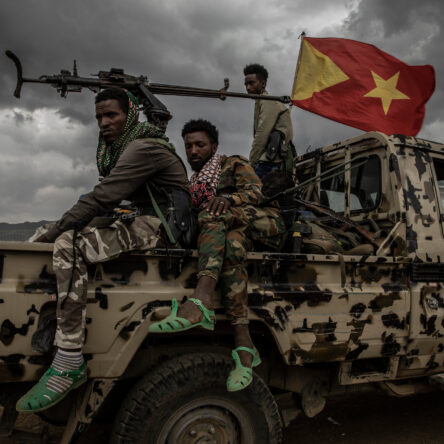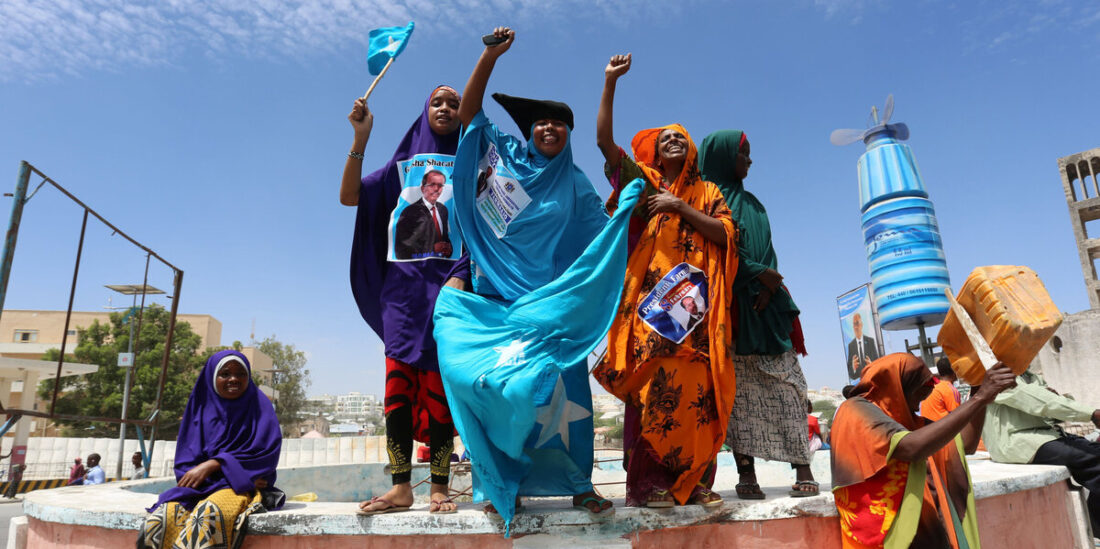
Horn politics is getting more tense, and the common thread is not a sudden change in local priorities. It is foreign powers making moves that reset the region’s options, often faster than Horn leaders can negotiate stable compromises In the past week alone, the map has been pulled in several directions at once Israel announced it now recognizes Somaliland as an “independent and sovereign state,” a first in three decades of Somaliland’s search for recognition Somaliland’s leadership framed it as a diplomatic breakthrough, and Reuters reported that the two sides signed a declaration of mutual recognition, with Somaliland committing to join the Abraham Accords framework.
Days earlier, Egypt quietly signed port arrangements with Eritrea and Djibouti that reporting says would upgrade Assab and Doraleh, including the potential to create berths for warships and enable small military contingents Steps described as part of Cairo’s broader pressure campaign against Ethiopia amid the Nile dispute.
At the same time, Sudan’s war continues to spill outward, with Khartoum repeatedly accusing the UAE of backing the Rapid Support Forces claims the UAE denies while Saudi Arabia positions itself as a central diplomatic channel for peace efforts In Somalia, Türkiye’s role keeps deepening not only as a mediator in Horn disputes, but as a security and economic partner, including maritime-security support arrangements intended to help Somalia protect its waters Taken together, these moves point to a broader reality: the Horn is increasingly governed by a Red Sea competition system, where external actors treat ports, bases, and recognition politics as strategic instruments.
Two of the major players shaping this environment are the UAE and Saudi Arabia The two share many interests trade lanes, energy security, and containing threats But their competition is also real, and it tends to show up in the Horn in three ways: port networks, preferred partners, and conflict positioning.
The UAE’s approach has often been logistics-first influence: build or operate ports, link them to security arrangements, and create long-term access Berbera in Somaliland is the clearest example Saudi Arabia’s posture tends to emphasize state sovereignty and recognized governments.
That is why Riyadh’s rejection of Israel’s Somaliland recognition matters: it is not just a Somalia statement; it is a signal about what kind of Red Sea order Saudi Arabia wants Israel’s recognition, in that sense, does not simply add a new actor; it sharpens the lines between approaches of the two powers.
It strengthens the UAE-aligned logic that commercial-security footprints can become enduring strategic facts And it fortifies the Saudi-aligned logic that recognition and sovereignty lines must be defended because fragmentation spreads The risk is not that every actor “wants” conflict. The risk is that these moves reduce the space for middle solutions Ethiopia’s need for reliable access to the sea is the most structurally critical issue in the Horn right now not because it is irrational, but because it intersects with sovereignty and multiple external interests.
This is where foreign influence becomes decisive Egypt’s reported port upgrades at Assab and Doraleh sit directly on Ethiopia’s strategic map both near Bab al-Mandab, and one tied to Ethiopia’s primary logistics dependency.
Whatever Cairo’s stated intent, the message received in Addis Ababa is leverage. And the Ethiopia Somalia crisis triggered by the Ethiopia Somaliland MoU already showed how quickly this can escalate It was only after Turkish mediation produced an Ankara process that things started to de-escalate So Israel’s recognition does not land on a blank slate It lands on top of an existing port-and-security ecosystem one that is already tied to Gulf competition and Red Sea security In practical terms, recognition can either begin to normalize Somaliland’s independence, or create a wider tension in the region that can lead to conflict This is not about claiming local leaders have no agency.
Somalia and Ethiopia’s recent de-escalation showed that dialogue can still narrow the space for proxy escalation But the playing field has changed When recognition decisions, port upgrades, and security pacts are driven by outside competition, the region’s politics become less responsive to citizens and more responsive to external bargaining.
And that is the risk: not only war, but a long-term politics of dependence, where regional disputes are repeatedly “solved” through foreign alignments rather than through durable local settlements The Horn does not need a new cold war along the Red Sea.
It needs mechanisms that make it harder for outsiders to reprice local disputes overnight whether through recognition shocks, port militarization, or proxy positioning Right now, the region is moving in the opposite direction.