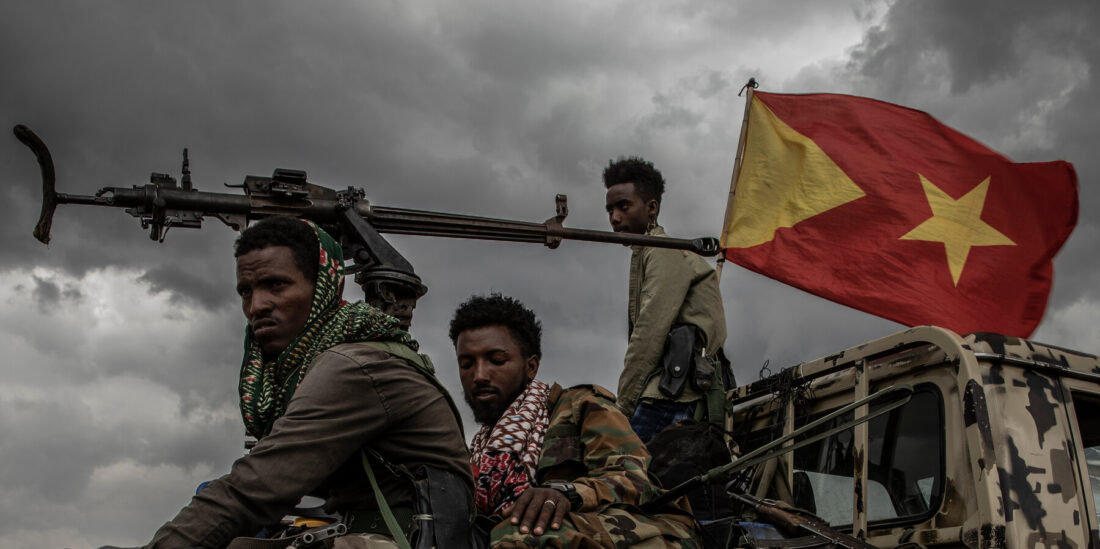
For nearly 27 years, the Tigray People’s Liberation Front (TPLF) sat at the center of political power in Ethiopia. Today, after losing its dominance, the group finds itself at the center of growing international scrutiny as both the United States and the European Union warn that its recent actions risk unraveling the fragile peace established under the Pretoria Agreement. Critics argue the TPLF is seeking to restore its lost influence at any cost, while the group insists it is defending Tigray’s interests.
The United States and the European Union have voiced growing concern over escalating tensions in northern Ethiopia, warning that recent developments involving the Tigray People’s Liberation Front (TPLF) risk undermining the Pretoria Cessation of Hostilities Agreement and threatening the region’s fragile peace.
The U.S. Department of State warned of increasing tensions between hardline TPLF members and the Ethiopian federal government that could reignite conflict in northern Ethiopia. In a statement, the U.S. Embassy in Addis Ababa urged all actors “actively undermining the peace process” to engage constructively in African Union-led dialogue and fully implement the Pretoria Agreement, which ended the devastating two-year war in November 2022.
The U.S. statement followed Washington’s recent decision to impose visa restrictions on hardline TPLF members and their immediate family members, citing their alleged role in fueling instability and increasing the risk of renewed conflict. According to the State Department, the sanctions were introduced in response to actions that threaten peace and regional stability.
The TPLF rejected the U.S. measures, describing the visa restrictions as “unbalanced” and arguing that they fail to reflect realities on the ground in Tigray while not holding the Ethiopian federal government equally accountable.
Although the U.S. Embassy did not identify the specific actors it believes are obstructing the peace process, tensions have intensified following the TPLF’s decision to dismantle the Tigray Interim Regional Administration established under the Pretoria Agreement and replace it with the regional council elected before the war. The regional council has also moved to implement a controversial compulsory military service proclamation, while reports indicate that large-scale forced recruitment is already underway.
Senior Ethiopian officials, including Getachew Reda and Redwan Hussein, recently accused the TPLF of preparing to launch a new military offensive within days. The TPLF dismissed the allegations and instead accused the federal government of preparing for another conflict in Tigray.
Echoing Washington’s concerns, the European Union also issued a statement expressing alarm over the deteriorating situation. The EU said the TPLF’s unilateral implementation of compulsory military recruitment constitutes a violation of the Pretoria Cessation of Hostilities Agreement. It also criticized the group’s move to establish what it described as a “parallel regional council,” saying these actions have contributed to rising tensions in northern Ethiopia.
The EU emphasized that it is urgent for all parties to begin discussions on the practical implementation of the Pretoria peace agreement and avoid steps that could jeopardize the hard-won ceasefire. The bloc reaffirmed its full support for African Union-led mediation efforts and for the work of former Nigerian President Olusegun Obasanjo, the AU High Representative who played a central role in negotiating the Pretoria Agreement. The EU said it remains committed to supporting initiatives aimed at preserving peace and stability in Ethiopia.
Earlier this month, Obasanjo traveled to Mekelle for talks with TPLF leaders. He described the discussions as productive, while TPLF officials said the meeting focused on restoring dialogue with the federal government after months of strained relations.
The United States also reaffirmed its commitment to monitoring political and humanitarian developments in Tigray and pledged to continue providing life-saving humanitarian assistance to the region. The U.S. Embassy stressed that lasting peace and stability are essential to ensuring uninterrupted humanitarian support and announced that American officials plan to visit Tigray in the future to meet regional leaders and humanitarian organizations, although no timeline was provided.
The latest international statements add to mounting diplomatic pressure on all parties to uphold the Pretoria Agreement, resolve disputes through dialogue, and prevent a return to armed conflict in northern Ethiopia.