For much of the past year, attention has been fixed on Gaza. But the war’s consequences are extending far beyond Palestine. Quietly, decisions taken in Tel Aviv, Riyadh, Abu Dhabi, Ankara, and Washington are reshaping power dynamics across the Red Sea and deep into the Horn of Africa.
What appears, on the surface, to be Middle East realignment is in fact a broader geopolitical shift, one that places the Horn at the center of emerging security, trade, and narrative contests.
The Gaza war has become the gravitational center of Middle Eastern politics. Its outcome will not only determine post-conflict governance in Gaza, but also shape diplomatic alignments across the region.
At the heart of this moment is UN Security Council Resolution 2803, which outlines a political phase following the fighting. The key question is whether this phase includes a credible pathway toward Palestinian statehood.
Saudi Arabia’s position has remained consistent: normalization with Israel is contingent on meaningful political progress. What has changed is the perceived credibility of Israeli compliance and the willingness of the United States to enforce the resolution’s terms.
Public rejection of statehood pathways by Israel’s government, resistance to international oversight, and objections to reopening critical crossings such as Rafah have deepened skepticism across the region. Washington’s decision to reopen Rafah over Israeli objections suggests pressure is being tested, though it remains unclear whether it will be sustained.
These tensions form the backdrop to a wider shift in regional alignments.
Much commentary has framed emerging cooperation among Saudi Arabia, Turkey, and Pakistan as a “Muslim NATO.” This label overstates the reality.
What is taking shape is not a formal alliance, but a flexible hedge architecture. There are no integrated command structures, automatic defense obligations, or binding commitments. Instead, the framework provides redundancy in an increasingly uncertain environment.
Saudi Arabia is hedging against doubts over U.S. reliability and concerns about Israeli maximalism. Turkey seeks leverage within NATO, expansion across key corridors, and access to Saudi political capital. Pakistan aims to monetize defense capabilities and regain strategic relevance.
Together, these interests form a layered, adaptable network activated when needed, recalibrated when conditions change. Its value lies in signaling, defense industrial cooperation, and corridor stabilization rather than collective defense.
This framework has direct implications for Africa.
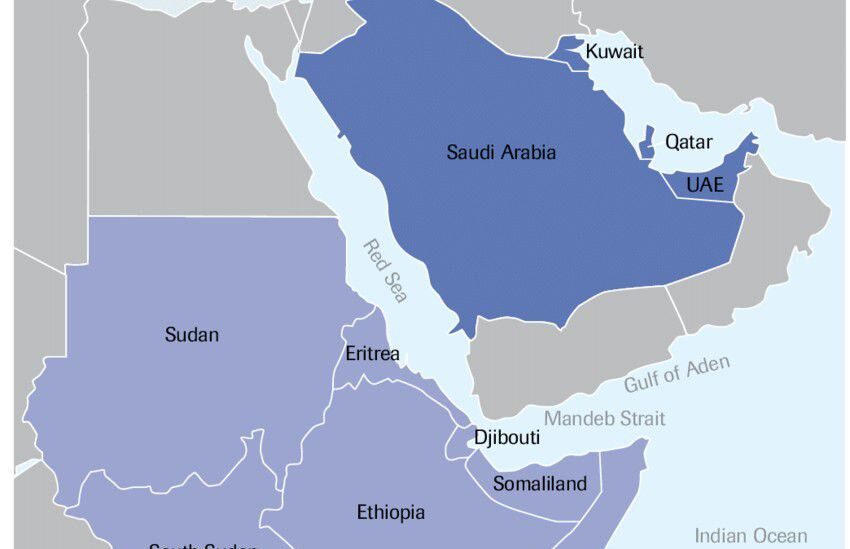
The Horn of Africa sits alongside one of the world’s most sensitive maritime chokepoints: the Bab el-Mandeb Strait. Global trade, energy flows, and security interests converge here.
Saudi Arabia is expanding partnerships with Egypt and Somalia, anchoring influence on both sides of the Red Sea. Turkey maintains a longstanding presence in Mogadishu. Pakistan is increasing defense exports tied to maritime security.
These moves are not ideological. They are corridor-focused, designed to manage instability and protect trade routes. As this network expands, the Horn becomes a strategic extension of Middle Eastern competition.
In response to the Saudi ,Turkey ,Pakistan framework, Israel and the United Arab Emirates are advancing a parallel narrative strategy. Without requiring explicit coordination, both states have increasingly framed the emerging framework as destabilizing and risky particularly in messaging aimed at U.S. policymakers.
At the same time, Israel and the UAE are deepening engagement with Ethiopia. Ethiopia occupies a pivotal position in the Horn. It is a regional heavyweight with direct exposure to Red Sea instability, militant networks, and economic shocks. For Israel and the UAE, Addis Ababa offers strategic depth on the African side of the Red Sea and a partner that understands the costs of disorder. This alignment is less about ideology than about influence and access.
The most consequential contest unfolding between these groupings is not military. It is narrative. Israel–UAE messaging primarily targets U.S. political institutions, emphasizing risks associated with Turkish activism and Pakistani involvement. Saudi–Turkey–Pakistan messaging focuses on Muslim publics and multilateral forums, stressing sovereignty, Palestinian rights, and resistance to external intervention.
Each side highlights the other’s destabilizing actions while omitting inconvenient details. Narrative framing has become a precision instrument, shaping policy environments without requiring escalation.
Meanwhile, humanitarian crises, from Gaza to Sudan to Somalia continue largely unaffected by rhetorical battles.
The available evidence suggests the region is not undergoing a clean strategic realignment. Instead, it is entering a hybrid moment. On one hand, there are signs of partial structural change: deeper Saudi–Turkish convergence, Pakistan’s expanding defense role, UAE–Saudi divergence in Yemen and Sudan, and Israel’s growing reliance on the UAE and Ethiopia as strategic partners. On the other hand, economic interdependence persists, military commitments remain limited, and much of the competition is fought through perception management rather than force.
The decisive variable remains Gaza. If the political phase outlined in UNSCR 2803 is enforced, emerging alignments may stabilize into a new equilibrium. If it stalls, hedging behavior will accelerate and narrative warfare will intensify.
For the Horn, this moment carries both risk and opportunity. The region is no longer a peripheral arena; it is a central theater where Middle Eastern power dynamics intersect.
Stability will depend less on declarations and more on predictable cooperation: maritime awareness, financial transparency, and counter-terrorism coordination. States such as Ethiopia, Kenya, and Somalia are navigating a crowded strategic environment, seeking leverage rather than loyalty.
In a multipolar world, survival does not come from choosing sides prematurely. It comes from understanding the landscape and positioning accordingly. As Middle Eastern alignments continue to shift, the Horn of Africa is no longer just reacting to external power. It is becoming part of the equation.