What happens when the most powerful political figure in the world publicly praises your leader and yet gets critical facts wrong? Former U.S. President Donald Trump has once again stepped into the Nile dispute, offering to mediate the Grand Ethiopian Renaissance Dam (GERD) talks. Egypt welcomed the move. Sudan expressed openness. Ethiopia, however, has remained silent.
That silence raises a critical question: is it a calculated display of strength or a missed strategic opportunity? his moment matters. Not just for diplomats in Addis Ababa or Cairo, but for millions of Ethiopians whose future depends on energy security, regional stability, and national sovereignty.
GERD: Power, Pride, and Unresolved History
The GERD was launched in 2011 with a singular ambition: to transform Ethiopia’s energy future. Built entirely through domestic financing government bonds, public contributions, and diaspora support, it stands as Africa’s largest hydroelectric project.
The dam has already reshaped Ethiopia’s power landscape. It expands electricity access, supports industrial growth, and enables power exports to neighboring states. For Ethiopia, GERD represents development without dependency.
Downstream, the picture looks different. Egypt relies on the Nile for the vast majority of its water supply. Any upstream project is therefore viewed through the lens of existential risk. Sudan shares similar concerns, though often with more nuance.
Years of negotiations failed to produce a binding agreement. U.S.-led mediation efforts in 2019–2020 collapsed after Ethiopia withdrew, citing bias toward colonial-era water arrangements it never signed. The African Union later took the lead, but without a final deal.
What changed everything is simple: the dam is now complete. It was inaugurated in 2025. Turbines are running. The project is no longer theoretical.
Trump Returns and So Does the Tension
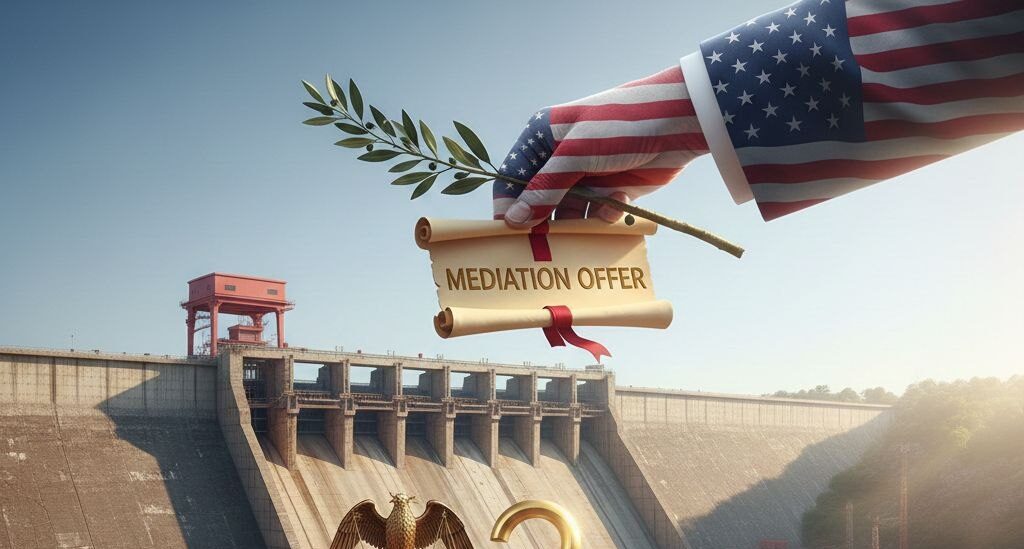
On January 16, 2026, Donald Trump sent a public letter to Egyptian President Abdel Fattah el-Sisi. In it, he offered to restart U.S. mediation on Nile water sharing and the GERD.
The letter praised Egypt’s role in Gaza diplomacy, warned of potential dangers, described Prime Minister Abiy Ahmed as a “strong leader,” and claimed that the United States financed the GERD.
That last claim is incorrect. The GERD was not funded by the U.S., a fact consistently confirmed by Ethiopian officials and independent observers.
Trump also framed the Nile as a “small river” and the GERD as a “big” and potentially dangerous project. The language was rhetorical, not technical but it carried political weight.
Egypt applauded the initiative. Sudan welcomed renewed engagement. Ethiopia, however, issued no immediate response. No acceptance. No rejection. Just silence.
Why Silence May Be Strategic
To some, Ethiopia’s quiet response reflects confidence rather than avoidance.
The GERD is operational. There is no verified evidence that it has harmed downstream water flows. In fact, regulated releases during heavy rainfall have helped Sudan mitigate flooding. International water law supports equitable and reasonable use, not downstream veto power.
Engaging now could elevate a mediator Addis Ababa has reason to distrust. During Trump’s first term, he publicly suggested Egypt might “blow up” the dam, remarks that deeply damaged
Ethiopia’s confidence in U.S. neutrality.
From this perspective, silence denies pressure-driven optics. It avoids reopening a file Ethiopia considers settled on technical grounds.
The Risk of Saying Nothing
Yet silence also carries risks. Egypt’s diplomatic machinery is sophisticated, well-funded, and deeply embedded in Washington and key Arab capitals. Ethiopia, by contrast, faces internal economic pressures, regional frictions, and limited international messaging capacity.
In Trump’s political universe, power is personal and transactional. He values strength, leverage, and deal-making over process. Calling Abiy Ahmed a “strong leader” is not an endorsement, it is an acknowledgment that Ethiopia cannot be ignored.
That acknowledgment opens a door. Ignoring it entirely could allow others to define the narrative.
Two Strategic Paths Forward
Ethiopia now faces a clear strategic choice.
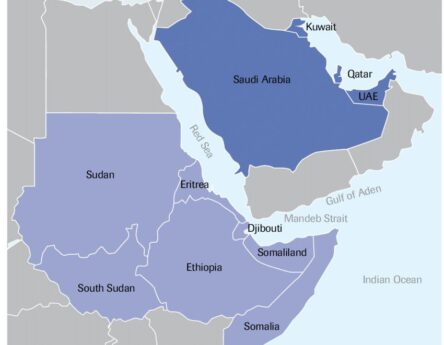
One option is calibrated engagement. Not concession but controlled participation. This could involve using trusted intermediaries Trump listens to, such as Israel or the United Arab Emirates. Ethiopia could insist on broader guarantors like India and Turkey, countries with extensive experience managing transboundary rivers as upstream states.
Framing Ethiopia as a key U.S. security partner in the Horn particularly on counterterrorism and Red Sea stability would shift the discussion from water alone to strategic alignment. The focus would be predictability and confidence-building, not sovereignty trade-offs.
The second option is disciplined restraint. Allow GERD’s continued operation to weaken alarmist narratives. Strengthen African Union–led processes. Build continental leverage and regional interdependence through power exports and data transparency.
Neither path requires escalation. Both require strategic clarity.
More Than a Dam
This debate is no longer only about water.
It is about who defines development in Africa in the 21st century and whether sovereign infrastructure can stand without external approval. It’s about balancing power with diplomacy, without surrendering either. Ethiopia has already built something real. The GERD stands. Power flows. Lives are changing. The question now is how Ethiopia chooses to defend that reality.
Engage Trump strategically, with allies and discipline?
Or stay silent and let facts continue to speak? The answer will shape Ethiopia’s place in a changing global order.
What would you choose?