Egypt may be quietly pushing Washington toward a new relationship with Eritrea, and the implications could extend far beyond Cairo and Asmara.
For decades, the United States isolated Eritrea and viewed President Isaias Afwerki’s government as a destabilizing force. Today, however, Washington appears to be reopening the door to Asmara.
The reason is not simply diplomacy.
Behind this shift is a much larger geopolitical struggle involving Ethiopia’s control of the Nile, its ambitions for Red Sea access, and Egypt’s efforts to contain what it sees as a growing Ethiopian challenge At the centre of this strategy is Eritrea.
Egypt has long regarded Eritrea as a strategically useful country in its competition with Ethiopia.
During Eritrea’s long insurgency against Ethiopia, Cairo saw an opportunity to keep Addis Ababa preoccupied with internal conflict and away from the Nile. Eritrea eventually became independent, leaving Ethiopia landlocked and fundamentally changing the geography of the Horn of Africa.
But the strategic balance has shifted again. Ethiopia has now completed the Grand Ethiopian Renaissance Dam on the Blue Nile, challenging Egypt’s longstanding influence over the river. Addis Ababa has also increasingly asserted that Ethiopia must regain meaningful access to the Red Sea.
For Cairo, these developments have created a new strategic challenge. And Eritrea has once again become central to Egypt’s calculations. Egypt’s failure to stop the construction of the GERD has been a major setback for Cairo. For years, Egypt used diplomatic pressure and international lobbying to oppose the project. But Ethiopia completed the dam and has since indicated plans for additional development along the Blue Nile.
The result is a significant shift in the regional balance.
Ethiopia now has greater control over the waters that originate within its territory, while Egypt has been unable to secure the agreement it wanted from Addis Ababa At the same time, Ethiopia has increasingly linked its economic future to the Red Sea.
For a country of more than 100 million people, continued dependence on foreign ports presents a major strategic and economic vulnerability. Ethiopian leaders have therefore argued that the country has a legitimate interest in securing reliable maritime access.
This has alarmed Egypt Cairo now faces what it sees as two interconnected challenges: Ethiopia’s growing influence over the Nile and its determination to regain a strategic position on the Red Sea That is where Eritrea enters the picture.
Egypt has moved closer to Eritrea as tensions with Ethiopia have increased The alignment became more visible in 2024, when Ethiopia reached an agreement with Somaliland aimed at securing maritime access. Egypt and Eritrea responded by strengthening coordination with Somalia, creating what was widely described as a tripartite alignment against Ethiopia’s maritime ambitions.
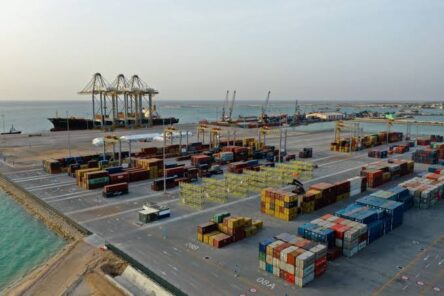
Since then, Cairo and Asmara have maintained increasingly frequent high-level contacts Discussions have also reportedly included cooperation involving Eritrean ports, including Assab The strategic logic is clear.
Eritrea sits directly on the Red Sea and controls a coastline of enormous geopolitical importance. Its location gives Asmara relevance to any regional strategy focused on limiting Ethiopia’s access to the sea.
But Egypt’s strategy appears to go further Cairo is reportedly seeking to encourage a rapprochement between Eritrea and the United States The US-Eritrea relationship has been strained for decades.
Washington has criticized the Eritrean government and imposed sanctions, while Asmara has remained deeply suspicious of American policy.
Yet Eritrea’s geography is becoming increasingly valuable The Red Sea has emerged as a major arena of global competition. Instability in Sudan, threats to maritime shipping, and growing military activity around the region have increased the strategic importance of Eritrea’s coastline.
Washington has also become concerned about the possibility of renewed conflict between Ethiopia and Eritrea. Against this backdrop, Massad Boulos, the senior US diplomat responsible for the Middle East and Horn of Africa, has reportedly engaged with the Eritrean leadership.
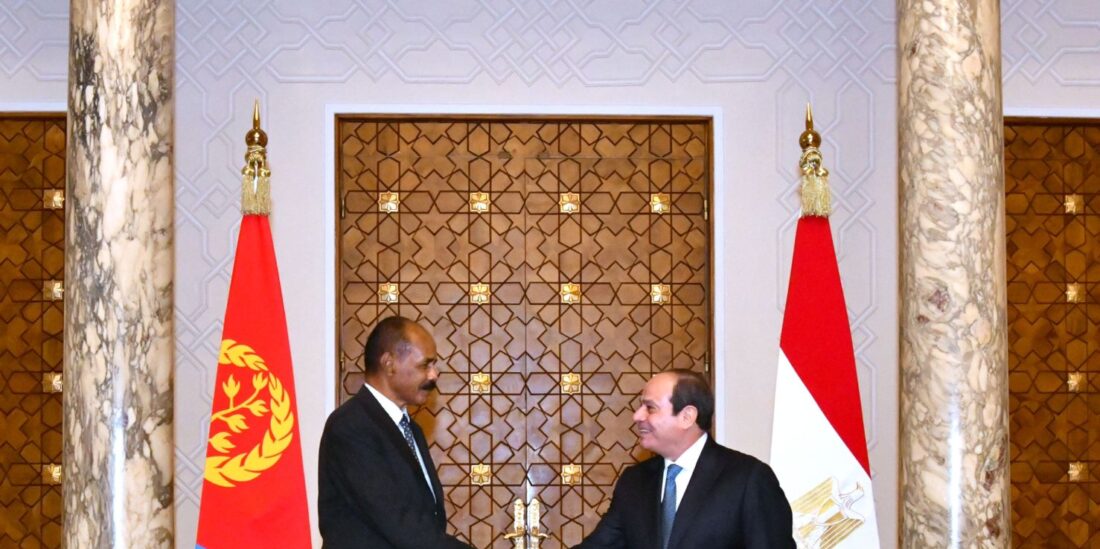
During Isaias Afwerki’s visit to Cairo last year, he reportedly held a secret meeting with Boulos, where the possibility of easing sanctions was discussed as a way to begin rebuilding relations The stated American objective is to prevent another war.
But critics argue that Washington may be viewing the crisis too narrowly The concern is that the region may be moving toward a broader confrontation Eritrea’s strategic position, Egypt’s rivalry with Ethiopia, and Sudan’s ongoing war are increasingly interconnected.
Cairo’s strategy involves building a regional network capable of challenging Ethiopia’s position on both the Nile and the Red Sea Eritrea sits at the centre of that strategy because of its geography, its history with Ethiopia, and its ability to influence regional security dynamics.
For Washington, the challenge is to determine whether engagement with Asmara can genuinely reduce tensions or whether it risks strengthening a regional alignment against Ethiopia.
The stakes are high If US diplomacy becomes too closely aligned with Cairo’s strategic calculations, Washington could lose its ability to act as an independent mediator And if the deeper regional dynamics remain unaddressed, diplomatic engagement may not prevent conflict.
The emerging US-Eritrea rapprochement is therefore about much more than repairing relations between Washington and Asmara It is unfolding within a much larger contest over the Nile, the Red Sea, and Ethiopia’s place in the regional order Egypt sees Eritrea as a valuable strategic partner in confronting Ethiopia.
Washington sees engagement with Eritrea as a possible tool for preventing another war Ethiopia, meanwhile, faces a growing diplomatic challenge as its maritime ambitions become increasingly entangled with regional rivalries The question now is whether Washington can engage Eritrea without becoming an instrument of Cairo’s strategy.