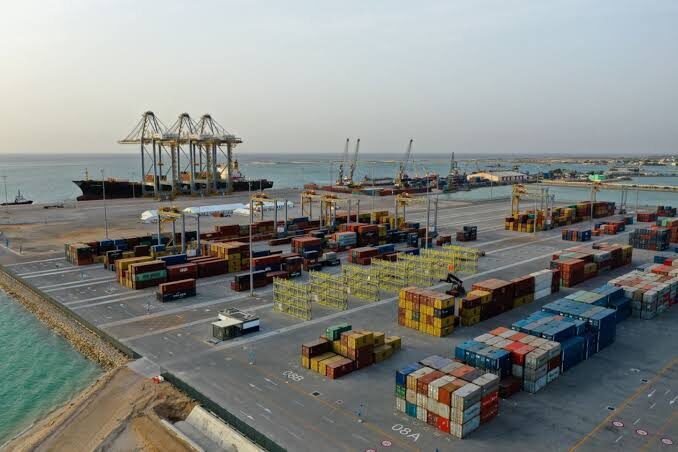
On the windswept Gulf of Aden coast of Somaliland, a once-modest harbor has been transformed into one of the Horn of Africa’s most modern ports. Operated by Dubai-based DP World under a 30-year concession awarded in 2016, Berbera Port now stands as a critical node in regional trade and a focal point of United Arab Emirates influence across Africa and the volatile Red Sea corridor.
DP World has invested approximately $442 million in the facility and the adjacent Berbera Economic Zone (or Special Economic Zone). Container capacity has risen from roughly 150,000 TEUs annually before the upgrades to 500,000 TEUs after Phase 1 completion, with plans to reach 2 million TEUs. The port features a deep draft of up to 17 meters, an extended quay (now over 1,000 meters including a 400-meter berth capable of handling Triple-E class vessels), three ship-to-shore gantry cranes, rubber-tyred gantries, and facilities for general cargo, bulk, breakbulk, and livestock (around 4 million heads per year).
Vessel productivity has increased dramatically; what once took days to unload can now be completed in hours. dpworld.comA new direct shipping service linking Jebel Ali Port in the UAE with Berbera, operating every nine days and calling at Aden and Djibouti, further integrates the facility into DP World’s global network. From Berbera, cargo can move inland via the Berbera Corridor toward Ethiopia, offering landlocked Ethiopia an alternative to the heavily used Djibouti route.
The economic zone, covering hundreds of hectares along the corridor, aims to attract manufacturing, logistics, and processing industries. Local employment has grown substantially, with DP World reporting a high percentage of Somaliland staff. By some projections, the port and zone could support trade equivalent to a significant share of Somaliland’s GDP and contribute meaningfully to Ethiopian economic activity in the coming decade.
Berbera’s location underpins its dual commercial and strategic value. Sitting near the Bab el-Mandeb Strait one of the world’s busiest maritime chokepoints through which a substantial portion of global trade and energy shipments pass the port offers access to East–West shipping lanes while remaining outside the immediate theater of some Red Sea disruptions. This positioning has made it attractive amid Houthi attacks on shipping in the Red Sea and Gulf of Aden.
The UAE’s presence extends beyond commercial operations. In 2017, Somaliland agreed to a long-term arrangement allowing UAE military facilities near the port and the adjacent airport, which features one of Africa’s longest runways (originally a Soviet-era strip also considered for emergency NASA use). These facilities were initially linked to UAE involvement in the Yemen conflict.
Recent reporting, including satellite analysis cited by outlets such as Le Monde, has described expansion activity at the airport area, including potential hardened storage and defensive infrastructure. Analysts and regional sources have noted the site’s potential utility for monitoring maritime traffic and projecting presence toward Yemen’s coast, where Iran-backed Houthi forces operate.
Houthi leaders have publicly warned against any Israeli or allied military presence in Somaliland, framing it as a potential target. Reports have also circulated of interest from Israel (which recognized Somaliland in late 2025, in a move reportedly facilitated by the UAE) and possible U.S. evaluation of basing options, though official confirmations of specific foreign combat deployments remain limited or absent.
This military dimension intersects with broader UAE ambitions in Africa. DP World and other Emirati entities have pursued ports, logistics corridors, renewable energy projects (including solar in Berbera), and commercial ties across the continent. Berbera forms part of a strategy to secure trade routes, diversify influence beyond traditional partners, and create resilient supply chains linking the Gulf to East African markets.
The project has drawn partnership from British International Investment and support for corridor roads from UAE and UK development funds. At the same time, it has generated friction: Somalia’s federal government has contested deals involving the breakaway Somaliland administration, and regional rivalries (including with Saudi Arabia) have sharpened over Horn of Africa policy. al-monitor.comInside the terminal, operations reflect professional global standards: modern equipment, improved turnaround times, and growing vessel calls.
Yet the surrounding geopolitics are impossible to ignore. The same deep-water berths and long runway that enable efficient commerce also provide dual-use potential for logistics support, surveillance of shipping lanes, and rapid response near Yemen.
Whether Berbera becomes a more active platform in efforts to counter Houthi threats to maritime security will depend on evolving diplomatic and military decisions by Somaliland, the UAE, and other interested parties.For now, DP World emphasizes trade facilitation and economic benefits for Somaliland and the wider region. The port’s rise illustrates how infrastructure investment, strategic geography, and great-power competition converge in the Horn of Africa. Berbera is no longer a sleepy outpost; it is a modern gateway whose commercial success and security implications will continue to shape UAE ambitions and regional stability for years to come.