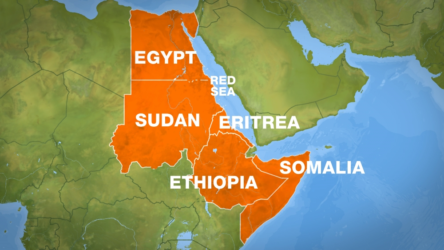
When you look at the Horn of Africa, one fact stands out: Ethiopia is the giant everyone must reckon with. This is a country that has endured nearly every challenge imaginable ..civil war, debt crises, regional rivalries, and the structural disadvantage of being landlocked. Yet despite it all, Ethiopia is not merely surviving. It is actively shaping the future of the region.
A Giant at the Center
Ethiopia’s influence begins with scale. With a population exceeding 120 million, it is larger than all its immediate neighbors combined. Addis Ababa hosts the African Union, making Ethiopia not just a participant in regional affairs but the center of continental diplomacy and decision-making.
This is not symbolic power
it is real leverage. When Ethiopia shifts, the Horn of Africa feels it. Even during its most difficult periods, the country has demonstrated a simple truth: Ethiopia cannot be ignored. That reality becomes especially important when considering what every Ethiopian government views as existential access to the sea.
Economic Firepower Under Pressure
Despite the Tigray conflict, the COVID-19 pandemic, and a $1 billion Eurobond default, Ethiopia’s economy continues to defy expectations. Growth projections remain strong, with double-digit expansion driven by agriculture, manufacturing, and massive infrastructure investment.
At the same time, Ethiopia is reforming its currency, negotiating debt restructuring, and opening selected sectors to private investment while maintaining control over strategic industries. This is not just economic recovery
it is leverage. A growing economy creates unavoidable demand for trade routes, ports, and Red Sea access. Ethiopia is no longer asking politely; it is becoming impossible to deny.
Battling Destabilization from Eritrea
The Tigray war left deep scars, but it also exposed a hard truth: Ethiopia has faced sustained destabilization efforts from Eritrea. The regime of Isaias Afwerki played an active role in pushing the conflict, committing atrocities and fueling instability not to resolve disputes, but to preserve its own authoritarian survival.
Yet Ethiopia did not allow provocation to dictate its future. Addis Ababa balanced diplomacy, international scrutiny, and internal security while protecting its core interests. It absorbed pressure without losing strategic direction. That restraint under extraordinary stress is statecraft at its most difficult.
The Sea Is Not a Dream-It Is a Necessity
Ethiopia’s landlocked status is not sustainable forever. Dependence on Djibouti alone is a strategic vulnerability, not a long-term solution. Access to the Red Sea is essential for trade, security, and national development.
And make no mistake: Ethiopia will secure it. Not through war, but through negotiation, investment, and inevitability.
Its engagement with ports and corridors in Djibouti, Berbera, and Assab is not rhetoric, it is a deliberate strategy. Every corridor Ethiopia develops strengthens its regional indispensability and sends a clear message to neighbors: Ethiopia cannot be sidelined.
Regional Pushback and Its Limits
Regional resistance is real. Egypt worries about Nile waters, Somalia is uneasy about Berbera, and Eritrea continues to push its own agenda. But much of this tension is shaped by external actors..Gulf rivalries, Saudi-UAE competition, Israel-Gulf alignments, and European strategic interests.
The reality is unavoidable: no power can stabilize the Horn of Africa or secure the Red Sea without Ethiopia. Ironically, external competition often strengthens Ethiopia’s hand. As global and regional players maneuver, Ethiopia plays the long game—gaining leverage without firing a shot.
Strategic Patience as Power
Ethiopia’s most potent asset is not its army or even its economy..it is time. Demographics, urbanization, industrial growth, and regional interdependence all favor Ethiopia over the long term. Short-term disruptions, including Eritrean provocations, remain exactly that: temporary.
Strategic patience allows Ethiopia to advance without overreach, absorb shocks without collapse, and pursue its goals methodically. History favors states that can wait.
The Bottom Line
Ethiopia’s story is one of resilience, strategy, and inevitability. War, debt, and regional provocation have not weakened it they have forged it. Ethiopia is the linchpin of the Horn of Africa, and its struggles are not signs of failure, but proof of endurance under pressure.
When it comes to access to the sea, the outcome is not a question of might..it is a question of necessity. Ethiopia will get access Any analysis of the Horn of Africa that ignores Ethiopia is not just incomplete..it is blind Ethiopia’s rise is not a matter of hope. It is a matter of fact. And the Horn of Africa will never be the same again.