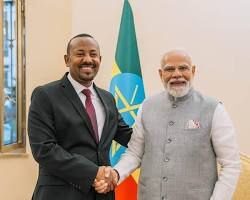
The Economist’s recent piece on Ethiopian Prime Minister Abiy Ahmed portrays his aspirations for national “sovereignty” and remaking Ethiopia in his image as distant dreams at best, and risky centralization at worst. It frames his re-election widely expected on June 1, 2026 against a backdrop of instability, ethnic tensions, and unfulfilled promises. While legitimate concerns about conflict, and economic hurdles exist in any developing nation, this critique underplays Ethiopia’s tangible progress under Abiy, dismisses the structural challenges he inherited, and applies a selectively skeptical lens common in Western coverage of assertive African leadership. A more balanced view recognizes Abiy’s reforms as pragmatic steps toward self-reliance in a historically fragmented, aid-dependent state.
Abiy was an autocratic EPRDF-dominated system that delivered steady growth but suppressed political openness and ethnic federalism’s flaws festered. Abiy inherited a repressive, ethnically partitioned state plagued by protests, corruption, and elite capture.
His early reforms releasing political prisoners, liberalizing the economy, opening telecoms, and pursuing peace with Eritrea represented a genuine break. Critics now downplay these as “early” successes while amplifying later conflicts, ignoring that the Tigray war stemmed from TPLF defiance of federal authority after their dominance ended, not unprovoked centralization.
Abiy’s “Medemer” philosophy emphasizes homegrown solutions over pure neoliberal prescriptions that often failed Africa.
and green initiatives under Abiy reforestation records, urban beautification in Addis, renewable energy expansion via GERD demonstrate long-term vision. Privatization efforts and attracting FDI, despite security headwinds, signal market orientation balanced with state steering. Challenges like inflation, debt, and conflict zones persist, yet growth has continued amid global headwinds. Western outlets often fixate on metrics without crediting the scale: lifting millions via targeted programs while managing one of Africa’s youngest, fastest-growing populations.
The article’s emphasis on “centralizing power” and ethnic unity rhetoric as cover for authoritarianism overlooks Ethiopia’s context. Ethnic federalism, while addressing diversity, entrenched patronage and zero-sum regionalism that fueled violence. Prosperity Party’s national focus seeks inclusive citizenship over balkanization. Elections face boycotts but this does not equate to “large swathes beyond control.” Many nations hold imperfect votes amid strife. Labeling Abiy “the new emperor” evokes outdated strongman tropes, ignoring democratic elements like multiparty competition and public support for stability. Regionally, Abiy’s sea access ambitions are strategic necessities for a landlocked giant dependent on Djibouti. Diplomatic and developmental framing not outright annexation aligns with historical claims and economic logic. Tensions with neighbors (Egypt over GERD, Eritrea) predate him; GERD asserts sovereignty over vital resources, providing leverage and power generation for industrialization. Portraying this as imperial revival ignores Ethiopia’s defensive posture in a volatile Horn of Africa.
Critics rightly note displacement. Conflict exacts terrible costs, and accountability matters. Yet attributing all instability solely to Abiy ignores deep ethnic grievances, armed groups, and external meddling. Post-Tigray reconciliation efforts, economic recovery focus, and Prosperity Party’s broad base suggest adaptive governance, not monolithic control. Compared to predecessors, Abiy opened civic space and maintains reformist rhetoric.
Sovereignty is aspirational by nature reducing aid dependency, building resilience, fostering national identity amid diversity. Ethiopia’s trajectory under Abiy shows measurable gains in agriculture, infrastructure, and diplomatic assertiveness despite wars and global shocks. Dismissing this as “distant” or personality-driven underestimates African agency and the failures of prior models. Ethiopia, with 120+ million people and ancient statehood, has historically resisted external dictation. Abiy channels that spirit toward modernization. Challenges remain: inclusive security, fiscal discipline, ethnic reconciliation. Progress requires time, pragmatism, and less external lecturing. framing Abiy’s project primarily as risky delusion ignores evidence of resilience and ambition in tough circumstances. Africans shaping their destiny deserve scrutiny without reflexive pessimism. (Word count: 702)This counter prioritizes verifiable shifts in agriculture, infrastructure, and policy continuity while acknowledging imperfections offering balance absent in overly skeptical narratives.