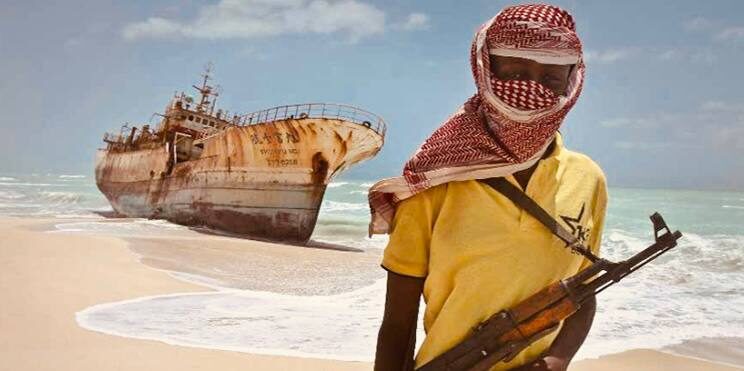
Imagine massive container ships and oil tankers, already forced into a punishing detour around the southern tip of Africa to avoid Houthi missiles in the Red Sea and tensions near the Strait of Hormuz, now sailing straight into another danger zone: the pirate-infested waters off Somalia’s 3,300-kilometer coastline. What was meant as a safer alternative has become a high-stakes gamble. Now, Somali piracy is making a swift, organized, and deeply concerning comeback, turning the western Indian Ocean into a triple threat of regional war, restricted chokepoints, and predatory high-seas hijackings.
The resurgence has been alarmingly rapid. In just the space of a few weeks in April and early May 2026, Somali pirate groups executed multiple successful operations. As of mid-May, three major vessels remain under pirate control: the oil tankers Honour 25 and Eureka, along with the cargo ship Sward. These are not isolated incidents but part of a coordinated wave that has security experts on high alert.
Pirates are capitalizing on a perfect storm. With international naval assets stretched thin by escalations involving the United States, Israel, and Iran, patrols that once kept piracy in check have been redeployed. Traditional deterrents like the European Union’s Operation Atalanta continue their missions, but they lack the capacity to escort every commercial vessel now funneled past Somalia. The result? Pirate groups operate with greater freedom, using sophisticated tactics that echo the peak years around 2011.
Modern Somali piracy is no longer the ragtag operation of small skiffs. Today’s groups are well-funded and strategically savvy. They frequently employ captured traditional dhows as “mother ships,” allowing teams to stay at sea for weeks, extend their operational range far offshore, and launch attacks against tankers that fail to follow best security practices. These operations require serious investment navigation equipment, weaponry, boarding gear and point to coordination
by experienced kingpins, particularly in regions like Puntland. One group even seized a dhow before repurposing it as a floating base.
The economic fallout is immediate and severe. Rerouting around the Cape of Good Hope already adds thousands of nautical miles and up to three weeks of sailing time, driving up fuel costs and freight rates. Now, the piracy threat compounds the pain. Shipping leaders warn of a potential return to 2011-level disruption, which could inflict billions in annual damages through skyrocketing insurance premiums, armed private security hires, and prolonged delays. Supply chains already battered by global tensions face yet another shock, with ripple effects on everything from energy prices to consumer goods.
Root causes run deeper than naval gaps. The suspension of non-security development aid to Somali coastal communities has stripped away vital economic alternatives, potentially pushing more young men toward pirate recruitment. Weakened intelligence networks and governance challenges onshore further enable these networks. For coastal populations with limited opportunities, the lure of multimillion-dollar ransoms remains potent, even as crews endure traumatic captivity.
This crisis carries broader strategic implications for the Horn of Africa and beyond. Landlocked nations like Ethiopia, heavily dependent on regional ports, face heightened risks to their trade lifelines. Global shipping companies must now weigh enhanced Best Management Practices higher speeds, better watchkeeping, and private guards against soaring costs. Some analysts see early signs of organized pirate action groups (PAGs) testing the waters for larger campaigns.
International responses are mobilizing, but coordination remains challenging amid competing global crises. Calls are growing for renewed focus on onshore solutions: sustainable development in coastal Somalia, strengthened local maritime capacity, and diplomatic pressure to restore economic alternatives that reduce incentives for piracy.
The resurgence of Somali piracy is a stark reminder that maritime security is only as strong as its weakest link. As vessels hug the African coast in record numbers,
the world cannot afford to treat this as a distant problem. Without sustained naval presence, onshore investment, and regional cooperation, the predatory return of high-seas hijackings could evolve from a troubling resurgence into a full-blown crisis that paralyzes one of the planet’s most vital shipping corridors. The ships keep sailing but the stakes have never been higher.