

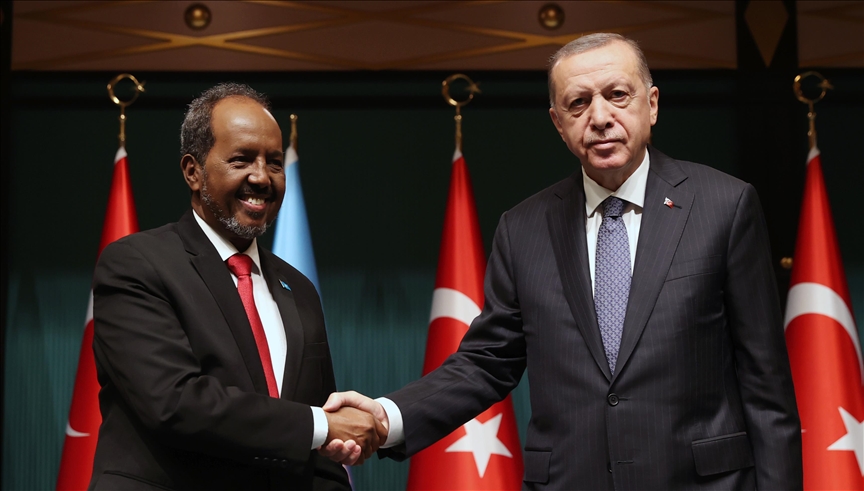
As heavy weapons fire echoes through Mogadishu’s residential districts, a second diplomatic track has quietly opened in the Somali capital. Senior Turkish intelligence officials from the MIT (Milli İstihbarat Teşkilatı) are conducting high-stakes shuttle diplomacy, meeting separately with President Hassan Sheikh Mohamud and opposition leaders. Sources indicate they are preparing a closed-door briefing for opposition figures as a stepping stone toward direct negotiations. This intervention comes as the United States warns of potential state collapse if the political deadlock persists.
The crisis stems from deep electoral disagreements. Opposition groups reject constitutional amendments passed by the federal government that extend President Mohamud’s mandate beyond its original May 15, 2026 expiry. The government views the extension as a necessary stabilization measure; critics call it a unilateral power grab. Against this backdrop, Turkey has also replaced its ambassador to Somalia with Ferhat Alkan, a move seen in Mogadishu as injecting fresh momentum into mediation efforts.
Turkey’s engagement in Somalia is not new. Since President Recep Tayyip Erdoğan’s landmark 2011 visit to Mogadishu, Ankara has positioned itself as one of Somalia’s most reliable partners. The crown jewel is Camp TURKSOM, Turkey’s largest overseas military base, which has trained thousands of Somali soldiers, including elite Gorgor commandos. Recent defense and maritime agreements further deepen ties, with Turkey assisting in naval training, securing Somali waters, and exploring economic opportunities in ports, infrastructure, and resources.
This latest MIT-led mission underscores Ankara’s preference for intelligence-driven leverage over conventional diplomacy in volatile settings. The current effort represents the most active non-Western pathway out of the impasse.
Turkey’s Somalia push invites comparison with its long involvement in Syria, where outcomes have been mixed and often aligned more with Erdoğan’s domestic and ideological interests than pure strategic success. In Syria, Turkey intervened to counter Kurdish autonomy along its border, manage refugee flows, and back Sunni opposition groups. Operations like Euphrates Shield, Olive Branch, and Peace Spring carved out “safe zones” and empowered Turkish-backed proxies such as the Syrian National Army.
Post-Assad (late 2024), Turkey emerged with significant leverage in Damascus through ties to HTS and other rebels. Critics argue it served Erdoğan’s “neo-Ottoman” vision and domestic nationalism, helping consolidate power amid economic challenges and post-coup politics. Tactical border control and proxy influence were achieved, but long-term stabilization remains elusive amid clan-like divisions, proxy rivalries, and governance failures Somalia risks repeating similar patterns. Turkey excels at rapid deployment, drone support, and building local capacities, but struggles with the deeper fractures of fragmented societies.
The diplomatic push unfolds amid intense violence. Reports describe gunfire and explosions in districts like Howlwadaag. Former Prime Minister Hassan Ali Khaire has accused government forces of targeting opposition figures including former President Sheikh Sharif Sheikh Ahmed’s residence using heavy weapons, anti-tank systems, and drones in civilian areas. He alleges deliberate disruption of electricity supplies and diversion of counterterrorism resources away from the fight against al-Shabaab, labeling some actions as potential war crimes.
Turkish mediators are reportedly seeking guarantees to halt such tactics before broader talks. A leaked Turkish intelligence assessment itself warned of Somalia’s “heightened fragility”: resilient al-Shabaab threats, political fragmentation, weak institutions, clan rivalries, and economic pressures. Offensives against militants often stall, with regrouping in rural areas.
Several factors suggest challenges ahead
Local Resistance and Perceptions: Turkish-trained units and equipment have reportedly featured in clashes against opposition, fueling accusations of bias toward the federal government Resource Diversion: Diverting anti-al-Shabaab efforts undermines the core justification for international including Turkish security support Regional Rivalries: The Horn of Africa remains a contested arena. Turkish backing for Mogadishu can clash with Somaliland dynamics or Gulf/Israeli interests.
Erdoğan’s activist foreign policy prioritizes presence, ideological soft power, and economic footholds. In Somalia, this yields influence where Western and Gulf engagement has been inconsistent. Yet without broad Somali buy-in and realistic expectations, Turkey risks entanglement in endless cycles of crisis, much as aspects of the Syrian campaign delivered gains at high ongoing cost.
The clock ticks in days. Two tracks, American red lines and Turkish intelligence-led mediation run in parallel. Whether Ankara succeeds where others falter depends on leaders distinguishing political competition from military targets. A new ambassador backed by MIT officers walks a tightrope. Turkey’s pattern suggests tactical agility but questions linger over long-term outcomes in fractured states. For Somalia, the difference between mediation success and deeper entanglement may prove decisive