

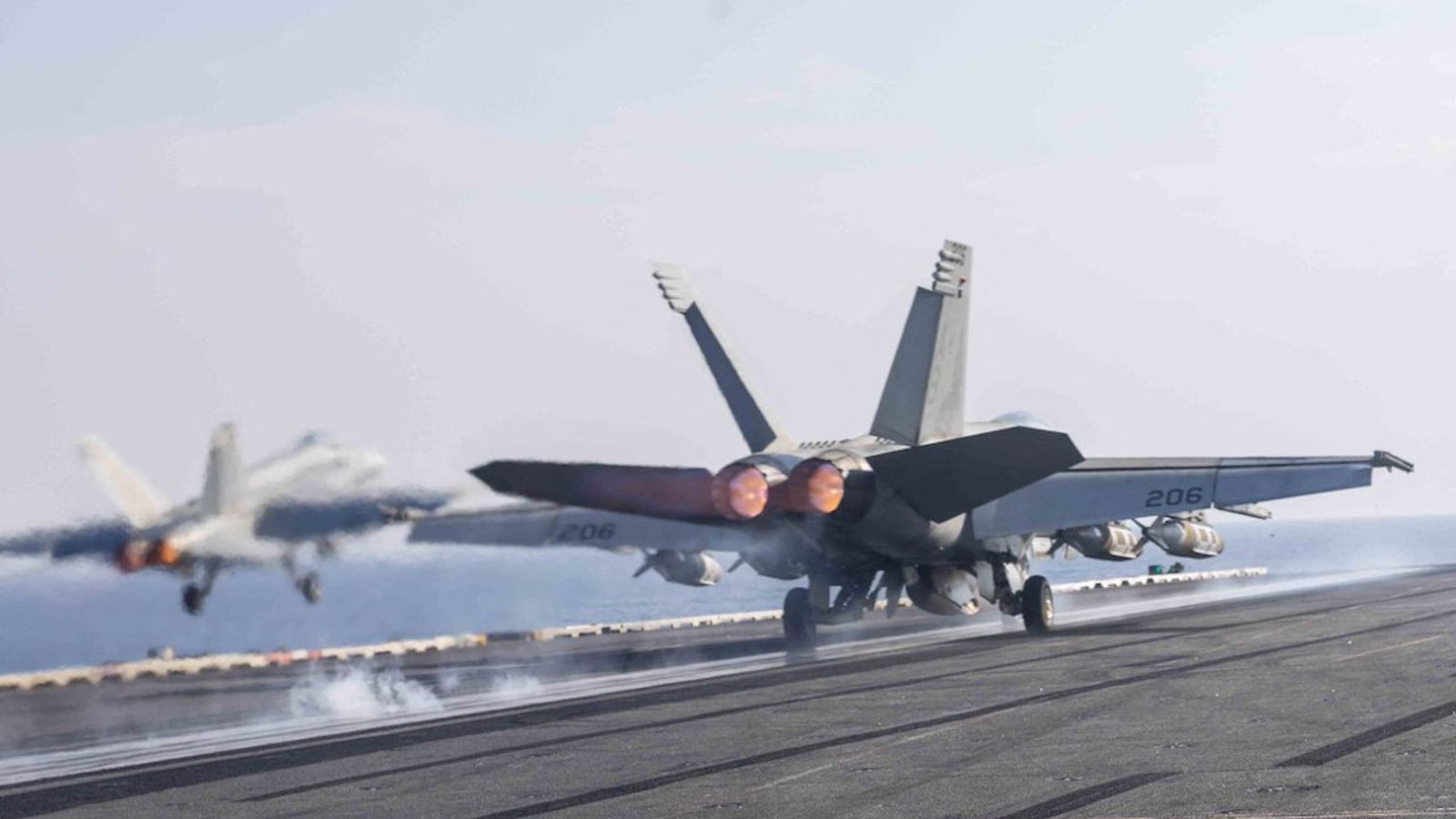
The United States stepped up air strikes in Somalia again this week, continuing a sharp escalation that has defined 2025. On December 14 and December 15, U.S. Africa Command announced two separate airstrikes near Kismayo. The statements U.S. Africa Command were short location, date, and the usual justification about degrading threats to U.S. interests.
But those two strikes are really just the latest beats in a much bigger pattern. By multiple counts, the United States has crossed the 100-strike mark in Somalia in 2025, making it one of Washington’s most intense air campaigns anywhere this year.
This is where the Somalia story starts to feel familiar: the escalation is happening while America’s internal politics keeps pulling Somalia into the domestic arena through immigration moves, diaspora scrutiny, and the way President Donald Trump talks about Somali communities.
A new travel ban signed by Trump included Somalia among countries facing a full restriction on entry into the United States. And just days ago, the U.S. Treasury Department announced it is intensifying investigations into alleged fraud targeting Minnesota’s Somali community, in an atmosphere where the administration’s rhetoric has also fueled public backlash and fear among Somali-Americans.
So the same year the U.S. reaches record levels of strikes in Somalia is also a year where Somali identity Somalia as a place, and Somalis as a people, keeps showing up in U.S. political messaging in a negative way.
Now, why the surge?
Part of the answer is battlefield momentum. In 2025, al-Shabaab has shown renewed ability to pressure Somali forces and threaten key routes around the capital, reversing gains and exposing how uneven Somalia’s security progress still is.
Part of the answer is also policy. Reporting this year describes the Trump administration loosening constraints on strikes compared with the prior administration—giving commanders wider latitude and accelerating the tempo of operations.
And part of the answer is simply what Somalia represents strategically. Somalia sits beside one of the world’s most sensitive maritime corridors linking the Indian Ocean to the Gulf of Aden and the Red Sea. When the Red Sea heats up, Somalia stops being “just” a counterterrorism file.
It becomes a geography file: shipping risk, coastal security, piracy, and outside powers competing for access and influence.
You can see that in the piracy data. The ICC’s International Maritime Bureau warns that Somali pirate capability has not disappeared, citing hijackings off Somalia in the first half of 2025 and cautioning against complacency in the Gulf of Aden-Red Sea corridor.
You can also see it in how Somalia has become crowded with external actors partners with overlapping interests, and sometimes competing ones.
Turkey has built one of the deepest state-to-state footprints in Somalia. It runs Camp TURKSOM in Mogadishu, described widely as Turkey’s largest overseas military base.
The UAE, meanwhile, has developed a different kind of influence map working not only with Somalia’s federal government but also with regional authorities. It has ties to port development through DP World, and it has supported forces like Puntland’s maritime police, a structure that is as much about coastlines and trade routes as it is about insurgents.
From Washington’s point of view, these relationships are not a side show. They are part of the operating environment. The Washington Institute has argued the U.S. should work more deliberately with Turkey and the UAE in Somalia because their training and support roles have become central to the security balance especially as al-Shabaab regains ground.
But here is where Somalia’s internal politics and the “always complicated” part reassert itself.
Somalia is not a single, unified governance space. It is a federal system with competing authorities, disputed territories, and parallel security chains. That means foreign partnerships often land unevenly: some go through Mogadishu, others through regional capitals, and some through de facto authorities that the federal government disputes.That is exactly why a story about air strikes quickly becomes a story about ports and recognition.
Earlier this year, Reuters reported that Somalia’s president offered the United States exclusive control over key air bases and ports an attempt to lock in U.S. strategic presence in the Horn.
But the offer included Berbera, in Somaliland, which Mogadishu does not control immediately raising the sovereignty dispute and exposing how geopolitics can collide with Somalia’s internal fragmentation. The Council on Foreign Relations captured this dynamic plainly: U.S. policymakers can’t treat Somaliland as a clean “solution” to Somalia’s problems, because Somalia’s weakness is precisely what attracts external influence and creates openings for opportunists, extremists, and rival powers.
In other words: Somalia’s value is not only in what it is. It’s also in what it borders, what it overlooks, and what it can host, airfields, ports, and access along a corridor that global powers increasingly treat as strategic infrastructure.
So the strikes aren’t just “counterterrorism.” They are also over navigation routes, regional alignments, and over who gets to shape security along the Horn’s coastline. Somalia’s location has always attracted power. What is changing is how many global and regional rivalries now overlap in the same waters counterterrorism, piracy, Red Sea insecurity, and competition for ports and influence.
The air war may suppress threats, but the underlying political problem remains harder, slower, and still unanswered.