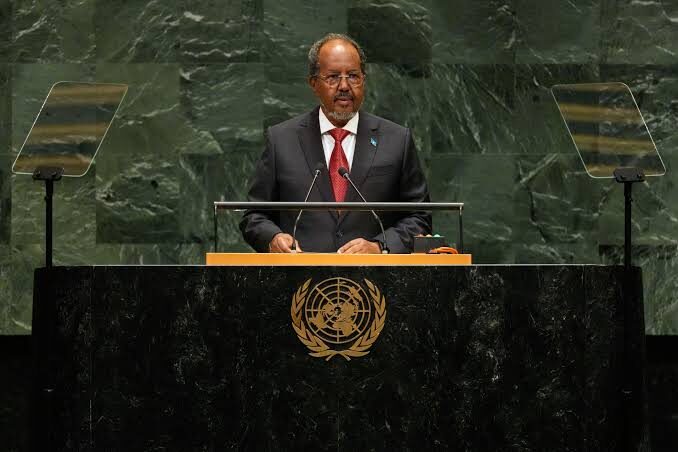
Somalia’s political future hangs in the balance as the United Nations concludes its mission after more than three decades, leaving behind unresolved disputes over electoral legitimacy and presidential tenure that threaten to deepen the country’s fragile stability.
The departure of the UN Transitional Assistance Mission in Somalia marks a significant transition in international engagement yet raises urgent questions about who will mediate the growing political impasse between the government and opposition forces.
The United Nations’ political mission in Somalia is set to close on Saturday after more than three decades of operation, with no agreed mechanism to mediate disputes between the government and opposition over a contested election process and the president’s tenure, the Associated Press reported The closure comes amid an unresolved dispute over President Hassan Sheikh Mohamud’s tenure, continued fighting against Al-Shabaab militants and worsening humanitarian needs driven by drought and declining aid funding.
Somalia’s government requested the mission’s closure in 2024, describing it as a milestone in the country’s ability to manage its own affairs The UN Security Council subsequently approved a two-year transition of the mission’s responsibilities to Somali institutions and other UN bodies.
The departing UN Transitional Assistance Mission in Somalia has advised political leaders and helped mediate disputes African Union troops will continue supporting Somali forces against militants, while UN humanitarian agencies and a separate UN support office will remain operational However, the mission’s departure leaves a critical gap in political mediation at a time when Somalia faces its most significant governance dispute in years.
Without an established international mechanism to facilitate dialogue, the burden falls on Somali institutions to resolve differences that have already proven deeply divisive Disagreements persist over the legitimacy of the current government’s mandate Parliament approved constitutional amendments extending presidential and parliamentary terms from four to five years, allowing Mohamud and lawmakers to remain in office until 2027, according to the government.
Opposition leaders reject applying the changes to incumbent officeholders, arguing that their mandates have expired The dispute strikes at the heart of Somalia’s constitutional order and raises fundamental questions about the rule of law and democratic accountability The opposition Somali Future Council requested an international mediation mechanism following the mission’s departure in a September letter seen by AP This request underscores the opposition’s concern that without external facilitation, the government may pursue political outcomes without meaningful consultation.
Mohamud has invited political leaders to election talks scheduled for 14–18 November, although major opposition groups have yet to confirm their participation The talks represent a critical opportunity to resolve the impasse, but their success depends on whether all parties can agree on the fundamental question of electoral legitimacy.
The timing of the talks coincides with the UN mission’s departure, creating a challenging environment in which Somali leaders must navigate complex political negotiations without the established mediation support that has characterized international engagement over the past three decades.
The mission’s closure represents a significant moment in Somalia’s post-conflict trajectory The government’s request for the mission’s departure reflects a desire to exercise greater sovereignty over its political processes and security arrangements Yet sovereignty brings responsibilities.
The unresolved election dispute, constitutional tensions and ongoing security challenges will test whether Somali institutions can manage differences peacefully and maintain stability without the international mediation framework that has supported the country for decades.
The closure of the UN political mission in Somalia marks the end of an era in international engagement with the country It also marks the beginning of a new phase in which Somali institutions must demonstrate their capacity to resolve political disputes, maintain security and address humanitarian needs without the comprehensive international support framework that has defined the past three decades.
For Somalia, the opportunity is to establish a political process that reflects the country’s sovereignty while maintaining the stability necessary for development and security The coming weeks will reveal whether Somalia can rise to this challenge The election talks scheduled for November represent a critical moment Their outcome will determine whether the country moves toward greater stability or deeper political crisis.