

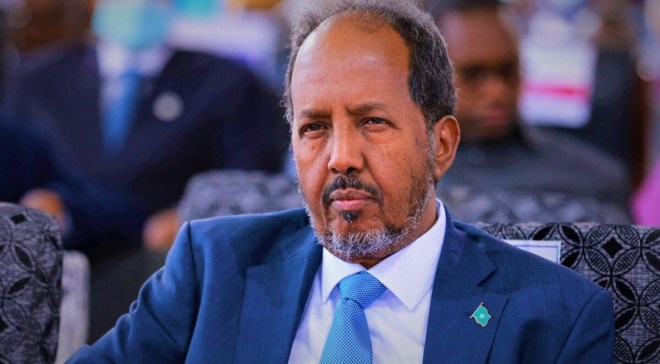
In the bustling halls of the UN General Assembly, Somalia’s President Hassan Sheikh Mohamud took center stage with a message of resilience and sovereignty. Days later, in a BBC interview on September 29, 2025, he doubled down addressing Al-Shabab’s insurgency, Somaliland’s secessionist push, and Somalia’s place in the Horn of Africa. His message was clear: unity is sacrosanct, security is paramount, and cooperation is the only path forward.
Confronting Al-Shabab’s Persistent Threat
“Somalia has a serious security challenge,” Mohamud admitted in his BBC interview. The Al-Qaeda-linked Al-Shabab insurgency continues to destabilize the nation despite recent territorial gains by Somali forces.
Mohamud emphasized that while military progress has been made, the group remains resilient. Citing the March 2025 assassination attempt against him, he reminded the world that Al-Shabab views the presidency itself as a target.
But his approach goes beyond bullets and battlefields. Mohamud framed Al-Shabab as a parasite feeding on clan rivalries and poverty. His government’s strategy blends security operations with addressing root causes poverty, social fragmentation, and governance gaps. By stressing Somali-led solutions with international backing, he projected both determination and pragmatism.
Somaliland and the Question of Unity
Somaliland’s bid for independence remains one of Somalia’s most sensitive political questions. The self-declared republic has functioned autonomously since 1991, but Mohamud was firm: “The country’s unity is sacrosanct.”
He rejected separatism outright, calling it a red line while still leaving space for dialogue. This stance, repeated in his September 29 parliamentary address, reflects his balancing act between asserting sovereignty and avoiding further fragmentation.
With conflicts like Las Anod threatening to inflame clan rivalries, Mohamud warned that secession risks not just Somalia’s stability, but the wider Horn of Africa where insurgents and foreign actors often exploit divisions.
Resetting Relations with Ethiopia
Mohamud’s comments on Ethiopia marked a subtle but important diplomatic shift. While past years have seen tension particularly over Ethiopia’s ties to Somaliland he struck a conciliatory tone.
“We give our support to working together in both countries’ interests,” he said, signaling that Somalia seeks cooperation rather than confrontation.
This comes as Ethiopia faces its own regional disputes, including with Egypt over the Grand Ethiopian Renaissance Dam (GERD). By presenting Somalia as a willing partner in regional integration, Mohamud positioned his country not as a spoiler, but as a stabilizing actor in the Horn of Africa.
Governance Reforms: Somalia’s Next Big Test
On the domestic front, Mohamud outlined ambitious reforms chief among them a move toward “one-person, one-vote” elections by 2026. This would be a dramatic shift from Somalia’s clan-based indirect voting system.
He tied this to broader reforms: constitutional amendments, economic revitalization after debt relief, and building climate resilience against drought. Invoking a Somali proverb, he stressed dialogue and reconciliation as the foundation for stability.
But these reforms are fraught with risk. Clan rivalries, entrenched elites, and opposition groups on social media have already accused Mohamud of centralizing power. Success will depend on whether he can translate vision into trust and action.
Somalia’s Regional and Global Role
Beyond domestic politics, Mohamud cast Somalia as a nation reclaiming its agency. Rejecting external meddling, he declared: “The era when the world used to decide for us has passed.”
This statement resonates in a region plagued by proxy rivalries from the Gulf to the Nile Basin. By aligning Somalia with the African Union and multilateral cooperation, Mohamud is trying to reposition his country as a partner, not a pawn.
The stakes extend far beyond Mogadishu. Somalia’s trajectory affects counterterrorism, migration, and Red Sea maritime security. Whether the world responds with paternalism or genuine partnership will be decisive.
Conclusion: Somalia at a Crossroads
President Hassan Sheikh Mohamud’s UN address and BBC interview reveal a leader determined to chart a new course. He confronted Al-Shabab with candor, rejected Somaliland’s secession, extended an olive branch to Ethiopia, and laid out reforms aimed at reshaping Somalia’s political system.
The vision is bold: a united, secure, and cooperative Somalia leading its own recovery. But the path ahead is fraught with internal fractures and regional complexities.
For Mogadishu, the challenge is clear: turn defiance into durable progress. For the region and the world, the question is whether they will support Somalia’s vision or leave it to face its battles alone.