In a bold but precarious realignment, Somalia has swapped security guarantors abruptly ending its partnership with the United Arab Emirates and formalizing a new defense cooperation pact with Qatar.
This move is being sold as a sovereign reset. In reality, it is a high-stakes gamble that risks replacing one form of external dependency with another, while deepening regional fractures across the Horn of Africa.
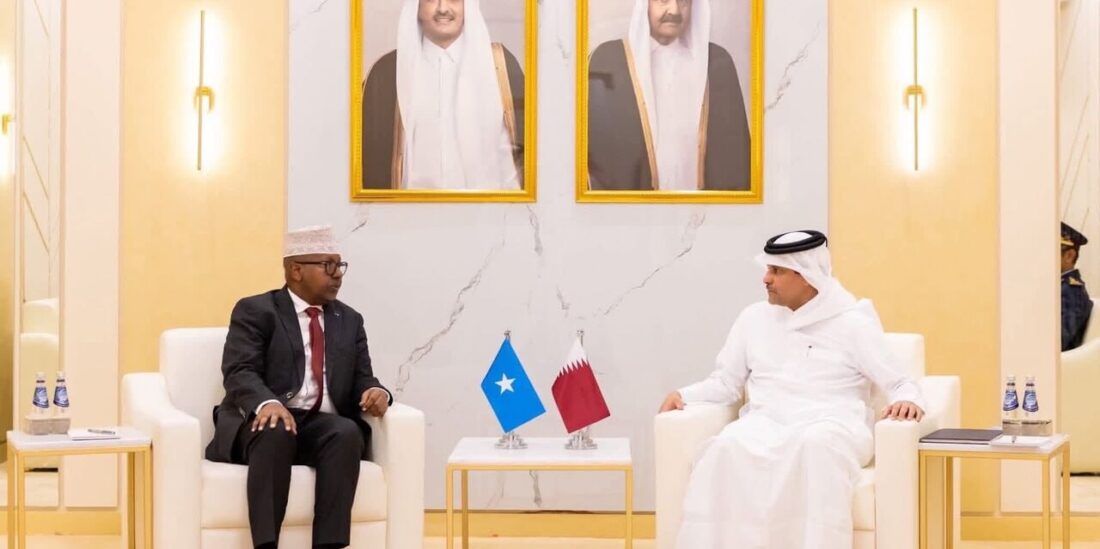
On January 19, 2026, Somalia and Qatar signed a defense agreement focused on military training and capability building. The deal came just one week after Mogadishu terminated all security and economic agreements with the UAE. The speed of this pivot matters. It signals urgency, not strategic patience and it embeds Somalia more deeply into Middle Eastern rivalries that have already destabilized the Horn.
Sovereignty or substitution?
Somalia’s decision did not come out of nowhere. Mogadishu has long been angered by Abu Dhabi’s engagement with Somaliland, including security cooperation and port investments that bypass the federal government. Those grievances are real.
But the manner of Somalia’s response reveals a deeper problem.
Rather than reducing external influence, the government has centralized it. The UAE’s leverage was diffuse channeled through federal member states like Puntland and Somaliland. Qatar’s influence, by contrast, is concentrated directly in Mogadishu. This is not an exit from dependency. It is a substitution.
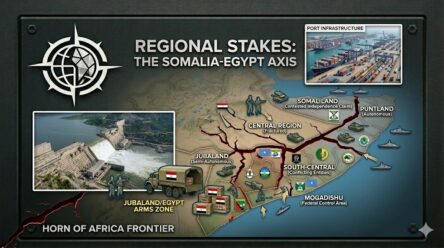
The promised military support from Doha may provide short-term advantages in the fight against Al-Shabaab. Yet it also binds Somalia’s security architecture to the strategic objectives of the Turkey,Qatar axis. That alignment risks turning Somalia into a platform for proxy competition whether aimed at countering the UAE, facilitating Egypt’s regional posture, or constraining Saudi influence.
In such an environment, Somalia’s internal priorities, national reconciliation, federal balance, and institution-building risk being subordinated to external agendas that do not share Somalia’s long-term interests.
Ethiopia’s response to the pact has been measured, publicly reaffirming Somalia’s sovereignty and calling for stability. But beneath the diplomacy lies a serious complication.
Ethiopia’s pursuit of sea access is not a luxury, it is an existential economic imperative for a landlocked nation of over 120 million people. Addis Ababa has sought this access through dialogue and pragmatic arrangements, including its controversial Memorandum of Understanding with Somaliland.
The Somalia,Qatar pact, however, reframes that issue entirely.
By aligning Somalia more closely with Egypt, a country locked in a bitter dispute with Ethiopia over the Nile, the agreement risks transforming a bilateral Ethiopia–Somalia dialogue into a multilateral confrontation. Ethiopia’s search for economic security is recast by Mogadishu’s new partners as aggression backed by a rival Gulf bloc.
This dynamic is dangerous. It militarizes diplomatic disagreements and raises the risk that external actors could supply Mogadishu with capabilities not only to combat Al-Shabaab, but to alter the balance with Somaliland. Such a shift would directly threaten Ethiopia’s economic interests and force Addis Ababa into difficult strategic calculations.
Crucially, it also jeopardizes existing security cooperation between Ethiopia and Somalia under African Union frameworks cooperation that remains vital in containing Al-Shabaab.
Supporters of the pact argue that regional alliances remain flexible. The evidence suggests otherwise.
This agreement is not a lubricant; it is a cementing agent. Somalia is now firmly slotted into the Doha Ankara Cairo camp. The predictable response will be counter-alignment: the UAE doubling down on ties with Ethiopia and Somaliland.
Saudi Arabia’s ability to mediate is weakened when its own partners, Qatar and Egypt are arming one side of an emerging regional cold war. What follows is not balance, but polarization.
The tragedy is that the core interests of Horn states are local: defeating Al-Shabaab, expanding trade, securing ports, and stabilizing borders. Yet this pact increases the likelihood that those interests will be hijacked by external agendas.
Gulf rivalries thrive on managed tension. Stability reduces leverage. This creates a perverse incentive for external patrons to sustain friction that justifies their military and financial involvement undermining the very peace they claim to support.
From diplomacy to deterrence
The Somalia,Qatar pact makes dialogue harder, not easier. It emboldens hardliners in Mogadishu who may now believe military pressure against Somaliland is viable. At the same time, it signals to Addis Ababa that its Red Sea ambitions are under coordinated external threat.
Diplomatic tracks Ethiopia-Somalia talks, IGAD forums, AU mechanisms now operate under the shadow of a shifting, externally backed military balance. That shadow changes calculations.
True stability would require external partners to underwrite de-escalation. This agreement does the opposite. It supplies tools of coercion before the tools of reconciliation have been fully exhausted.
The most likely outcome is not open war, but something more corrosive: a prolonged, expensive,
and volatile cold war within Somalia and across the Red Sea. Arms will flow. Proxy relationships will harden. Territorial fractures will deepen. And Al-Shabaab will exploit the distraction.
A strategic miscalculation
Somalia’s defense pact with Qatar is a masterclass in short-term diplomatic maneuvering but a potentially catastrophic long-term strategic miscalculation.
It replaces the diffuse influence of the UAE with the concentrated, agenda-driven patronage of a rival bloc. In doing so, Mogadishu mortgages elements of its foreign policy autonomy and deepens its exposure to external rivalries.
Rather than asserting true sovereignty, Somalia has embedded itself more deeply in a geopolitical contest that prioritizes fragmenting the Horn into spheres of influence over fostering regional integration.
The pact has not resolved Somalia’s foundational challenges. It has made the environment for addressing them more dangerous and far more complex.