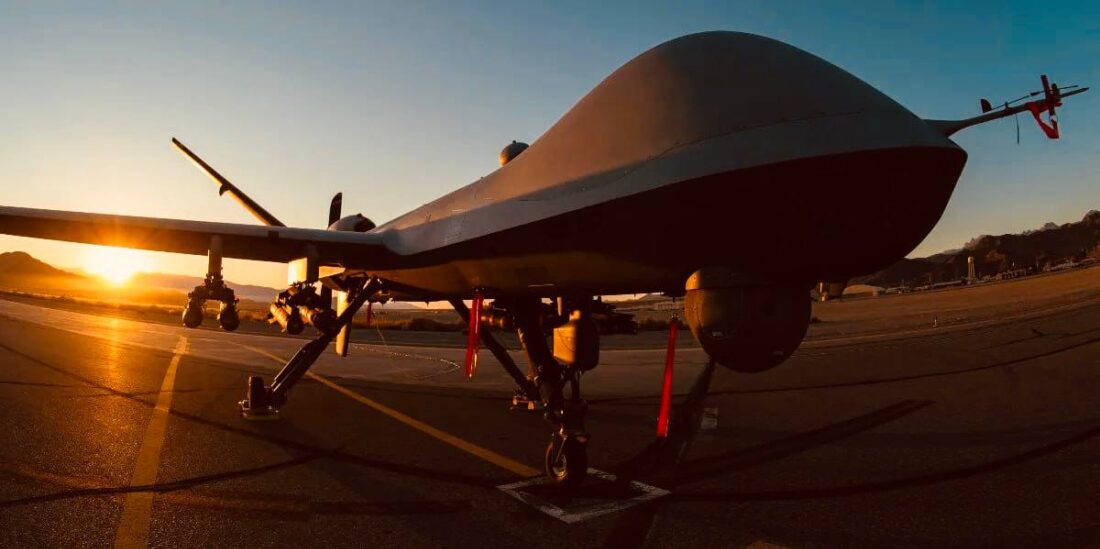
The United Arab Emirates has carried out its first reported drone strike against Al-Shabaab in northern Somalia in nearly a year The attack signals Abu Dhabi’s deepening security role in Puntland and its willingness to act independently of Mogadishu as relations with Somalia’s federal government continue to deteriorate.
The UAE’s drone operations from Bosaso airport are not simply counterterrorism They reflect a broader pattern in which external powers pursue security objectives through regional administrations rather than the central state For Somalia, this compounds an already fragile political landscape: federal-regional tensions over elections, uncertainty over international funding, and a persistent insurgency that exploits ungoverned spaces.
The question is whether external military engagement strengthens Somalia’s security, or further fragments its sovereignty The strike targeted Al-Shabaab militants at the Galgala mountain pass in Puntland’s Al-Madow range, where the group has maintained a presence for years According to local officials, UAE drones conducted reconnaissance before targeting four militants allegedly planting roadside bombs, wounding two.
Local paramilitary forces then moved in and killed the wounded militants The operation was launched from Bosaso airport, where the UAE maintains a military base It was the first reported Emirati strike since November 2025, and it comes after an explosive device planted by Al-Shabaab targeted Puntland forces.
Puntland is expected to announce a new offensive against the group in the coming days The UAE is among several foreign countries involved in combating Al-Shabaab But its role in Somalia extends beyond counterterrorism. Abu Dhabi has cultivated relationships with regional administrations, particularly in Somaliland and Puntland, often bypassing Mogadishu.
This approach has strained relations with Somalia’s federal government, which views such engagements as interference in its internal affairs The drone strike, conducted without public coordination with Mogadishu, illustrates the gap between Abu Dhabi’s security priorities and the federal government’s authority For the UAE, regional partners offer operational flexibility. For Somalia, they raise questions about sovereignty and the coherence of national security strategy.
The strike precedes an expected Puntland offensive against Al-Shabaab, suggesting that the UAE’s operations are integrated with local military planning Puntland has long maintained its own security forces and has pursued a relatively autonomous approach to counterinsurgency.
But this autonomy is embedded in wider political tensions Some regional administrations have rejected the federal government’s plans for national elections scheduled for 2027 Mogadishu has not commented on the reported attack. The silence reflects a broader uncertainty: who speaks for Somalia’s security, and under what terms external partners engage.
Al-Shabaab has battled Somali and international forces for nearly two decades While its presence in Puntland is smaller than in south-central Somalia, the group has operated from the Al-Madow mountains for years, exploiting rugged terrain and limited state reach Drone strikes can disrupt militant operations and provide tactical advantage But they cannot substitute for governance, intelligence, and local legitimacy.
The killing of four militants two wounded by the strike, two killed by ground forcesis a limited operation Its strategic impact depends on whether it is part of a sustained campaign or an isolated intervention. Air power may degrade capability, but it rarely addresses the conditions that sustain insurgency.
The UAE’s drone strike in Puntland is a small operation with larger implications.
It demonstrates Abu Dhabi’s willingness to act through regional partners, bypassing a federal government whose authority is contested.
It also highlights the fragmentation of Somalia’s security landscape, where external powers, regional administrations, and militant groups interact in ways that complicate national cohesion.
Effective counterinsurgency requires coordination, legitimacy, and a political strategy that addresses the grievances and governance gaps Al-Shabaab exploits.
Drone strikes may disrupt militants. But without a coherent framework that aligns external partners, federal authorities, and regional administrations, each operation risks deepening the divisions that sustain conflict.