Just ten days after fighting flared up in northern Ethiopia, forces loyal to the Tigray People’s Liberation Front (TPLF) evacuated Mekelle. Within days, federal forces and their allies advanced across much of the region, occupying major urban centers with strikingly little conventional resistance While TPLF leadership framed the rapid withdrawal as a strategic decision to transition toward mobile warfare, federal authorities declared it a decisive military defeat.
Beyond the official press releases, however, analysts and former insider figures point to a far more profound reality: an acute internal political collapse, severe war fatigue among the population, and a shifting regional alliance matrix that threatens to spill across international borders Fractured Leadership and Loss of Popular Support The primary engine behind the TPLF’s rapid retreat lies not only on the battlefield, but within the party’s own organizational structure.
Since the passing of former Prime Minister Meles Zenawi, and escalating significantly following the 2022 Pretoria Peace Agreement, the party has experienced severe factional splits Former TPLF senior official and political scholar Bisrat Amare notes that the party broke into rival camps most notably dividing behind figures like Getachew Reda and spawning secondary factions like Wledo. What remained under the core leadership of Dr. Debretsion Gebremichael and Fetlework Gebre-Egziabher became an increasingly isolated apparatus, largely disconnected from the grassroots populace. Having lost its administrative coherence, the organization could no longer maintain effective command over its cadres or field a unified defense of urban centers.
The Operational Limits of Mobile Warfare TPLF commanders claimed to have shifted their strategy to “mobile warfare” a doctrine operating between traditional guerrilla tactics and coordinated multi-front military engagements. However, executing successful mobile or insurgent warfare requires two foundational elements that the party currently lacks: popular legitimacy and sustainable recruitment.
First, decades of conflict and humanitarian crisis have left the civilian population deeply exhausted. Voluntary enlistment among local youth has hit historic lows, prompting the leadership to rely on compulsory mobilization decrees that further strain relations with the public. Second, guerrilla operations cannot survive in a vacuum without popular support to provide intelligence, food, and cover. Without a willing demographic base or unified command, any transition to insurgent warfare faces severe operational constraints.
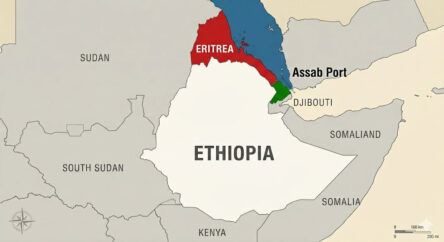
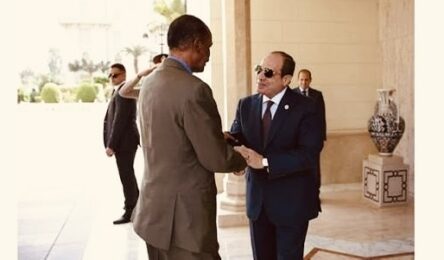
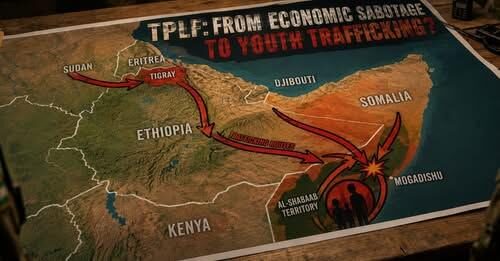
Proxy Alliances and Regional Geopolitic The crisis in northern Ethiopia is no longer a purely domestic affair. Analysts such as Dr. Getiem note that broader anti-federal coalitions, including multi-group alliances formed under the pretext of survival, function primarily as tactical arrangements rather than ideologically cohesive fronts With external actors including Eritrea, Sudan, and Egypt watching or influencing developments along the borders, federal military deployments are increasingly oriented toward preventing wider regional instability rather than conducting localized counter-insurgency operations alone.
The risk remains high that remnant insurgent elements could be drawn into broader geopolitical maneuvers across the Horn of Africa Alternate Futures: Reconstruction or Dissolution? Military analysts project two distinct potential paths forward for the remaining TPLF apparatus Exogenous Flight and Exile: High-level leadership cadres may seek asylum or cross-border refuge in neighboring territories.
In this scenario, remnant figures risk becoming diplomatic leverage for external powers in regional negotiations, while losing direct operational control on the ground Internal Reconfiguration and Settlement: Rival factions such as those aligned with Debretsion or General Tsadkan could seek to reconcile their internal divides through traditional mediation by elders and enter negotiations with federal authorities.
This pathway offers conditional political survival, though it would require complete military demobilization and institutional restructuring The swift abandonment of Mekelle and surrounding districts marks a structural turning point in Ethiopian politics. Driven by party fragmentation, a fatigued civilian base, and an evolving regional security environment, the TPLF’s legacy as a central military power in the Horn of Africa faces an unprecedented crisis—one from which classical guerrilla tactics may no longer offer an escape.