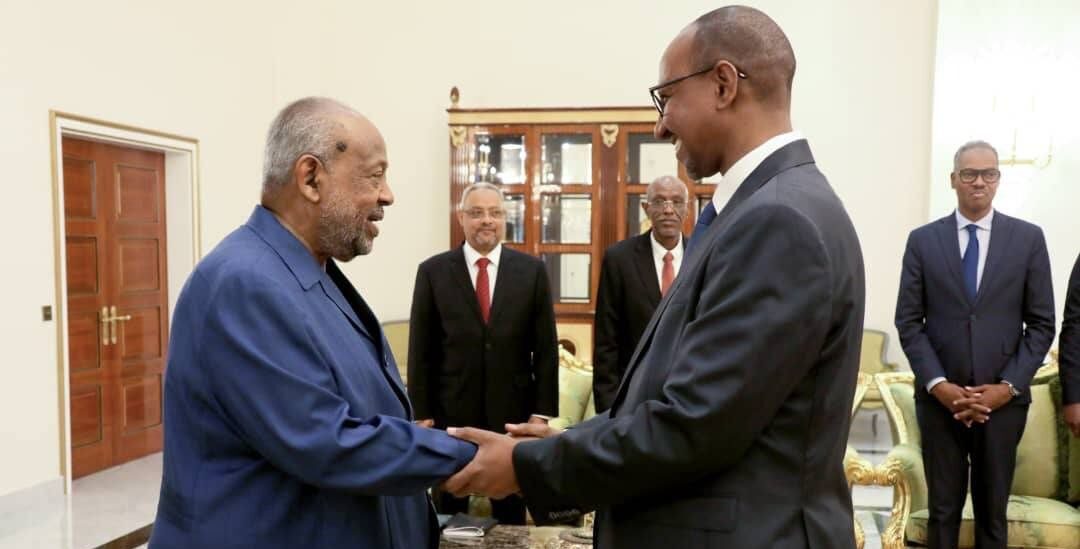
Ethiopia’s delegation to Djibouti is less ceremonial than strategic: it arrives at a moment when port licences, arbitration rulings, and corridor politics are converting containers into leverage, and when Addis must decide whether to accept transactional dependence or translate friction into durable interdependence.
Ethiopia’s official delegation visited Djibouti this week amid an acute operational dispute over access for Ethiopian-licensed multimodal transport operators to Djibouti’s terminals, set against the backdrop of long-running legal fights over the Doraleh container terminal. The visit is both a tactical negotiation and a political signal. Ethiopia seeks predictable port access while diversifying maritime options, while Djibouti seeks to protect the revenue and sovereign control that underpin its strategic posture.
WHAT THE VISIT DID ASSERTION, RENEGOTIATION, REASSURANCE
The Ethiopian delegation’s agenda focused on steadying bilateral logistics ties and securing operational guarantees for Ethiopian operators. Public messaging emphasized continued trade cooperation and joint infrastructure projects, aimed at calming markets and operators already affected by Djibouti’s temporary suspension of certain Ethiopian-licensed MTOs. The timing was consequential, as the operational disruptions forced Addis to accelerate contingency planning and assert its commercial interests while keeping the corridor functional.
WHY THIS IS MORE THAN A TRADE ROW
Two structural dynamics amplify the stakes. First, the Doraleh and DP World legal saga has left residual mistrust over foreign operators and state control of terminals. International arbitral awards and U.S. and UK court rulings have complicated investor relations and policy choices in Djibouti. This legal uncertainty makes port policy politically combustible, with technical regulatory acts often interpreted as sovereign reassertions, giving Djibouti leverage in negotiations.
Second, Ethiopia remains highly concentrated on the Addis,Djibouti corridor for port throughput. While Addis has pursued alternatives, including commercial engagement with DP World over Berbera, corridor projects with Somaliland, and the AfDB-backed Addis-Djibouti,South Sudan expressway, those options remain incomplete and insufficient to absorb a sustained shock. The AfDB grant for corridor upgrades underscores both countries’ interest in preserving the trade artery while hedging against risk.
GEOPOLITICAL LAYERS GREAT POWERS, RENT, AND REGIONAL ALIGNMENTS
Djibouti is more than a neighbor; it is a marketplace of strategic rents. The state monetizes its geography by hosting foreign military bases and positioning port assets as sovereign levers, with U.S., Chinese, French, Japanese, and other facilities tightening Djibouti’s bargaining power and raising the political premium of controlling terminals and logistics revenues. For Djibouti, maintaining tight control protects both income and geopolitical autonomy. For Ethiopia, this concentration represents a strategic vulnerability that external powers can exploit indirectly.
Beyond great-power influence, intra-regional politics matter. Ethiopia’s overtures toward Berbera and its 2024 engagements with Somaliland recalibrated relations with Mogadishu, generating friction that regional actors are still navigating. Sustained transit disruptions in Djibouti could accelerate Addis’s pivot toward commercial partners such as DP World and private investors, as well as alternative littorals, a move that would revive sensitive questions about sovereignty, recognition, and regional balance.
WHAT THE VISIT SIGNALS STRATEGICALLY
The Ethiopian delegation’s visit signals Addis’s resolve to assert commercial and logistical rights while keeping corridors functional. It provides both capitals breathing space to align technical rules such as MTO licences, fees, and customs procedures with political assurances. Perhaps most importantly, it repositions transit as a bilateral asset to be jointly managed rather than a one-way vulnerability to be exploited. These outcomes are necessary but not sufficient, as structural risks remain.
The biggest near-term risk is that unresolved arbitration and court outcomes, particularly the Doraleh and DP World cases, could periodically empower hardline regulators in Djibouti to adopt protectionist or nationalist measures, especially if domestic politics or elite rent pressures intensify. External patrons and investors, from Gulf sovereign funds to Chinese infrastructure financiers, have incentives to defend their holdings, potentially pulling Djibouti into third-party disputes that cascade into transit friction.
POLICY IMPLICATIONS FOR ADDIS ABABA
Practically, Ethiopia must simultaneously pursue immediate legal and administrative harmonization with Djibouti, converting political assurances into binding agreements that protect Ethiopian operators. At the same time, Addis needs to accelerate credible diversification, operationalizing Berbera, deepening rail and fuel links, and completing corridor investments so alternatives are scalable. In addition, dispute management should be internationalized by involving multilateral lenders and development partners in a trilateral framework to reduce zero-sum temptations. The AfDB and other partners can underwrite this architecture, transforming transit into a shared, enforceable good rather than a bargaining chip.
Ethiopia’s delegation bought diplomatic time and a tone of reassurance, but the deeper tension remains. Djibouti must protect sovereign rents, while Ethiopia requires predictable, low-cost access to the sea. In the Horn, ports are not merely economic infrastructure; they are instruments of statecraft. Addis must convert this flare-up into durable contractual protections and scale viable alternatives, or every container will remain a latent crisis.