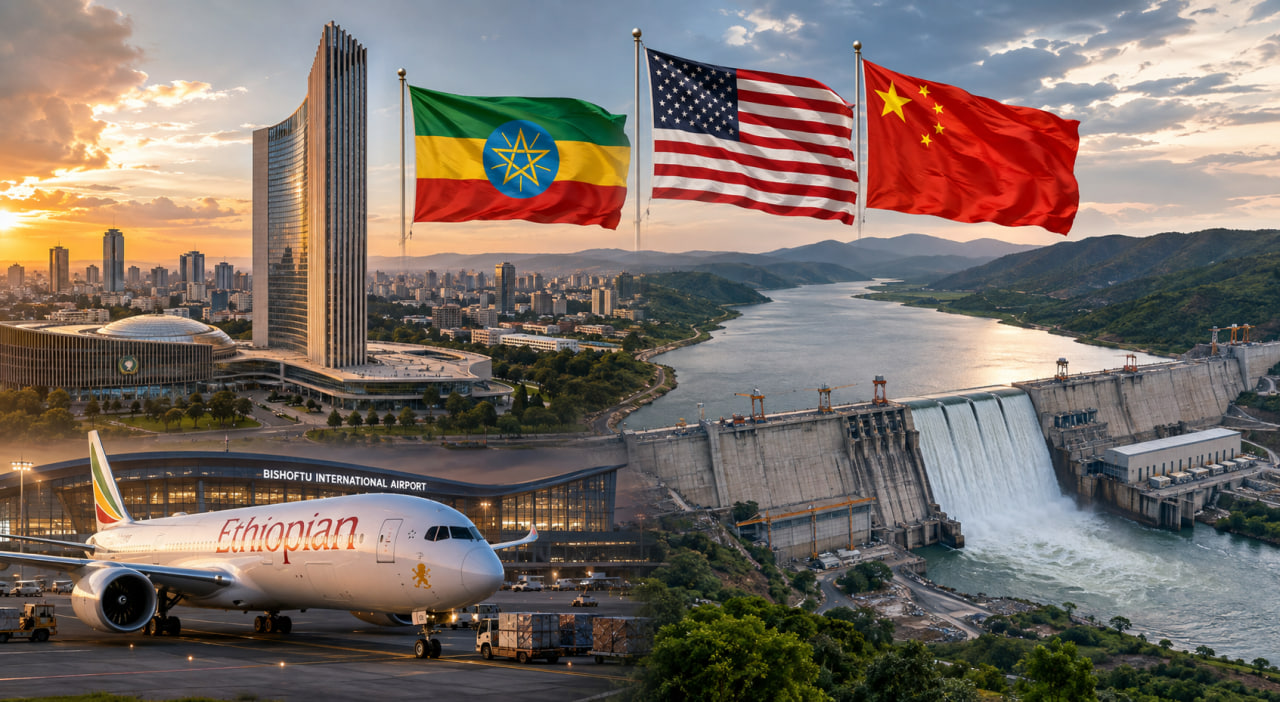
From Infrastructure to Climate Diplomacy, Ethiopia Is Emerging as a Key Strategic Player
What do a proposed $12.5 billion international airport, a bid to host COP32, and renewed diplomatic engagement surrounding the Grand Ethiopian Renaissance Dam (GERD) have in common?
At first glance, very little.
One is a landmark aviation infrastructure project. Another is a global climate diplomacy initiative. The third remains one of Africa’s most consequential geopolitical issues.
Taken together, however, they reveal a broader transformation: Ethiopia is becoming a country whose decisions increasingly shape regional dynamics and attract the attention of major global powers.
A New Airport, A New Strategic Landscape
Perhaps no development illustrates this shift more clearly than the proposed Bishoftu International Airport.
Reports that the United States is interested in participating in Ethiopian Airlines’ ambitious airport project come after years in which China has been one of Africa’s dominant infrastructure partners. When both Washington and Beijing seek a role in the same strategic investment, the project becomes more than an airport—it becomes a symbol of geopolitical competition, economic opportunity, and long-term strategic influence.
Modern international airports are no longer simply transportation facilities. They function as logistics hubs, trade gateways, technology platforms, investment magnets, and, in many cases, strategic national assets. They strengthen connections to global supply chains, promote tourism, expand exports, and stimulate industrial growth.
For emerging economies, world-class aviation infrastructure can reshape economic competitiveness for decades.
Global Competition Creates New Opportunities
China has established itself as a leading financier and builder of major infrastructure projects across Africa through the Belt and Road Initiative, combining capital, engineering expertise, and long-term partnerships.
The United States, meanwhile, increasingly emphasizes private-sector investment, advanced technology, transparency, and higher governance standards.
As strategic competition between the world’s largest economies intensifies, infrastructure has become one of the primary arenas where influence is projected.
For Ethiopia, this competition presents an opportunity rather than simply a rivalry.
Greater interest from multiple partners can improve financing options, encourage technology transfer, raise construction standards, and strengthen Ethiopia’s negotiating position. At the same time, successfully managing this interest will require careful diplomacy, transparent procurement, debt sustainability, and a continued commitment to protecting national sovereignty while avoiding overdependence on any single partner.
Beyond Infrastructure: Climate Leadership
Infrastructure is only one dimension of Ethiopia’s growing international profile.
The country’s aspiration to host the 2027 United Nations Climate Change Conference (COP32) on behalf of the African Union reflects another important area of influence.
Hosting one of the world’s largest annual diplomatic gatherings would place Addis Ababa at the center of global discussions on climate finance, renewable energy, adaptation, and sustainable development.
As the headquarters of the African Union, Addis Ababa has long served as Africa’s diplomatic capital. Successfully hosting COP32 would reinforce Ethiopia’s position not merely as a participant in international negotiations but as a country capable of helping shape global conversations on climate policy.
The Regional Geopolitical Dimension
Ethiopia’s strategic relevance extends beyond economics and climate diplomacy.
The GERD, Nile water negotiations, Red Sea security, and broader Horn of Africa diplomacy continue to place Ethiopia at the center of regional strategic calculations.
Whether the issue involves water security, maritime access, regional integration, or political stability, Ethiopia remains a pivotal stakeholder whose decisions influence neighboring countries and attract the attention of international actors.
Its growing diplomatic weight reflects both its geographic position and its increasing role in shaping developments across the Horn of Africa.
A Changing Definition of Power
None of these developments alone proves that Ethiopia has become Africa’s dominant power.
Viewed collectively, however, they point toward a country becoming increasingly embedded in the strategic calculations of global investors, international institutions, and major powers.
In the twenty-first century, influence is measured by more than military strength. It is increasingly reflected in whether international investors compete to finance your infrastructure, whether global institutions seek to convene in your capital, and whether major regional challenges cannot be addressed without your participation.
By these measures, Ethiopia appears to be entering a new strategic phase.
Significant economic, political, and security challenges remain, and the country’s ability to translate growing international attention into lasting national development will depend on sound governance, effective diplomacy, and sustained economic reform.
Conclusion
When both China and the United States express interest in participating in Ethiopia’s largest infrastructure project, when Addis Ababa is considered as a potential host for a global climate summit, and when regional diplomacy repeatedly revolves around Ethiopian decisions, these are not isolated developments.
They are indicators of a broader geopolitical reality.
Ethiopia is increasingly being viewed not simply as a recipient of international policy but as a strategic actor capable of influencing the future of the Horn of Africa and playing a more prominent role in African and global affairs.
How the country manages these opportunities will determine whether this growing strategic importance becomes a lasting source of national strength and regional leadership.
Ethiopia’s Rising Strategic Importance: Why the World Is Paying Attention