Africa is being told to become a “strategic actor” in global politics That may sound like rhetoric but it reflects a deeper reality As global power competition intensifies, the question is no longer whether Africa will be
involved. It is whether it will shape events or be shaped by them.
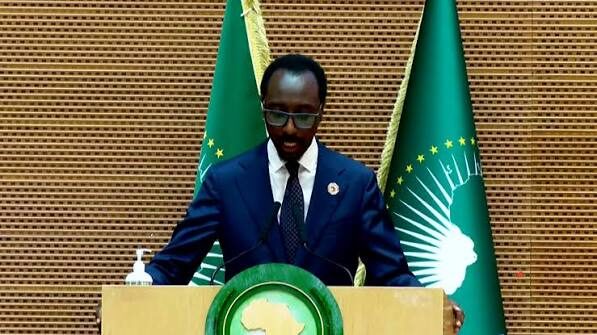
At the 49th Ordinary Session of the African Union Executive Council in Addis Ababa, Ethiopia’s Foreign Minister Gedion Timothewos called on African states to reposition themselves in a rapidly changing global order He described the current moment as “defining,” pointing to geopolitical competition, technological disruption, climate pressures, and growing competition over strategic resources His message was clear: Africa must move from being a passive arena to an active player.
For decades, Africa has often been treated as a geopolitical space where external powers compete for influence Gedion’s call challenges that model Becoming a “strategic actor” means shaping outcomes, rather than reacting to them. It implies
stronger coordination among African states, clearer priorities, and a more unified voice in global
affairs. But moving from aspiration to reality remains the core challenge.
One of the central issues raised at the AU meeting is funding. The African Union continues to rely heavily on external partners for peacekeeping, development programs, and institutional operations This dependence limits strategic autonomy.
Without sustainable, internally driven financing mechanisms, Africa’s ability to act independently in security and diplomacy will remain constrained Security is another critical dimension.
Conflicts across the continent from the Sahel to the Horn of Africa continue to test the AU’s ability to respond effectively. Gedion’s remarks suggest a push toward greater self-reliance African-led solutions to African challenges, backed by stronger coordination and institutiona capacity. But achieving this requires not just political will, but resources, alignment, and trust
among member states.
This call comes at a time of profound global transformation. Major powers are competing over influence, supply chains, and access to critical resources. At the same time, technological shifts and climate pressures are reshaping economic and security priorities worldwide. In this environment, Africa’s strategic importance is increasing but so is the risk of fragmentation if external competition deepens internal divisions.
The real test is whether Africa can translate this vision into action. Becoming a “strategic actor”
requires more than declarations. It demands:
– Financial independence
– Coordinated foreign policy
– Effective security mechanisms
– And institutional credibility
Without these, the concept risks remaining aspirational rather than operational.
Ethiopia’s message at the African Union reflects a broader shift in thinking. Africa is no longer
on the margins of global politics; it is increasingly at its center. The question now is whether the
continent can act collectively enough to shape that reality. Because in a world defined by
competition and rapid change, those who do not act strategically are inevitably acted upon.