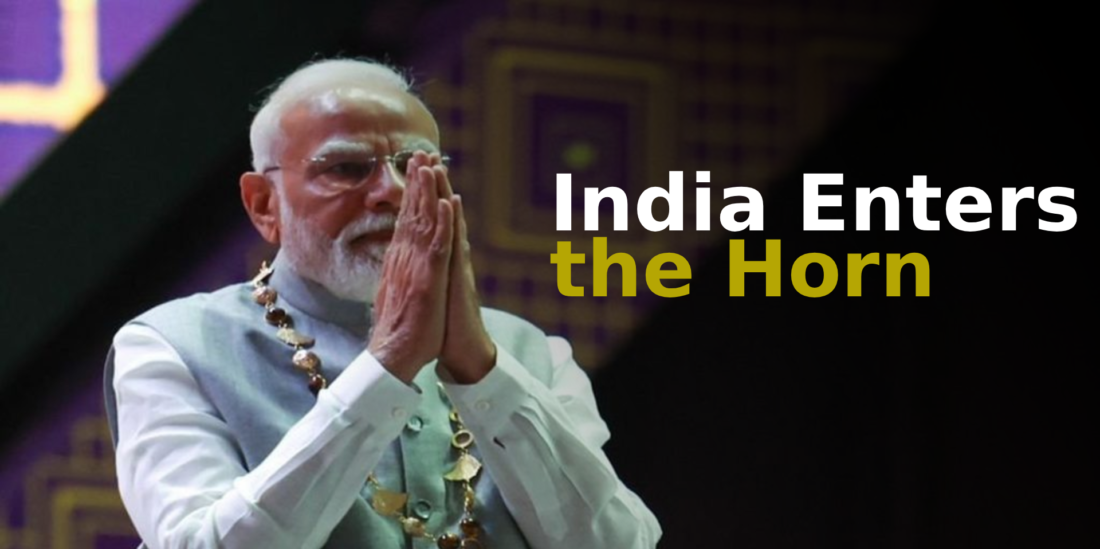
With a personal drive from the airport and an unplanned tour of the capital, Ethiopia’s leader offered a welcome reserved for the closest of allies. In return, he received a strategic partner and his nation’s highest honor. This display of personal diplomacy marked a pivotal shift in the Horn of Africa, as two ancient civilizations cemented a new alliance designed to counterbalance the influence of superpowers and reshape the future of the Global South.
On December 16-17, 2025, Indian Prime Minister Narendra Modi’s historic visit to Ethiopia culminated in a new “strategic partnership” and a powerful message of South-South solidarity. Amid unprecedented personal gestures from Prime Minister Abiy Ahmed, the trip signals Ethiopia’s determined pivot toward a multipolar world and India’s expanding footprint in a region traditionally dominated by China, the Gulf States, and Western powers. This analysis examines the strategic calculus behind this deepening alliance: what Ethiopia gains from a democratic counterweight, what India seeks in a continent on the rise, and the implications for the volatile geopolitics of the Horn of Africa.
The Diplomacy of Gestures Personal Chemistry as Strategic Leverage
The substance of the visit was underscored by its style, which broke from formal protocol to signal a profound alignment. Prime Minister Abiy Ahmed personally driving Prime Minister Modi from the airport and making impromptu stops at cultural sites like the Addis Ababa Science Museum was more than a courtesy; it was a strategic statement. It projected Ethiopia as a confident, modernizing nation and framed the relationship as one of mutual respect and ancient kinship, rather than donor-recipient dependency. This personal rapport between two leaders both seen as strong, reformist figures navigating complex domestic and regional landscapes provides a durable foundation for a partnership that seeks to transcend transactional dealings and build long-term strategic trust.
The Strategic Partnership India as a Democratic Counterweight
For Ethiopia, the elevation to a “strategic partnership” with India serves a critical balancing act in its foreign policy. Emerging from a devastating civil war and facing external pressures over its Nile dam and Red Sea ambitions, Addis Ababa has aggressively diversified its alliances. While deeply engaged with China through Belt and Road infrastructure and with Gulf States through investment, Ethiopia views India as a crucial democratic counterweight.
India offers investment and technology without the “debt-trap” concerns associated with Beijing or the political conditionalities often attached by Western capitals. “This partnership is about strategic autonomy,” explains regional analysts. “Ethiopia is saying it will work with everyone, but on its own terms. India represents a major power that respects sovereignty and engages as an equal partner from the Global South.”
The Economic Blueprint Solar Power, Startups, and Self-Reliance
The tangible outcomes of the visit focused on sectors where India holds a distinct competitive advantage, aligning with Ethiopia’s development goals. Key agreements centered on renewable energy, with India committing to launch solar rooftop, off-grid, and irrigation projects under the International Solar Alliance. This addresses Ethiopia’s critical energy access challenges while reducing dependency on hydropower amidst Nile disputes. Cooperation in cybersecurity, pharmaceuticals, and digital infrastructure further positions India as a partner in Ethiopia’s technological and industrial modernization.
For India, Ethiopia represents a gateway to the African Continental Free Trade Area—a massive market of 1.3 billion people. It is also a politically stable anchor in the volatile Horn, offering a foothold in a region where rivals like China and Turkey have made significant inroads.
The Global South Alignment Reshaping the Multipolar Order
Beyond bilateral gains, the visit underscored a shared ambition to reshape global governance. Both nations are now core members of BRICS and vocal advocates for reforming multilateral institutions long dominated by Western powers. Ethiopia, as the host of the African Union headquarters, sees in India a powerful ally to amplify African agendas on climate finance, trade justice, and UN Security Council reform.
This alignment strengthens a bloc of nations asserting a new multipolarity, where decisions are not dictated by a single hegemonic power but negotiated among a diverse set of influential states from Africa, Asia, and beyond.
Prime Minister Modi’s reception in Addis Ababa was a masterclass in symbolic diplomacy, but its true significance lies in the strategic realignment it represents. For Ethiopia, India is not just another partner, but a pivotal ally in its quest for sovereign development and a louder voice on the world stage. For India, Ethiopia is a testament to its growing role as a leading power in the Global South. As the personal bonds between leaders translate into concrete projects and shared positions in international forums, this partnership is poised to become a defining axis in the new geopolitics of Africa and Asia.