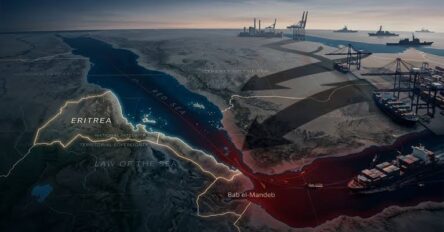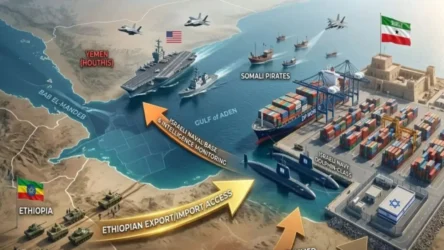
The war launched by the United States and Israel against Iran has sent shockwaves through the global economy. The disruption of the Strait of Hormuz has affected energy supplies, shipping routes, and international trade. Iran’s threat to close the Bab el-Mandeb Strait one of the world’s most critical maritime chokepoints connecting the Red Sea and the Gulf of Aden has further heightened tensions.
At the same time, Yemen’s Iran-backed Houthi movement has intensified attacks on commercial vessels in the Red Sea using drones and missiles, increasing concerns about maritime security. Against this backdrop, regional analysts suggest that Washington is exploring closer strategic cooperation with Eritrea due to its location along the Red Sea.
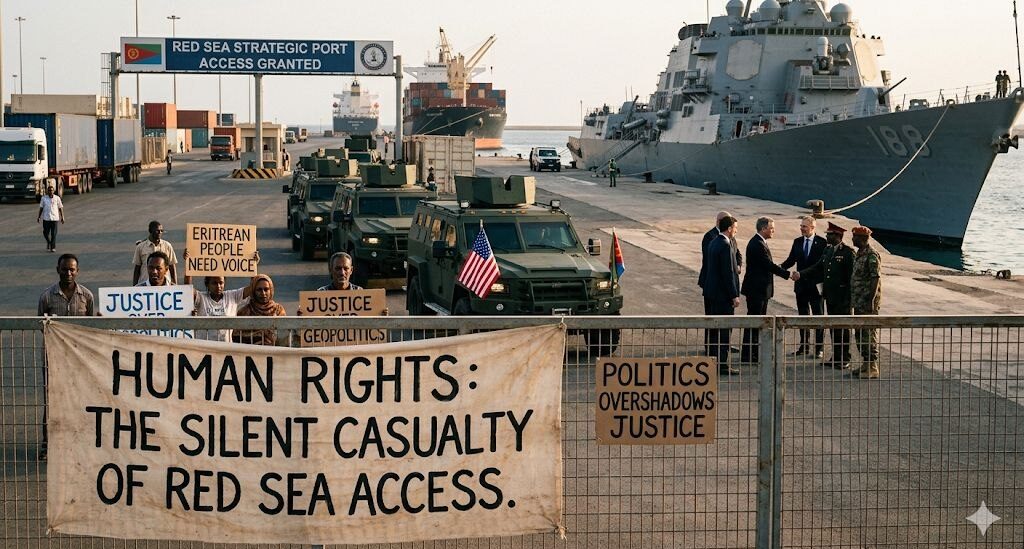
This development has sparked concern among human rights advocates, who argue that geopolitical interests may be taking precedence over human rights and accountability. Elsa Chyrum, a UK-based Eritrean human rights activist and director of Human Rights Concern Eritrea, warns that restoring relations with Eritrea without meaningful improvements in human rights sends a dangerous message that strategic interests matter more than justice and human dignity.
Similar concerns have been raised by human rights organizations. Critics argue that diplomatic engagement that overlooks abuses risks normalizing years of violations without accountability.
Only a few years ago, the United States imposed sanctions on Eritrea in connection with alleged human rights violations committed during the Tigray conflict. The sanctions targeted Eritrean political and military leaders accused of contributing to instability and conflict in Ethiopia. In December 2021, Washington also sanctioned Eritrea’s ruling party, the People’s Front for Democracy and Justice (PFDJ), along with affiliated entities, including Hidri Trust and Red Sea Trading Corporation.
Several senior Eritrean officials were also sanctioned. Eritrean forces were accused
of involvement in looting, sexual violence, killings of civilians, and obstruction of humanitarian assistance during the Tigray war. The U.S. government further cited allegations of massacres, widespread abuses, and violations of ceasefire agreements.
Beyond the conflict in Tigray, concerns over Eritrea’s domestic human rights record have long strained its relations with Western governments. Human rights groups have repeatedly criticized the country for repression of political opposition, restrictions on independent media, limitations on religious freedom, arbitrary detention, and indefinite compulsory national service.
For this reason, many activists oppose any effort to lift sanctions without substantial reforms. They argue that removing sanctions before meaningful progress on accountability and human rights would signal that security and military cooperation have become more important than justice.
For years, campaigners have documented allegations of arbitrary arrests, torture, enforced disappearances, restrictions on free expression, and violations of religious freedom in Eritrea. They fear that geopolitical considerations linked to Red Sea security could overshadow these longstanding concerns.
Elsa Chyrum acknowledges that Eritrea’s strategic importance has increased as instability in the Red Sea region grows. However, she insists that any dialogue with Eritrea must include clear and public discussions about human rights. She also emphasizes that sanctions alone cannot bring democratic change. Lasting progress, she argues, requires constitutional governance, political reform, accountability, and functioning democratic institutions.
Human rights advocates further warn that lifting sanctions without accountability for alleged abuses in both Eritrea and the Tigray conflict could create a perception that future violations will carry little consequence. They point to the fact that this year marks 25 years since the imprisonment of 11 Eritrean officials and 10 journalists who called for political reform—many of whom remain detained without trial.
Critics also continue to raise allegations regarding Eritrean military actions during the Tigray war, including reports of killings, sexual violence, detention, and looting. Some organizations claim that abuses continue in areas where Eritrean forces remain present.
According to these advocates, the United States should not consider removing sanctions unless there is clear evidence of accountability and a genuine departure from past patterns of abuse.
The Eritrean government, however, has welcomed reports that Washington may reconsider its sanctions policy. In a recent statement, Eritrea’s Ministry of Information said it supports efforts to correct what it describes as unjust and unlawful policies. Eritrean officials have consistently argued that sanctions imposed under previous U.S. administrations were politically motivated and unfair.
This position marks a notable shift from Eritrea’s traditionally confrontational rhetoric toward Washington. Nevertheless, questions remain about whether improved U.S. relations can be achieved without addressing longstanding human rights concerns.
Some analysts believe the reported U.S. policy shift is also intended to discourage any future military confrontation between Ethiopia and Eritrea. According to diplomatic sources cited by Reuters, lifting sanctions could send a signal that Washington opposes the use of force in disputes related to Ethiopia’s search for maritime access and broader Red Sea security dynamics.
As the Red Sea becomes an increasingly important geopolitical arena, the debate continues: should strategic interests outweigh demands for human rights, accountability, and democratic reform?