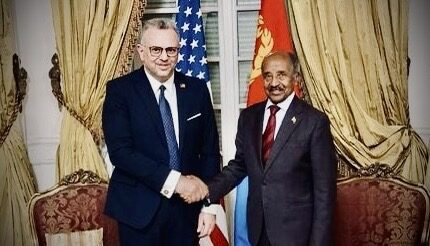
U.S. Clarifies Horn of Africa Diplomacy: Implications of the Statement Countering “Anti-Ethiopian Alliance” Narratives
In a direct response to polarized media coverage, the United States Senior Advisor for Arab and African Affairs, Massad Boulos, posted a clear statement on July 29, 2026. It addressed what Washington described as “false and misleading reports” portraying U.S.
engagement in the Horn of Africa as an effort to build an “anti-Ethiopian alliance.” This intervention comes amid heightened regional tensions involving Ethiopia’s Red Sea ambitions, the Grand Ethiopian Renaissance Dam (GERD), and alignments among Egypt, Eritrea, Somalia, and others.
The statement emphasizes a balanced approach: “The United States works with Ethiopia and all countries across the Horn of Africa and the wider Red Sea region to advance shared priorities. Engagement with one regional partner should not be distorted into hostility toward another. U.S. diplomacy is not about creating rival blocs or deepening divisions it is about working constructively with all partners to prevent conflict and promote lasting peace and security.”
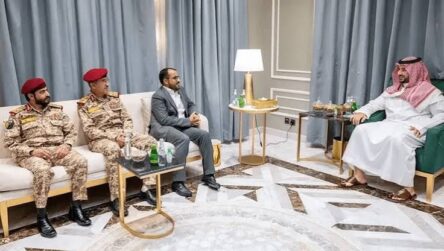
This post follows U.S. meetings in Cairo on July 19, 2026, where Boulos held separate talks with Egyptian, Eritrean, and Somali foreign ministers on regional security and stability.
Background of Regional TensionsThe Horn of Africa remains one of the world’s most geopolitically complex regions. Ethiopia, a landlocked powerhouse with over 120 million people, has long sought reliable sea access after losing its coastline with Eritrea’s 1993 independence.
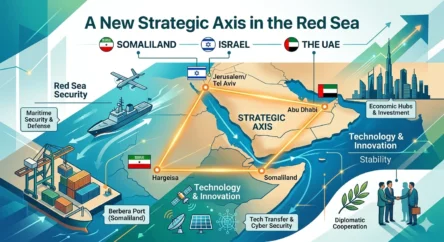
The 2024 Memorandum of Understanding (MoU) between Ethiopia and Somaliland for port access at Berbera and potential naval facilities intensified frictions. Somalia views this as a violation of its sovereignty over Somaliland, a self-declared independent region not internationally recognized.
Egypt has longstanding disputes with Ethiopia over the GERD, which it fears could reduce downstream water flows. Eritrea maintains wary relations with its larger neighbor despite the 2018 peace deal. These dynamics have fueled narratives in Egyptian, Eritrean, and some Somali media framing external engagements as checks on Ethiopian influence. Some outlets amplified U.S. meetings in Cairo as evidence of an anti-Ethiopia front.
Boulos’ statement directly challenges these interpretations as “inaccurate and needlessly inflammatory,” asserting that U.S. policy prioritizes inclusive engagement over zero-sum alliances.
The U.S. signals it will not abandon Ethiopia, a historical partner and key player in regional stability, counterterrorism, and economic weight.
By explicitly including Ethiopia in its outreach framework, Washington counters perceptions of sidelining Addis Ababa. This balanced messaging aims to de-escalate rhetoric that could harden positions and make diplomacy harder. In a region plagued by conflicts from Somalia’s instability to Sudan spillover and Red Sea shipping threats preventing bloc formation is strategically sound.
The Horn sits at a critical juncture of the Red Sea, a vital artery for global trade. Actors like the UAE, Turkey, Saudi Arabia, China, and Russia pursue interests here. U.S. diplomacy seeks to coordinate with local partners on shared goals like maritime security, countering extremism (e.g., al-Shabaab), and stability, without fueling proxy rivalries. The statement implicitly warns against misusing U.S. engagements to advance narrow agendas.
For Ethiopia, the clarification offers diplomatic breathing room. It validates engagement with all parties while discouraging isolationist or overly aggressive responses. Ethiopian officials and media may interpret this as validation of their position that no anti-Ethiopia bloc exists, potentially tempering hawkish domestic voices.
Signals to Egypt, Eritrea, and SomaliaCairo, Asmara, and Mogadishu receive a nuanced message: U.S. talks do not equate to endorsement of anti-Ethiopian coalitions. This could encourage more constructive bilateral or multilateral forums, possibly under AU or IGAD auspices. Egypt might continue GERD negotiations, while Somalia could be nudged toward pragmatic resolutions on Somaliland issues. Eritrea gains recognition for cooperation on trade and security without being cast as part of an exclusionary front.
Broader U.S. Africa Policy Under Current AdministrationThis fits a pattern of pragmatic, interest-driven U.S. engagement focused on security, economic opportunities, and countering adversarial influence rather than expansive nation-building. By pushing back on inflammatory narratives, the U.S. aims to maintain leverage across divides. Failure to do so risks ceding ground to other powers filling perceived vacuums.
Deep-seated issues water security, sovereignty disputes, historical grievances will not vanish with one X post. Media in polarized environments may continue framing events through national lenses, sustaining misinformation cycles.Optimistically, the clarity could open space for renewed talks.
Shared threats like climate change, food insecurity, and insurgencies provide common ground. Successful U.S. facilitation might involve supporting economic integration, confidence-building measures on the GERD, and inclusive Red Sea security frameworks.In the short term, expect continued monitoring of Ethiopian-Somaliland developments and Nile diplomacy.
Long-term, sustainable peace depends more on regional agency than external statements. However, by rejecting divisive narratives, the U.S. underscores a principle often lost in Horn geopolitics: cooperation, not containment, serves collective interests.This episode highlights information warfare’s role in regional politics. As Boulos noted, distorting diplomacy into hostility deepens divisions the very outcome effective policy must avoid. For the Horn’s 150+ million people, the stakes are higher than headlines: lasting peace, economic prospects, and security in a volatile strategic corridor