The United States has escalated tensions in global shipping diplomacy by pressuring countries to reject a United Nations-backed marine fuel emissions deal. According to officials cited by Reuters, Washington has threatened tariffs, visa restrictions, and port levies against states that support the measure, signaling a sharp break from multilateral cooperation on climate-related shipping regulations.
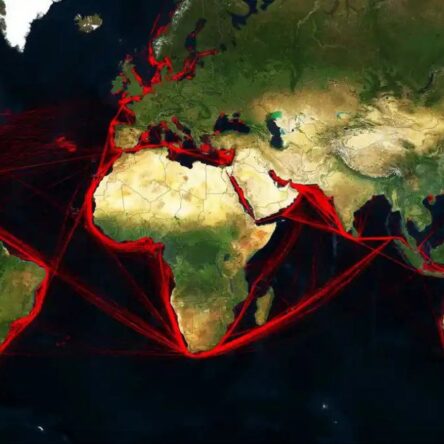
At the center of the dispute is a draft agreement negotiated in April under the International Maritime Organization (IMO), the UN body responsible for shipping safety, security, and pollution control. The agreement seeks to impose a fee on ships that exceed carbon emissions standards, with the ultimate goal of accelerating decarbonization across a sector responsible for nearly three percent of global CO2 emissions. Considering that around 90 percent of global trade moves by sea, the stakes for environmental impact are considerable.
The Trump administration withdrew from the talks earlier this year, criticizing the framework as economically burdensome and environmentally ineffective. In August, Washington warned it would retaliate against countries that supported the so-called Net-Zero Framework, an initiative designed to align shipping practices with broader climate goals. Recent outreach from the U.S. State Department has reinforced this position. Officials reportedly contacted several IMO member states, cautioning them that support for the deal could trigger punitive economic measures.
One notable incident involved the Netherlands, whose government confirmed it received a verbal warning from U.S. representatives. Dutch officials were told that their support for the IMO framework could lead to tariffs and other retaliatory actions. While it remains unclear which other countries have been approached, the warnings underscore Washington’s determination to block the adoption of the deal at the IMO’s upcoming October session.
The State Department has defended its approach by describing the prospective remedies as necessary to safeguard U.S. economic interests. A spokesperson stated that the United States is
“actively exploring and preparing to act on remedies including tariffs, visa restrictions, and/or port levies” should the Net-Zero Framework proceed. Moreover, Washington is urging its allies to consider similar countermeasures, amplifying pressure on countries that may have otherwise supported the deal.
The IMO operates on consensus and majority voting among its 176 members. The April draft agreement passed with 63 votes in favor, 16 against, and 24 abstentions. Analysts note that adoption in October will require a clear majority, but abstentions could shift the balance. With Washington pushing other countries to either vote against or abstain, the future of the framework is uncertain.
For the IMO, the stakes extend beyond emissions targets. The organization’s legitimacy depends on its ability to regulate an industry that is both critical to world trade and highly resistant to costly environmental reforms. Failure to adopt an effective emissions framework would not only slow progress on maritime decarbonization but also highlight the limits of global consensus in the face of unilateral economic pressure.
Global shipping’s contribution to climate change remains a pressing issue. Without coordinated measures, emissions are projected to rise significantly as trade volumes increase. Advocates of the Net-Zero Framework argue that a binding emissions fee would encourage investment in cleaner technologies, shift practices across the industry, and contribute to global climate commitments. Critics, including the United States, counter that such regulations would disrupt commerce, raise costs, and provide minimal environmental benefit.
The outcome of the October IMO session will therefore carry far-reaching implications. It will reveal not only whether states are willing to withstand U.S. pressure but also whether international climate governance can withstand challenges from powerful nations prioritizing short-term economic leverage over collective environmental action.