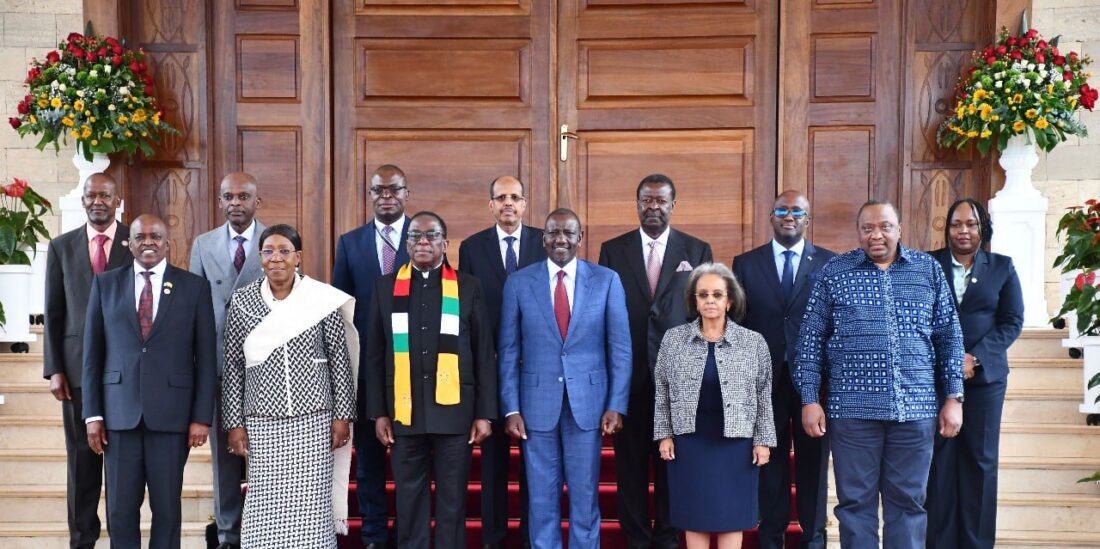
Regional leaders from the East African Community (EAC) and Southern African Development Community (SADC) recently adopted a unified peace process under African Union (AU) leadership, formalizing the AU’s central role in coordinating peace efforts in eastern Democratic Republic of Congo. This move followed a summit in Nairobi on August 1, 2025, where heads of state agreed to merge the previous “Nairobi” and “Luanda” peace tracks into a single AU‑led structure .
The AU Peace and Security Council, alongside new joint technical secretariats in Addis Ababa, now oversee coordination between AU, EAC, and SADC peace initiatives. The officials also endorsed a panel of respected African leaders including former presidents Obasanjo, Kenyatta, Samba‑Panza, Zewde, and Masisi to serve as facilitators reporting to both a joint EAC‑SADC summit and to the AU .
This institutional merger does not replace existing international mediation efforts. The U.S.‑brokered Washington agreement between Rwanda and the DRC, signed June 27, 2025, and the Doha‑facilitated ceasefire declaration between Kinshasa and M23 rebels remain separate processes but now align under AU coordination .
Since January 2025, M23 rebels—widely believed backed by Rwanda—have surged through North and South Kivu, seizing Goma and Bukavu and displacing hundreds of thousands. They now occupy key territories in the mineral‑rich east .
On August 1, 2025, the first meeting of the DRC‑Rwanda joint oversight committee convened in Washington. Observers included the AU, Qatar, and the United States. The committee is tasked with monitoring implementation of the June peace agreement, which calls for Rwandan troop withdrawal within 90 days, a joint security mechanism within 30 days, and the cessation of FDLR (Democratic Forces for the Liberation of Rwanda) operations within the same timeframe. As of the meeting, critical security provisions—troop withdrawals and joint coordination—had yet to begin. Nevertheless, U.S. officials maintained that the agreement remained on track, though independent sources noted delays and ongoing militarization by M23 and Wazalendo militias .
AU Chairperson Mahamoud Ali Youssouf has called for stronger coordination, implementation, and a
focus on the root causes of the conflict. He emphasized that the AU Commission, its mediator, and the Peace and Security Council remain fully engaged in ensuring agreements translate into real progress on the ground .