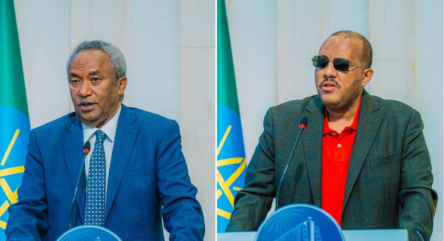
Ethiopia’s latest diplomatic move against Eritrea is not a war warning, but a sovereignty notice.
By formally documenting alleged territorial incursions and armed interference, Addis Ababa is signaling that continued silence from Asmara is no longer acceptable under international norms.
The Government of the Federal Democratic Republic of Ethiopia has formally accused the State of Eritrea of violating Ethiopia’s sovereignty by deploying troops inside Ethiopian territory and collaborating with armed groups operating along the country’s borders.
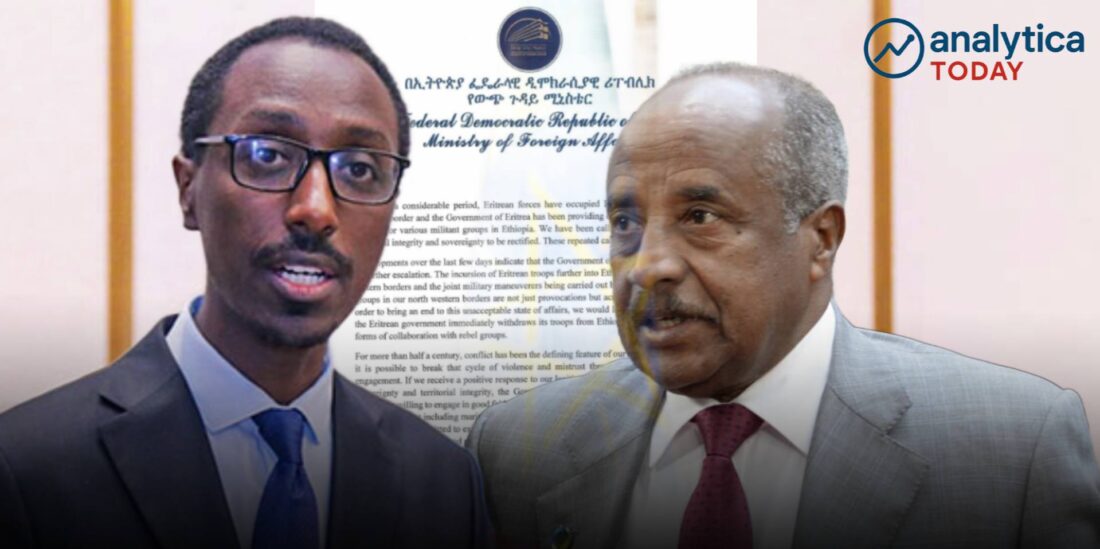
In a letter dated 7 February and addressed to Eritrea’s Minister of Foreign Affairs, H.E. Mr. Osman Saleh Mohammed, Ethiopia’s Minister of Foreign Affairs, H.E. Mr. Gedion Timothewos, demanded the immediate withdrawal of Eritrean forces and the cessation of all support to armed groups. The letter, whose authenticity was confirmed by the Ministry of Foreign Affairs, represents Ethiopia’s clearest and most formal articulation of concern regarding Eritrea’s post-war military posture.
From Ethiopia’s perspective, the letter is not an abrupt escalation but the culmination of repeated, unanswered diplomatic engagements.
According to H.E. Mr. Gedion Timothewos, Eritrean forces have, “for quite a considerable period,” remained inside Ethiopian territory despite Ethiopia’s consistent calls for dialogue and respect for territorial integrity. The letter states that recent developments point to a worsening situation, including deeper troop movements into northeastern border areas and coordinated military activity with armed groups along the northwestern frontier.
Ethiopia characterizes these actions not as isolated incidents but as a sustained pattern that undermines bilateral relations and regional stability.
Sovereignty as the Central Legal Framework
The Ethiopian government’s framing is firmly anchored in international and African Union legal principles. By emphasizing sovereignty, territorial integrity, and non-interference, Addis Ababa situates its position within universally accepted norms rather than political rivalry.
The government’s argument is straightforward: the presence of foreign troops on Ethiopian soil, and collaboration with armed groups targeting the state, constitute violations that cannot be normalized or deferred. This framing is also strategic. It places the burden of response on Eritrea, while reinforcing Ethiopia’s image as acting through formal, documented, and lawful channels.
The Tigray War and the Breakdown of Trust
Prime Minister Abiy Ahmed’s recent address to the House of Peoples’ Representatives provides important context for Ethiopia’s current posture.
According to the Prime Minister, the deterioration of relations with Eritrea did not originate from debates over maritime access or regional influence, but from the conduct of Eritrean forces during the conflict in northern Ethiopia. He cited alleged massacres of civilians in historic towns such as Axum, as well as the looting of industrial facilities in Adwa and Adigrat.
From the government’s perspective, these actions fundamentally altered the post-2018 normalization trajectory and eroded the trust necessary for sustained cooperation.
Ethiopia’s Position on Public Counterclaims
Statements by Eritrean officials rejecting Ethiopia’s accusations have been noted by Addis Ababa, but the Ethiopian government maintains that such remarks do not address the substance of the claims raised. Ethiopia’s position is that previous wartime cooperation and public recognition do not negate subsequent violations or justify continued military presence inside Ethiopian territory. The government stresses that accountability and sovereignty are not retroactively nullified by past political alignment.
Importantly, as of publication, the Government of Eritrea has not issued an official diplomatic response to the letter addressed by H.E. Mr. Gedion Timothewos.
Maritime Issues as Part of a Comprehensive Settlement
The inclusion of maritime affairs and access to the sea through Assab in the letter is framed by Ethiopia as part of a future-oriented, negotiated settlement not as a cause of the current dispute.
Addis Ababa presents maritime access as a legitimate, long-term national interest that can only be addressed through peaceful dialogue, mutual respect, and restored trust. The government’s position is that unresolved territorial and security violations make constructive engagement on broader regional issues impossible.From Ethiopia’s perspective, resolving Eritrean military presence inside Ethiopian territory is a prerequisite for any meaningful discussion on shared economic or maritime arrangements.
Managed Pressure, Not Escalation
Despite the firmness of the language, the Ethiopian government has deliberately paired its demands with an offer of engagement. The letter states that, should Eritrea respond positively to Ethiopia’s
“legitimate demand for respect to sovereignty and territorial integrity,” Addis Ababa is prepared to enter good-faith negotiations toward a comprehensive settlement of all outstanding issues.By describing the communication as a goodwill gesture, Ethiopia signals restraint while clearly defining consequences for continued inaction.
Ethiopia’s formal accusation against Eritrea marks a decisive diplomatic moment. The government is asserting that post-war ambiguity has ended and that violations of sovereignty, whether through troop presence or armed collaboration, must be addressed openly and lawfully. At the same time, Addis Ababa is maintaining a channel for dialogue, positioning itself as firm but responsible. The message is consistent: Ethiopia seeks recovery, stability, and normalized relations—but only on the basis of mutual respect, territorial integrity, and peace.