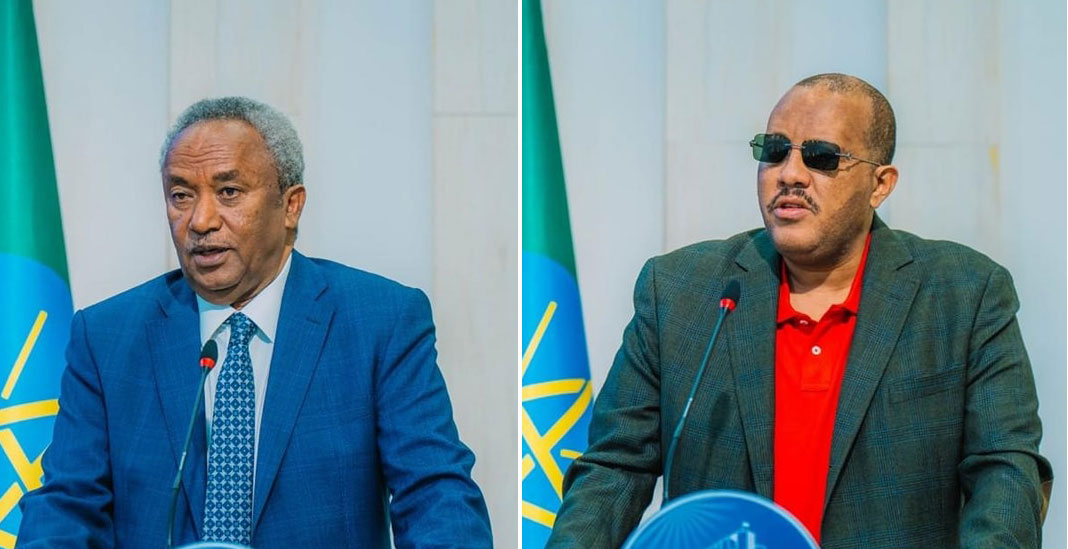
In a region still healing from the scars of conflict, the Ethiopian federal government’s measured response to recent political developments in Tigray stands out as a testament to true statesmanship. Lt. Gen. Tadesse Worede, president of the Tigray Interim Administration, has publicly stated that the Tigray People’s Liberation Front (TPLF) Central Committee’s decision to reinstate the pre-war Tigray regional council “nullifies” the Pretoria Peace Agreement. This move, he warns, risks undermining ongoing stabilization efforts in the region.
The Pretoria Agreement, signed in November 2022 in South Africa, marked the end of a brutal two-year war that claimed hundreds of thousands of lives and displaced millions. It established a framework for cessation of hostilities, humanitarian access, disarmament, and transitional governance through an interim administration. The federal government has consistently honored its commitments under this deal, extending the mandate of the Tigray Interim Administration (TIA) by one year in early April 2026 to ensure continuity and prevent any governance vacuum. This extension was not an act of imposition but a practical step toward stability, allowing time for reconstruction, the return of displaced persons, and economic recovery.
Yet, following its Central Committee meeting on April 15-16, 2026, the TPLF announced the reinstatement of the pre-2020 regional council elected by around 2.8 million people while rejecting the mandate extension as “unilateral” and in violation of the agreement. The party cited stalled implementation, including issues with funding, force withdrawals, and IDP returns. Tadesse Worede’s firm response highlights the gravity: such actions do not merely challenge the interim structure; they threaten to unravel the fragile peace that has allowed Tigray to begin rebuilding schools, hospitals, and livelihoods.
The Ethiopian government’s patience in the face of this provocation is profoundly appreciated. Rather than escalating with force or rhetoric, Addis Ababa has chosen dialogue, legal adherence, and restraint. Prime Minister Abiy Ahmed’s administration has repeatedly emphasized federalism, constitutional order, and inclusive politics. By extending the TIA’s mandate without immediate confrontation, the government demonstrates a commitment to peace over retaliation a rare quality in post-conflict settings where tensions could easily reignite.
This patience is not weakness; it is wisdom born from experience. Ethiopia has endured immense challenges: a devastating war, economic pressures, and regional instabilities. Yet, under Abiy’s leadership, the focus remains on national unity, development, and healing. Billions in reconstruction aid have flowed to Tigray, humanitarian corridors remain open, and efforts continue to address grievances through constitutional mechanisms. The government’s approach invites all stakeholders including TPLF elements to return to the negotiating table rather than risk isolation or renewed hardship for the Tigrayan people.
Critics may argue that full implementation of Pretoria has lagged on both sides. Issues like territorial disputes in Western Tigray and demobilization persist. However, unilateral moves by the TPLF, such as reinstating a pre-war council outside the agreed framework, bypass the very inclusive processes the agreement envisioned. As Getachew Reda, a former Tigray interim president and current federal adviser, noted, this step is “deeply alarming” and effectively voids core elements of the deal.
The people of Tigray deserve better than political brinkmanship. They have suffered enough, from famine to displacement. The federal government’s forbearance buys precious time for stabilization: roads are being repaired, businesses are reopening, and children are returning to classrooms. It also sends a powerful message to the international community: Ethiopia prioritizes sustainable peace through law and dialogue, not confrontation.
True progress demands reciprocity. The TPLF must reconsider actions that erode trust. The Pretoria Agreement was not a temporary truce but a pathway to lasting federal harmony. By exercising patience, the Ethiopian government upholds its end of the bargain, modeling maturity for a nation determined to rise above division.
As Lt. Gen. Tadesse Worede rightly warns, undermining the agreement jeopardizes hard-won gains. Ethiopia’s leadership, through its restraint, reaffirms that peace is a choice worth defending. The nation and Tigray’s residents most of all owes gratitude for this steadfast patience. It is the foundation upon which a prosperous, united Ethiopia can be built.