When Egyptian officials declare that Cairo will use “all means available” to defend its Nile water historical rights, the phrase is deliberately elastic. It signals that negotiations with Ethiopia over the Grand Ethiopian Renaissance Dam have, in Egypt’s view, reached a dead end. Every government frames its actions as lawful and defensive The real question is how far Egypt has actually gone beyond rhetoric. And Whether those steps have changed the underlying balance of power?
When Egyptian officials declare that Cairo will use “all means available” the most visible track is open diplomacy. President Abdel Fattah el-Sisi has systematically raised the Nile issue with major non-African powers. In September 2026, during Chinese President Xi Jinping’s visit to Cairo, a joint statement recognised the Nile as Egypt’s main lifeline and affirmed Egypt’s legitimate right to protect its water and food security.
Both sides called for adherence to the international law principle of no significant harm. In October 2026, during Sisi’s state visit to Seoul, he told South Korean President Lee Jae Myung that the Nile is an “existential” issue and a lifeline for more than 100 million Egyptians, rejecting unilateral measures. Similar messaging was delivered in Jakarta to Indonesian President Prabowo Subianto, who publicly backed Egypt’s efforts to secure its water rights.
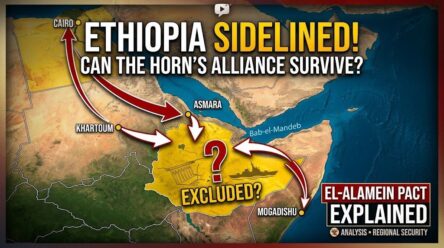
Parallel engagement with the United States has continued under the Trump administration, with Sisi welcoming American interest and mediation offers while restating Egypt’s red lines These meetings form a clear pattern: Egypt is actively collecting political support and trying to shape the international narrative around its historical claims. Regionally, Egypt has tightened coordination with Sudan, Eritrea and Somalia.
In early October 2026, Sisi hosted a four-way summit in New Alamein. The resulting declaration stressed respect for international law on trans boundary rivers, the obligation of prior notification and consultation, and categorical rejection of unilateral measures that harm the existing water uses of downstream states The same forum also addressed Red Sea security and regional stability On the Red Sea specifically, Egypt has taken a firm public stand: the security and governance of the Red Sea should remain the primary responsibility of its littoral states.
Cairo has rejected any moves that would internationalise the waterway in ways that undermine coastal sovereignty Egyptian officials have made clear that Ethiopia, has no automatic claim to sovereign presence or permanent foothold on the Red Sea While major powers such as the United States and China already operate or hold interests in the region, Egypt still argues that a Ethiopia whose nearest point is still a considerable distance from the sea cannot insert itself as an equal coastal actor.
Beyond these public steps lie the invisible works. Ethiopian officials and some regional analysts have repeatedly claimed that Egypt has gone further by supporting internal opposition actors inside Ethiopia, particularly elements linked to the Tigray People’s Liberation Front (TPLF) These suggest that Cairo has sought to increase pressure on the Ethiopian government through political, financial or other forms of backing for domestic challengers.
Similar claims have circulated about Egyptian efforts to cultivate influence among other dissatisfied groups or regional actors hostile to Addis Ababa. Egypt has consistently denied any such involvement for oblivious reason stating that it does not interfere in Ethiopia’s internal affairs and that its focus remains on water security and international law Yet reality on the ground favours Ethiopia.
The Grand Ethiopian Renaissance Dam is completed and operational. Ethiopia contributes the overwhelming majority of the Nile’s(more than 85%) water and asserts a clear legal right to utilise the resource within its territory under the principle of equitable and reasonable use Ethiopian officials have repeatedly stated that they seek an end to what they call Egypt’s historical monopoly over the Nile, not the denial of water to downstream countries.
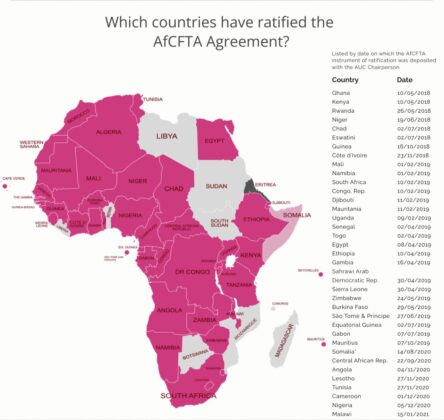
Ethiopia is a signatory to the Cooperative Framework Agreement (CFA, also known as the Entebbe Agreement), which several upstream Nile Basin states have ratified. Egypt and Sudan reject the CFA, but its existence strengthens Ethiopia’s claim that a new, inclusive legal framework has replaced the colonial-era treaties Cairo continues to invoke In practical terms, Egypt has so far been unable to halt or reverse the dam’s construction and filling Diplomatic pressure, regional summits and international lobbying have not altered the physical and legal facts on the ground: Ethiopia retains the upper hand on the Blue Nile.
Egyptian officials have also spoken of monitoring developments inside Ethiopia and of refusing to accept any new dams on the Blue Nile without prior agreement. Foreign Minister Badr Abdelatty has described the previous thirteen-year negotiation track as exhausted and has reserved Egypt’s right to respond with all measures permitted under the UN Charter if its water security is harmed. This language keeps options open while stopping short of announcing specific coercive actions.
Taken together, the picture that emerges is one of determined but so far limited pressure. Egypt has invested heavily in diplomatic outreach to China, the United States, South Korea and other partners. It has built a public regional coalition with Sudan, Eritrea and Somalia. It has closed the door on the previous format of negotiations and faces persistent allegations of deeper internal involvement Yet Ethiopia still holds the decisive advantages: control of the completed dam, the legal argument of equitable utilisation, and the CFA framework. Egypt’s “all means available” formula remains a stated last card. Whether it can be converted into real leverage is still an open question.