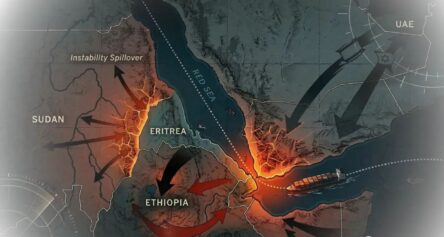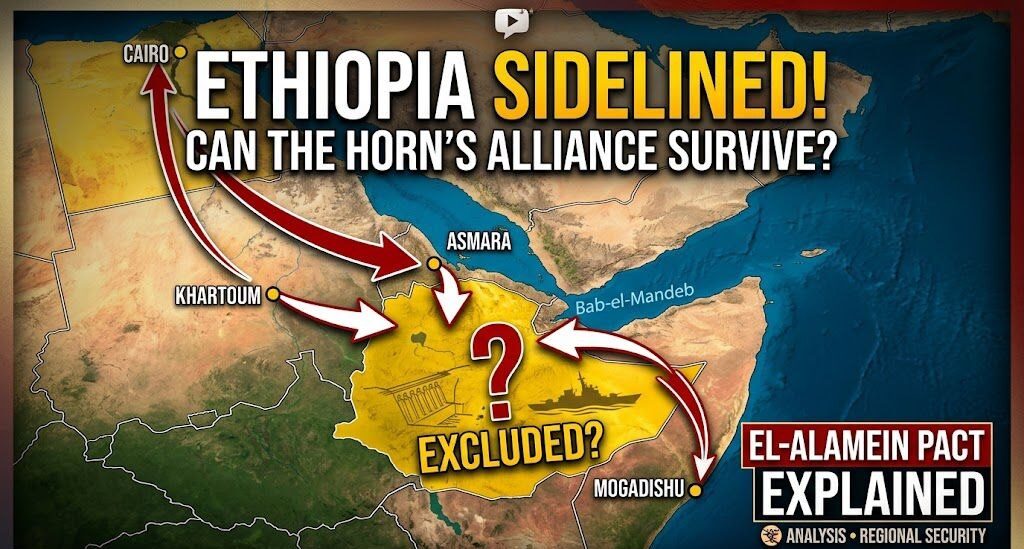
On paper, the El-Alamein Declaration reads like a masterclass in international legal consensus. Issued jointly by Egypt, Somalia, Sudan, and Eritrea, the document lays out strict principles on state sovereignty, maritime governance, non-interference, and non-unilateral action across Northeast Africa Yet behind the diplomatic polish lies an elephant in the room: the strategic framework targets core regional disputes while pointedly sidelining Ethiopia the Horn of Africa’s geographic hub, second-most populous nation on the continent, and the economic powerhouse driving many of these contested dynamics.
By examining four pivotal nations (Egypt, Ethiopia, Somalia, and Sudan) and four intersecting national interests (Nile Basin hydrology, Red Sea maritime access, Somali security architecture, and border disputes), a fundamental flaw in this emerging alliance becomes clear. Can an anti-encirclement pact deliver lasting stability when it excludes the region’s central player?
- Nile Hydrology: Water Sovereignty vs. Upstream Development The Nile River basin remains the foundational fault line of regional geopolitics Egypt’s Stance: Facing structural water scarcity and dependent on the Nile for over 90% of its freshwater, Cairo treats transboundary water security as an absolute national survival metric. Egypt insists on consensus-driven allocations and strict legal constraints against unilateral upstream alterations Ethiopia’s Stance: As the source of roughly 85% of the Nile’s total flow via the Blue Nile, Addis Ababa views projects like the Grand Ethiopian Renaissance Dam (GERD) as non-negotiable engines for domestic electrification, economic independence, and poverty alleviation.
The Strategic Gap: The El-Alamein Declaration invokes principles of non-unilateral action to challenge upstream water projects. However, framing Nile governance without the state that controls the headwaters produces diplomatic statements rather than actionable water-sharing mechanisms. - Red Sea Security: Coastal Dominance vs. Landlocked Ambitions
The Bab-el-Mandeb Strait and the Red Sea corridor are critical bottlenecks for global trade, energy supply, and naval power projection.
Egypt’s Stance: Securing canal revenues and maritime transit relies on keeping the Red Sea under the exclusive jurisdiction of littoral (coastal) nations, blocking landlocked powers or non-regional states from establishing permanent footholds. - Ethiopia’s Stance: Operating a rapidly expanding economy with over 120 million people, Ethiopia considers direct commercial and naval access to maritime routes essential for long-term economic survival and national defense.
The Strategic Gap: Restricting Red Sea security purely to coastal states creates an artificial geopolitical boundary. Sidelining the primary inland driver of regional cargo volume risks fueling unauthorized port deals and escalating naval friction. - Somalia’s Security Architecture: Sovereign Authority vs. Boots on the Ground
Stabilizing Somalia remains vital for counter-terrorism efforts and regional integration.
Somalia’s Stance: Mogadishu demands strict recognition of its territorial integrity and state sovereignty, opposing external agreements or troop presence negotiated without federal authority.
Ethiopia’s Stance: Sharing a vast, porous border with Somalia, Addis Ababa views counter-insurgency operations as a matter of direct domestic security. Ethiopian forces have spent years managing frontline counter-terrorism operations under African Union mandates and bilateral arrangements.
The Strategic Gap: While the declaration affirms support for Mogadishu’s sovereignty, attempting to restructure Somalia’s security architecture while alienating the neighboring force with significant operational presence creates security vacuums that militant forces can exploit. - Border Disputes: The Reality of Territorial Integrity
Border demarcation remains a delicate flashpoint across the Horn.
Sudan’s Stance: Khartoum insists on strict adherence to international boundaries and colonial-era treaties, particularly regarding the fertile Al-Fashaga agricultural lands.
Ethiopia’s Stance: Addis Ababa advocates for dialogue and joint border management, highlighting historical local farming populations and warning against unilateral militarization along contested zones.
The Strategic Gap: Invoking territorial integrity without direct bilateral negotiations fails to solve localized border friction. Third-party declarations cannot replace direct compromise between adjacent states.
The Reality of Regional Architecture
The El-Alamein Declaration successfully aligns Egypt, Sudan, Eritrea, and Somalia into a cohesive political block. Yet a regional security structure built around isolating its central geographic power remains inherently fragile. Lasting stability across the Horn of Africa will ultimately require bringing Ethiopia inside the diplomatic frame rather than managing it from the outside.