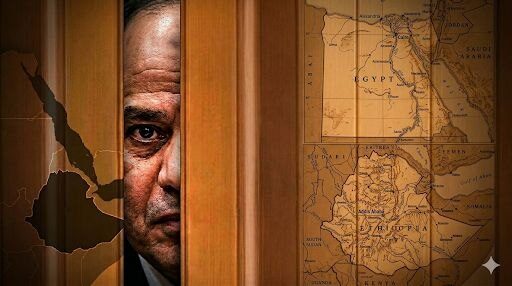
Reports suggest that Ethiopia is once again reconsidering the Somaliland option as part of its Red Sea strategy. A few days after Somaliland celebrated the 35th anniversary of its declaration of independence from Somalia, attention across the Horn of Africa shifted back to Ethiopia.
This has reignited the unresolved question: Could Ethiopia become the second country, after Israel, to officially recognize Somaliland?
After the excitement surrounding the Memorandum of Understanding (MoU) signed between Ethiopia and Somaliland in 2024 gradually faded, many believed the issue had been shelved. However, it has now resurfaced due to new diplomatic initiatives, intensifying geopolitical competition over the Red Sea shipping corridor, and Ethiopia’s continued efforts to secure reliable access to the sea.
Although there is no official confirmation that Ethiopia is preparing to recognize Somaliland, recent discussions held in Washington by Foreign Minister Dr. Gedion Timothewos have fueled speculation that Addis Ababa may once again be reviewing strategic options it had previously put aside due to regional opposition.
The United Arab Emirates, one of Ethiopia’s closest partners, is reportedly lobbying several countries to recognize Somaliland. According to reports, the UAE has been conducting diplomatic efforts to persuade countries including Eswatini, Argentina, Zambia, and the Dominican Republic to grant Somaliland state recognition. Somalia has strongly opposed these efforts, arguing that they violate the principles of the African Union.
Meanwhile, Egypt and Eritrea continue working to prevent Ethiopia from returning to the Red Sea.
Eritrean President Isaias Afwerki is in Cairo for a three-day official working visit.
President Isaias is holding talks with Egyptian President Abdel Fattah el-Sisi on bilateral cooperation, regional security, and current developments in both the Horn of Africa and the Middle East.
According to Eritrean Information Minister Yemane Gebremeskel, the two leaders will discuss ways to strengthen broad bilateral relations, including economic cooperation and collaboration in other sectors.
The discussions will also focus on issues affecting the Horn of Africa, Red Sea security, and the wider Middle East region. Eritrea’s Foreign Minister Osman Saleh is accompanying President Isaias as part of the high-level delegation.
The visit comes at a time of heightened regional tensions involving Ethiopia, Egypt, and Eritrea, driven by evolving security and geopolitical developments in both the Horn of Africa and the Red Sea corridor.
Since Ethiopia publicly reaffirmed its determination to obtain sea access last month, it has accused Egypt of intensifying what it described as “encirclement-like” activities and pursuing a strategy of “provocation” against Ethiopia. These accusations came after Egyptian officials criticized Ethiopia’s maritime ambitions and warned against actions they said could destabilize the region.
At the time, Ethiopian Foreign Ministry spokesperson Ambassador Nebiat Getachew emphasized that Addis Ababa would continue pursuing its objective through peaceful and diplomatic means.
During the same month, the Ethiopian National Defense Force announced that it had briefed members of the diplomatic community on its “Tsimdo Initiative.” During that presentation, military officials linked regional security concerns to developments involving neighboring countries, including Eritrea.
The briefing followed a visit by Egyptian Foreign Minister Badr Abdelatty and Transport Minister Kamel El-Wazir to Asmara, where they held talks with President Isaias Afwerki. During that visit, Egypt and Eritrea signed an agreement on maritime transport and cooperation between Red Sea ports.
Following the agreement, Cairo and Asmara reaffirmed that governance and security in the Red Sea should be decided only by countries bordering the Red Sea. Ethiopia views this position as an attempt to diplomatically isolate the region’s largest landlocked country.
President Isaias’ current visit follows steadily expanding political and economic ties between Cairo and Asmara. Last April, a senior Eritrean delegation led by Economic Affairs official Hagos Ghebrehiwet and Trade and Industry Minister Nasreddin Salih held extensive discussions in Cairo with Egyptian officials on trade, investment, and broader economic cooperation.
Eritrean officials described those meetings as part of ongoing efforts to deepen bilateral relations.
Relations between Egypt and Eritrea have strengthened significantly in recent years, largely due to shared concerns over Red Sea security and broader geopolitical developments. During a high-level meeting held in Cairo last October, Presidents el-Sisi and Isaias discussed the situation in the Horn of Africa and the strategic importance of the Red Sea shipping corridor.
During those talks, Egypt reaffirmed its support for Eritrea’s sovereignty and territorial integrity a move that observers viewed as further evidence of growing political alignment between the two countries.
The outcome of President Isaias’ current talks in Cairo is expected to be closely monitored in Addis Ababa. Ethiopian officials view the evolving diplomatic and security partnerships in the region through the lens of Ethiopia’s pursuit of maritime access and the changing security dynamics across the Horn of Africa.