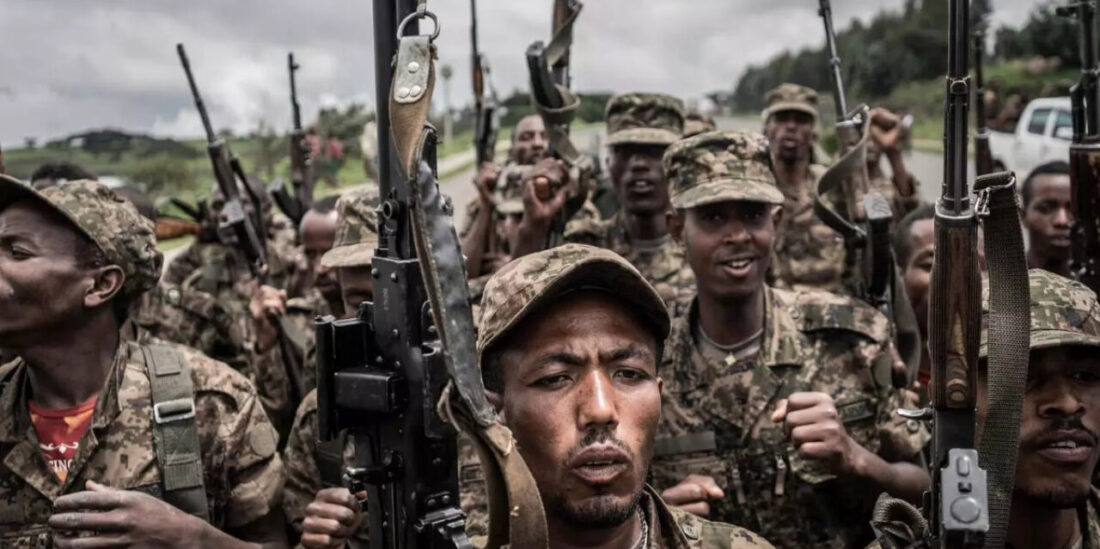
A new alliance of armed Ethiopian groups has changed the political and security landscape around the country.
On September 20, seven armed organizations announced the formation of the Ethiopian Peoples’ Forces Alliance for Survival, bringing together the Tigray People’s Liberation Front, Oromo Liberation Army, Amhara Fano National Movement, Ogaden National Liberation Front, Afar Revolutionary Democratic Unity Front, Benishangul Peoples Liberation Movement and Gumuz Peoples Democratic Movement.
Reuters reported that the coalition says it is seeking to remove Prime Minister Abiy Ahmed’s government.
But the most important question may not simply be whether these groups can fight together It is whether they can remain together after their immediate common objective is achieved The alliance brings together organizations with dramatically different political histories and objectives. Some have fought each other directly. Others have competing territorial claims, ethnic grievances and fundamentally different visions for Ethiopia’s future.
That contradiction is visible in the words of OLA adviser Jirenya Gudeta In an interview with BBC Afaan Oromoo, Jirenya said the OLA had not abandoned its longstanding objective of dismantling what it calls the “empire’s system.” He described the alliance not as a merger, but as a working arrangement between groups that do not share the same political ideology.
That distinction matters.
Jirenya explicitly said, “We have not become one.” According to his explanation, the groups are cooperating because they currently see the federal government and the ruling Prosperity Party as their principal threat In other words, the alliance does not necessarily represent ideological convergence It represents tactical convergence And that may be its greatest weakness in the long term.
The TPLF and Fano, for example, fought on opposite sides during Ethiopia’s 2020–2022 war. Their territorial and political disputes have not disappeared. The question of Western Tigray remains deeply contested. Meanwhile, the OLA and Fano have also accused one another of attacks against civilians in areas of Oromia Yet these groups are now sitting at the same political table.
Why? Because each organization appears to believe that cooperation against the federal government currently serves its interests Jirenya’s comments make this calculation particularly clear. He argued that political differences could be addressed later, potentially through a transitional government and eventually through referendums.
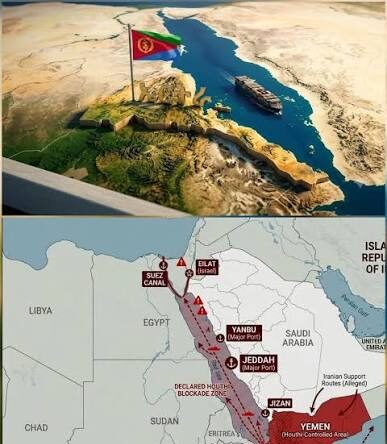
That creates a crucial question: what happens after? Well it is noted that the alliance is part of an Eritrean strategy of “transnational power projection,” designed to use Ethiopian armed groups as proxies to weaken the federal government and create strategic depth for Eritrea Secret consultations took place in Eritrea the past few months and Asmara promoted a “Roadmap for Transitional Government.” Eritrea is attempting to coordinate the different factions through a political and military structure.Reuters also reported that the coalition contains groups with significant political and territorial differences.
The alliance therefore raises two separate questions The first is external: Eritrea is providing political, military or logistical support to the coalition, how extensive is that support the second is internal: Can organizations with competing visions of Ethiopia actually construct a common political order? Jirenya’s remarks provide an important clue He did not describe the alliance as a unified ideological movement. Instead, he described it as cooperation between separate organizations pursuing their own objectives.
That means the coalition could potentially function effectively as a pressure mechanism against the federal government while remaining deeply divided over what comes next And this is where the alliance becomes more complicated than a simple government-versus-rebels confrontation if its members eventually confront questions of territory, federalism, self-determination, ethnicity and state power, their differences could become impossible to contain.
The alliance has therefore created a new political reality in Ethiopia Its members have discovered that they can cooperate without agreeing on the future One big question lies here: Is this primarily an Ethiopian coalition driven by shared grievances, or is it becoming part of a wider regional power struggle involving Eritrea?
The answer could determine not only the future of Ethiopia’s political order, but also the balance of power across the Horn of Africa.