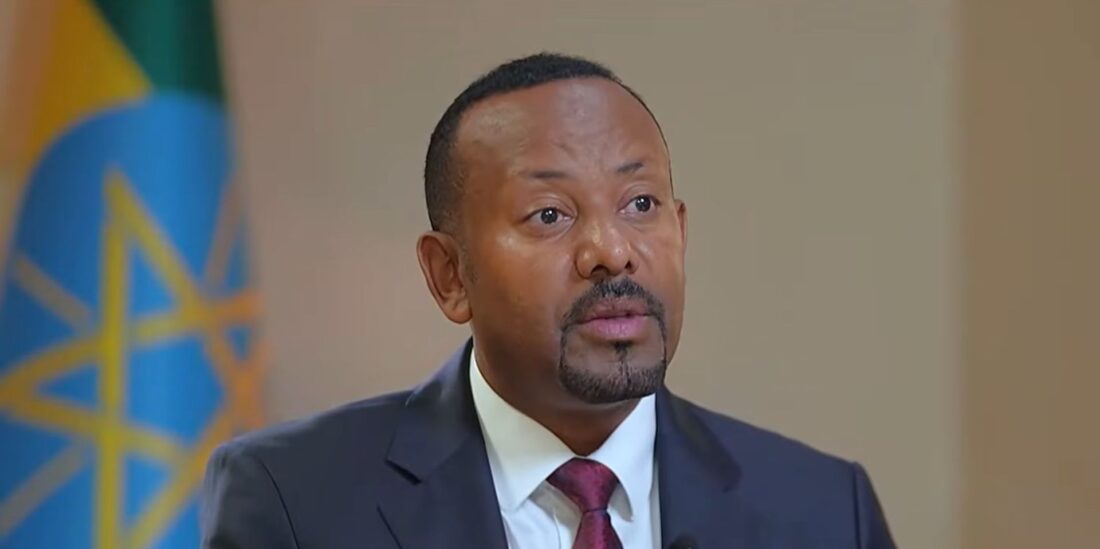
Abiy Ahmed’s warning to Eritrea on Monday carried implications beyond the bilateral relationship. Delivered three days after the federal government established a caretaker administration in Tigray, it placed Ethiopia’s internal political transition alongside its deteriorating relations with Asmara. The two developments expose a strategic dilemma for Addis Ababa: external deterrence may help protect the conditions for political consolidation in Tigray, but it cannot compensate for an interim administration that fails to establish political legitimacy. For Ethiopia, the task is to consolidate regional stability while preventing external security pressures from undermining that process.
On October 16, the federal government announced a six-month mandate for the caretaker administration to prepare for regional elections. Three days later, Abiy warned Eritrea that continuing to serve as a base for Ethiopia’s enemies would have “very, very, very severe consequences.” He also declared that the Tigray People’s Liberation Front (TPLF) was approaching the end of its existence and urged its members to abandon armed resistance.
The significance lies in how these developments intersect. Ethiopia is seeking to translate its position in Tigray into a functioning political order while signalling that external interference could undermine the transition. Although Abiy did not explicitly present the two developments as a coordinated strategy, both concern the conditions necessary to prevent renewed conflict in northern Ethiopia.
The caretaker administration’s mandate includes restoring public services, facilitating the return of displaced residents, reopening markets, ensuring humanitarian access and preparing regional elections. For the federal government, the six-month timetable offers a framework for moving from prolonged conflict towards regular regional administration. Its success would also strengthen the prospects for reconstruction and allow greater attention to wider national priorities.
The TPLF’s rejection of the administration as illegitimate presents a significant political obstacle. Yet the question of legitimacy cannot be settled by competing declarations alone. It will depend partly on whether the administration can demonstrate that it serves the population and creates a credible route towards elected leadership.
Several benchmarks will matter. Public services must resume, humanitarian access must be sustained, and displaced residents must be able to return safely and voluntarily. Election preparations must also establish a credible process for political participation, including clarity on the conditions under which competing political forces can participate. TPLF participation would be relevant to the breadth of the political process, although its absence would not, by itself, determine whether elections are credible. The essential test is whether the transition can offer a durable institutional alternative to renewed confrontation.
For Ethiopia, this distinction has strategic consequences. A functioning administration and credible electoral process would strengthen the basis for stability in Tigray. If political disagreements remain unresolved, the government could face continued security pressures even after the six-month period. The six-month deadline is therefore more than an administrative target. It is a test of whether the federal government can translate stabilisation into durable political authority, supported by functioning institutions and a credible electoral process that can withstand challenges to its legitimacy.
Abiy’s warning placed the Tigray transition within Ethiopia’s wider security concerns. Addis Ababa has accused Eritrea of supporting armed opponents and threatening Ethiopian security. Eritrea denies these allegations, which must remain attributed rather than treated as independently established facts.
From Ethiopia’s perspective, alleged external support for armed groups could complicate efforts to stabilise Tigray. Renewed confrontation would place additional pressure on communities affected by conflict, impede reconstruction and risk widening regional tensions. Addressing credible external security threats is therefore directly relevant to protecting the conditions for political recovery.
The warning also leaves room for a diplomatic alternative. Abiy’s appeal for good-neighbourly relations suggests that Ethiopia’s stated objective need not be confrontation itself, but a relationship that respects its security and sovereignty. For both countries, escalation carries risks beyond their shared border. Ethiopia has an interest in communicating its security concerns clearly while preserving space for diplomacy and avoiding a wider conflict.
Deterrence, however, has limits. It can signal resolve and seek to discourage external interference, but it cannot independently settle political disputes in Tigray or ensure that regional institutions command public confidence. Equally, difficulties in the political transition would not establish the truth of allegations against Eritrea. The two challenges are connected, but each requires its own response.
The coming six months will test whether the caretaker administration can translate its mandate into measurable progress while Ethiopia manages its deteriorating relationship with Eritrea. These objectives reinforce one another. Greater stability in Tigray would strengthen Ethiopia’s security position, while reduced regional tensions would create more space for reconstruction and political recovery.
Abiy’s warning signals the seriousness with which Addis Ababa views the external security question. The caretaker administration provides a defined framework for addressing the internal political transition. The decisive question is whether Ethiopia can use the six-month period to establish a credible political order in Tigray while safeguarding its sovereignty and preventing regional tensions from developing into another conflict. The answer will shape not only the future of Tigray, but Ethiopia’s wider security environment.