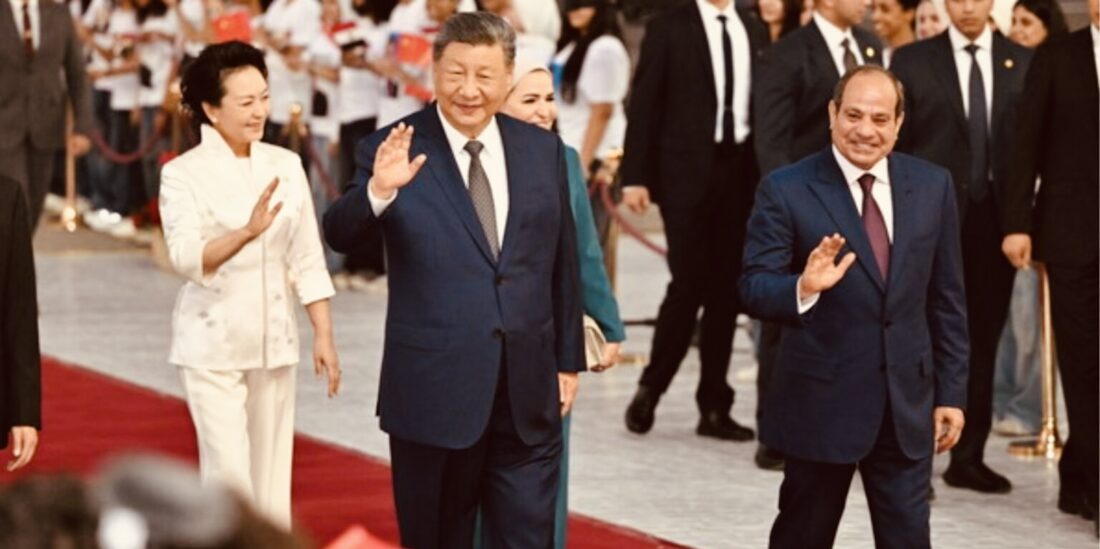
The recent Egyptian-Chinese joint statement has been greeted in some Egyptian circles as a diplomatic triumph. Commentators highlight China’s recognition of the Nile’s vital importance to Egypt, its affirmation of Egypt’s right to protect water and food security, and the call for Nile Basin states to respect international law, including the obligation not to cause significant harm.
They portray this language as a strategic success that constrains Ethiopia’s room for maneuver without even naming the Grand Ethiopian Renaissance Dam. This reading is comforting. It is also largely wishful thinking. Egypt needs to stop dreaming of isolating or pressuring Ethiopia through great-power statements and start cooperating with Addis Ababa on the basis of shared interests and mutual benefit.
China’s formulation is carefully balanced, not a decisive endorsement of Egypt’s maximalist position. Beijing has long maintained deep economic and political ties with Ethiopia. Chinese firms and financing have played major roles in Ethiopian infrastructure, including elements connected to the GERD and related power infrastructure. Ethiopia has been a flagship partner in the Belt and Road Initiative in the Horn of Africa.
China consistently prefers African solutions to African problems and has repeatedly called for dialogue among Egypt, Ethiopia, and Sudan rather than external arbitration or pressure. A joint statement that affirms general principles of international water law while avoiding any specific criticism of Ethiopia’s actions does not alter China’s fundamental interest in maintaining productive relations with both Cairo and Addis Ababa. Interpreting polite diplomatic language as a strategic victory that “narrows Ethiopia’s diplomatic space” overstates its practical effect.
China will continue to balance its relationships; it will not sacrifice its substantial stakes in Ethiopia for the sake of Egyptian water security narratives.Meanwhile, the physical and political realities on the ground have moved far beyond statements. The GERD is largely complete and has undergone successive filling phases. Ethiopia has framed the dam as a sovereign development project essential for electricity generation, industrialization, and poverty reduction in a country where large portions of the population still lack reliable power.
Ethiopia rejects the colonial-era Nile treaties of 1929 and 1959, to which it was never a party, and insists on the modern principles of equitable and reasonable utilization of shared watercourses. Years of negotiations under various umbrellas have failed to produce a binding agreement on filling and operation rules that satisfies all sides. Continued insistence that Egypt can somehow reverse or heavily constrain the dam through diplomatic isolation or external pressure ignores these facts. The dam exists. Unilateral filling has already occurred.
Further confrontation will not dismantle it; it will only deepen mistrust.The “no significant harm” principle is real under international water law, but so is the principle of equitable and reasonable use. These principles must be balanced through negotiation, technical cooperation, and joint mechanisms, not asserted as absolute trump cards. Egypt’s near-total dependence on the Nile is understandable and legitimate. Ethiopia’s need to develop its water resources for a growing population is equally legitimate.
Treating the issue as a zero-sum contest in which one side must concede absolute priority guarantees deadlock. Rhetoric that frames any Ethiopian development as an existential threat, or that seeks to close off regional options such as Red Sea access, escalates political tensions without solving the underlying technical and allocation problems.Cooperation offers a more realistic path. A negotiated framework for coordinated operation of the GERD, data sharing, drought management protocols, and joint investment in water efficiency and alternative supply measures would reduce risks for all parties.
Ethiopia gains international legitimacy and potentially technical or financial support for broader basin development. Egypt gains greater predictability of flows and a stake in the management regime. Sudan, often caught in the middle, benefits from flood control and regulated releases. Beyond the dam itself, broader economic cooperation trade, infrastructure connectivity, energy exchanges, and agricultural coordination could turn the Nile from a source of perpetual dispute into a platform for regional integration.
China, with interests in both countries, is better positioned to encourage such practical arrangements than to underwrite one side’s maximal claims.Persisting in the dream that external statements will deliver a decisive advantage risks missing opportunities and prolonging a conflict that serves neither country’s long-term development. Egypt’s water security is real and must be protected. Ethiopia’s development rights are equally real.
The only sustainable way forward is direct, pragmatic engagement that acknowledges both. Stop treating every diplomatic phrase as a strategic breakthrough that will compel Ethiopian concessions. Accept the new hydrological and political realities, resume serious technical and political talks aimed at win-win arrangements, and build cooperative institutions. The alternative continued confrontation, mutual suspicion, and wasted diplomatic capital leaves both nations poorer and the region less stable. Cooperation with Ethiopia is not a concession. It is the necessary recognition that the Nile’s future must be managed together.