From Article 39 and self-determination to Addis Ababa’s status, federalism, religion, corruption, and peacebuilding, the National Dialogue Commission has unveiled eight major agendas for a historic national conference. Could this be the start of a new national consensus or another missed opportunity?
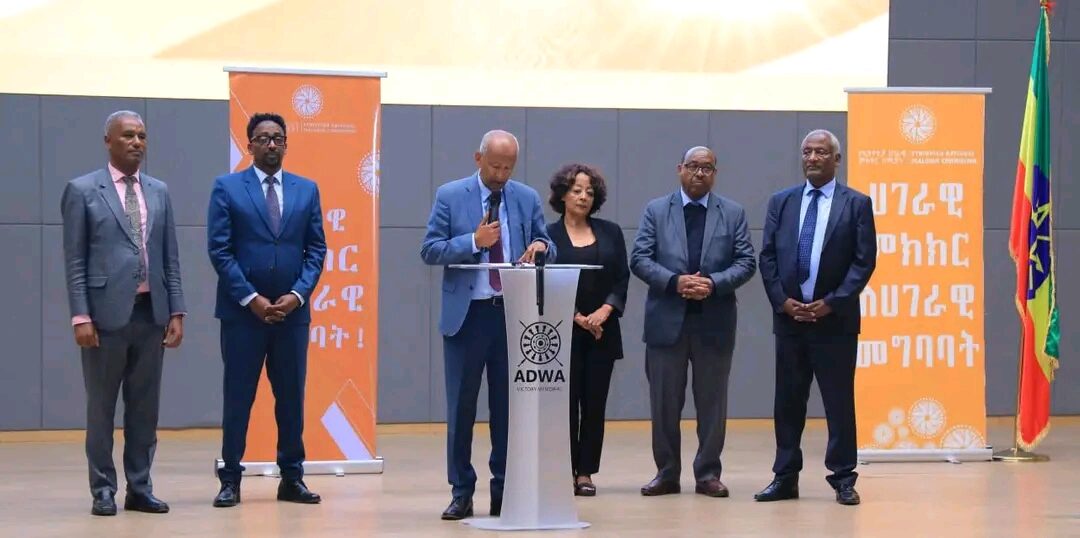
The Ethiopian National Dialogue Commission (ENDC) has officially unveiled eight major agenda items that will form the basis of discussions at the country’s upcoming national conference, a landmark event aimed at addressing some of Ethiopia’s most complex and longstanding political, social, and constitutional questions.
The Commission, established under Proclamation No. 1265/2021 (E.C.), was created to facilitate broad, inclusive, and impartial dialogue among Ethiopians. Its mandate is to help bridge deep political and ideological divides that have accumulated over decades and to build a foundation for lasting national consensus.
After four years of consultations, public forums, and nationwide agenda-gathering efforts, the Commission has identified eight overarching themes that it considers central to Ethiopia’s future. The agendas were formally announced by Chief Commissioner Mesfin Araya ahead of the national conference scheduled to begin on 8 Hamle 2018 E.C. (July 15, 2026).
Among the most significant topics is the issue of nation-building, a subject that touches on questions of identity, belonging, and statehood. Discussions under this agenda will focus on national identity, ownership of the country, and the development of shared Ethiopian values that can serve as a unifying foundation for the country’s diverse communities.
Another major agenda concerns the structure and form of government. This theme is expected to generate extensive debate, as it encompasses issues related to Ethiopia’s political system, electoral framework, and models of governance. Participants will also discuss constitutional questions tied to self-determination, including Article 39 of the Ethiopian Constitution, which grants nations, nationalities, and peoples the right to self-determination up to and including secession. Other issues under this agenda include the creation of new regional states, federal-regional relations, constitutional amendment procedures, and the terms of office for federal and regional leaders.
The future status and governance of Ethiopia’s two federal cities, Addis Ababa and Dire Dawa, have also been included among the key agenda items. Discussions are expected to address the legal status of both cities, Addis Ababa’s relationship with the Oromia Regional State, and Dire Dawa’s relationship with the Oromia and Somali regional states. Participants will also examine issues related to representation, administration, policing, courts, boundaries, and place names, particularly in the capital.
Religious affairs constitute another major area of discussion. Ethiopia’s religious communities have historically played a significant role in the country’s social and political development. The agenda includes debates on secularism, freedom of religion and its limits, historical claims of marginalization or privilege among religious groups, and mechanisms for reducing tensions and strengthening interfaith coexistence.
Institution-building, the rule of law, and human rights have likewise been identified as national priorities. Under this theme, participants will discuss ways of strengthening public institutions, improving legal governance, and safeguarding citizens’ rights. The agenda specifically includes the rights of internally displaced persons (IDPs), as well as discussions regarding the recognition of dual citizenship and broader questions of constitutional and legal reform.
Economic and social issues form the sixth major agenda category. These discussions will focus on the concerns of women, farmers, pastoralist communities, and workers. The objective is to examine how national policies can better address social inequalities, economic challenges, and development needs affecting various sectors of Ethiopian society.
The seventh agenda centers on corruption and good governance. Participants will examine issues related to accountability, transparency, public trust, and institutional effectiveness. The inclusion of this theme reflects growing public concern over governance standards and the need for stronger mechanisms to combat corruption and improve service delivery.
Perhaps the most closely watched discussions will take place under the eighth agenda: peacebuilding. Coming at a time when Ethiopia continues to grapple with the consequences of multiple conflicts, this theme will address the root causes of violence, conflict resolution mechanisms, the role of armed groups, ceasefire arrangements, and peace agreements. Discussions will also cover transitional justice, an issue regarded by many as essential for reconciliation and long-term stability.
According to Chief Commissioner Mesfin Araya, the eight agendas were selected because of their national significance and their potential to shape Ethiopia’s future. He emphasized that the numerous subtopics identified under each theme will serve as guiding questions for conference participants rather than predetermined conclusions.
The July conference is expected to bring together representatives from across Ethiopia’s political, social, religious, and civic sectors. As the country seeks to navigate competing visions of identity, governance, and national unity, many observers view the national dialogue process as a critical opportunity to address unresolved disputes through discussion rather than confrontation.
Whether the dialogue succeeds in producing meaningful consensus remains to be seen, but the unveiling of these eight agendas marks a significant step in one of the most ambitious attempts in recent Ethiopian history to confront the issues that have shaped the country’s political landscape for generations.