Guelleh’s Message to the UAE—and to Ethiopia
As maritime corridors redraw regional maps and Gulf powers deepen their footprints across the Horn, Djibouti’s president has issued a rare, unfiltered warning.
His targets?
The United Arab Emirates—and Ethiopia.
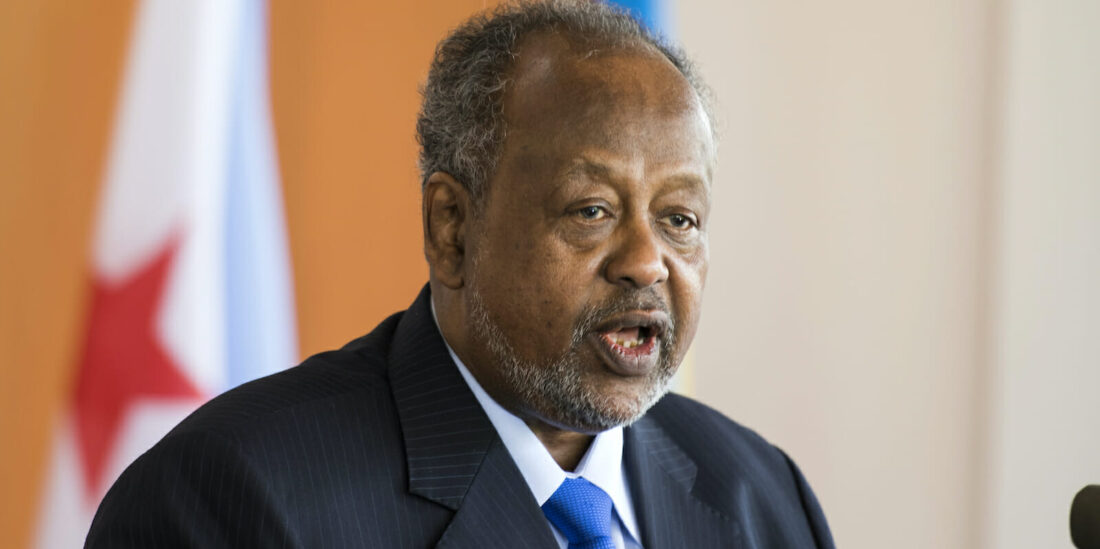
In a wide-ranging interview in May 2025, Djibouti’s President Ismaïl Omar Guelleh took aim at what he calls “disguised colonialism” by the UAE—and firmly rejected Ethiopia’s push for a direct maritime outlet.
In today’s episode, we break down the geopolitical signals behind Guelleh’s remarks, what they reveal about Djibouti’s defensive posture, and why this could reshape Ethiopia’s Red Sea strategy moving forward.
For years, the UAE has cast itself as a development partner across the Horn—signing port deals in Assab, Berbera, and Kismayo. But Guelleh has now drawn a sharp line, accusing Abu Dhabi of turning port infrastructure into strategic weapons.
“There is no investment without military interest.”
That was Guelleh’s clearest warning yet. The subtext?
Djibouti sees Emirati deals not as trade facilitation—but as hard power encirclement.
He pointed to the DP World fallout in 2018, where Djibouti nationalized the Doraleh terminal and expelled Emirati operators. The president stood by that decision, calling it a matter of national dignity.
What followed, he says, was an orchestrated Emirati campaign to “punish” Djibouti—by funding and militarizing rival ports in neighboring countries.
Guelleh didn’t just criticize the Gulf. He also addressed the growing push by Ethiopia to secure its own Red Sea outlet.
While Addis Ababa has insisted that maritime access is essential for its sovereignty and economic growth, Djibouti’s message was unequivocal:
“Djibouti is a sovereign country. Our territory is not up for negotiation—today or tomorrow.”
This rebuff, echoed by senior presidential adviser Alexis Mohamed, lands at a sensitive time for Ethiopia. Prime Minister Abiy Ahmed has recently toned down earlier rhetoric suggesting historical entitlement to coastal access. But Djibouti’s position remains firm: no land swaps, no base concessions, and no pressure diplomacy.
The implications are clear—Ethiopia must recalibrate. If Red Sea access is to be achieved, it might be hard to come through Djibouti
Guelleh’s tone reflects more than frustration—it signals a deeper fear of regional irrelevance.
For decades, Djibouti thrived as Ethiopia’s exclusive maritime gateway. But Abu Dhabi’s network of port deals—and Ethiopia’s pivot to Somaliland’s Berbera—have begun to erode that monopoly.
Behind the scenes, Djibouti sees its centrality slipping—and it’s fighting back, not with weapons, but with warnings.
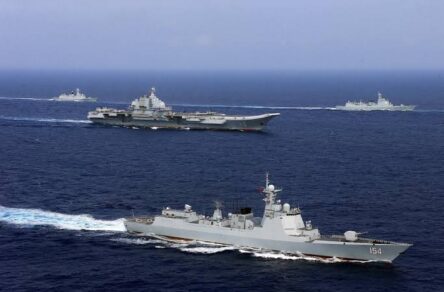
Add to that the growing presence of foreign military actors—China, the U.S., France, and possibly Saudi Arabia—and Djibouti’s leadership feels like a king being surrounded on a shrinking chessboard.
Guelleh’s answer?
Double down on sovereignty. Reject strategic dependency. And expose the ambitions of actors who bypass Djibouti in favor of newer, more pliable coastal players.
For Ethiopia, Guelleh’s remarks represent a diplomatic wall.
While trade through Djibouti continues, the prospect of a special access corridor, port lease, or joint maritime zone seems off the table—at least for now.
Addis must now turn more seriously toward Berbera, Assab, or even long-shot deals with Somalia. But every option involves its own geopolitical cost—and potential backlash from Djibouti, Egypt, or even Eritrea.
This leaves Ethiopia in a bind:
Depend on Djibouti and accept its limits?
Or diversify maritime access using every possible way and achieve its ambition?
President Guelleh’s interview was more than a warning. It was a statement of resistance—to foreign military expansion, to Emirati pressure, and to Ethiopian maritime assertiveness.
Djibouti may be small, but its messag wanted to pass was loud:
Sovereignty is not for lease. Ports are not for sale. And geography is not a bargaining chip.