
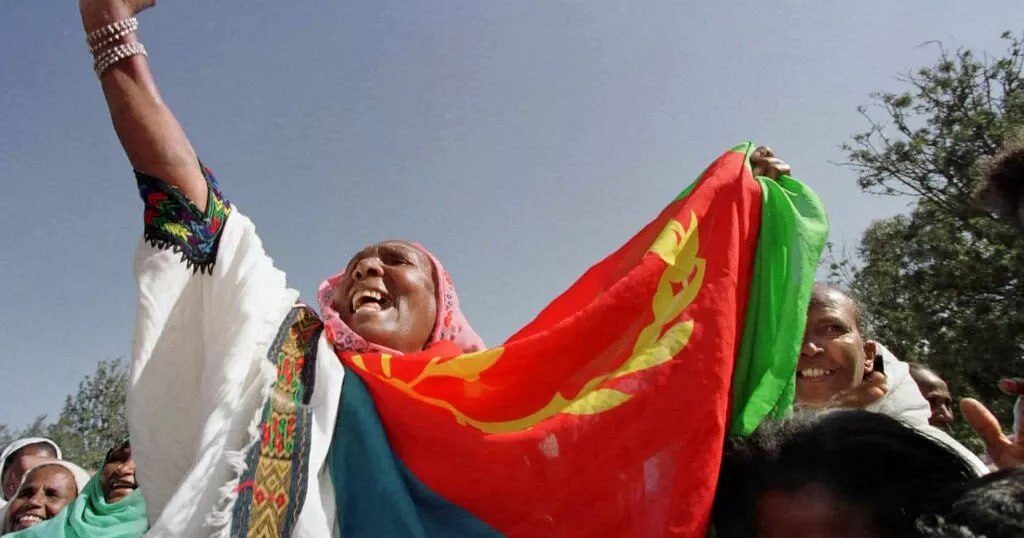

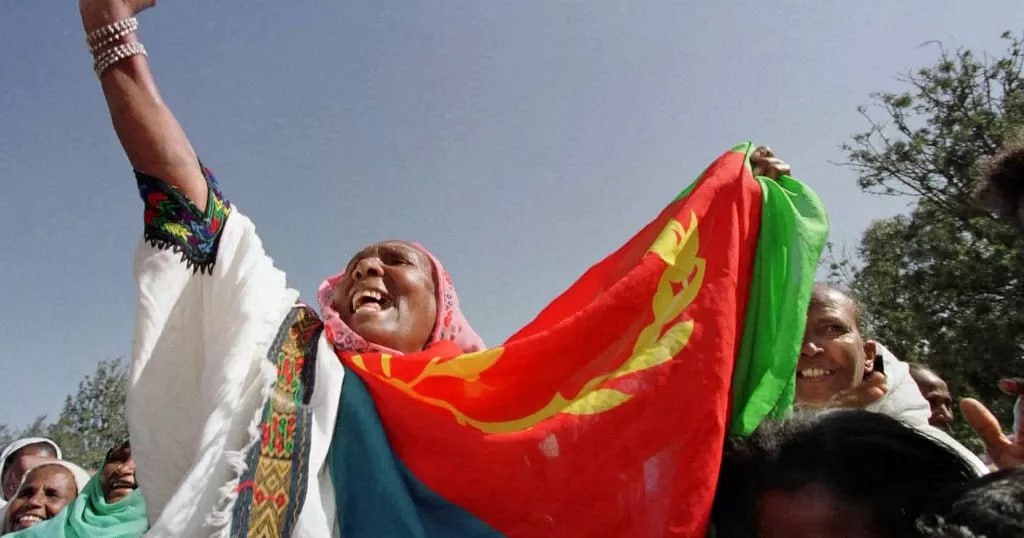
Thirty years of independence. No elections. No constitution. No free press. And one man—still in power. As Eritrea celebrates 34 years of independence, it’s time to ask—what has it really achieved… and at what cost? Eritrea just marked 34 years since breaking free from Ethiopia—a hard-won liberation after one of Africa’s longest guerrilla wars. But while the flags are flying and the parades are rolling, a bigger story is unfolding: Has Eritrea’s independence delivered on its promise—or has it become a cautionary tale for the region?
Today, we’re unpacking the legacy of President Isaias Afewerki, the good, the bad, and the ugly. From post-liberation hope to authoritarian rule… from national pride to regional disruption… let’s break it down.
Let’s start with the good—because there was some.
When Eritrea declared independence in 1991, few could question the sacrifice. Thirty years of guerrilla warfare forged a strong national identity, built around self-reliance, discipline, and unity.
The early years saw infrastructure expansion, literacy campaigns, and a sense of collective purpose. Roads were built, the local currency—the Nakfa—was introduced, and a small but determined industrial sector began to emerge.
Eritrea was praised for its low corruption and focus on merit-based governance in its first decade.
Isaias Afewerki, once hailed as a visionary, promised democracy, development, and dignity.
But then… things changed.
Here’s where the bad and the ugly begin.
By the late 1990s, Eritrea was no longer a rising model—it was a country at war again.
A devastating border conflict with Ethiopia from 1998 to 2000 left over 70,000 dead.
The war entrenched a siege mentality in the leadership and served as the justification for indefinite national conscription, which still exists today.
Elections were postponed.
The constitution was shelved.
Independent media?
Shut down never had a chance.
Opposition parties?
Nonexistent.
Eritrea today has no press freedom, no political freedom, and no civil society.
National service—originally meant to be 18 months—has turned into open-ended forced labor, often lasting a decade or more.
The UN has called it a system of modern-day slavery.
Thousands of Eritrean youth flee the country each year.
Many die in the Sahara or drown in the Mediterranean.
And economically?
Despite having two major ports—Massawa and Assab—Eritrea remains one of Africa’s least connected economies.
According to the World Bank, its GDP per capita is among the lowest on the continent.
But Eritrea’s story isn’t just about Eritrea.
Its independence—and its leadership—reshaped the Horn of Africa.
Let’s start with Ethiopia.
Eritrea’s departure in 1993 didn’t just cost Ethiopia its coastline.
The Eritrean Liberation movement, with its ethno-nationalist ideology, inspired movements like the TPLF in Tigray and the OLF in Oromia.
These groups trained alongside or received support from Eritrea during the struggle in the 70s and 80s—and continued on post-Independence—even today.
More than that, Eritrea’s independence itself led to a constitutional compromise for Ethiopia—Article 39—which gave every ethnic group, every liberation movement in Ethiopia the right to self-determination, including secession.
This article, created to legally justify Eritrea’s exit, planted the seeds for various ethnic based independence movements and the political fragmentation we see today.
Today, Ethiopia’s national unity is still reeling from the ripple effects of Eritrea’s independence.
And it didn’t stop at Ethiopia. Eritrea has clashed with Djibouti, fought Yemen over the Hanish Islands, and interfered in Somalia, allegedly backing extremist groups in the mid-2000s.
In 2009, the UN imposed sanctions on Eritrea for destabilizing the region—a move lifted only in 2018. More recently, Eritrea played a direct and brutal role in Ethiopia’s civil war in Tigray—sending troops accused of committing serious human rights abuses, including massacres and rape. Despite international condemnation, Isaias remains defiant, refusing to allow independent investigations.
And here’s what might be the ugliest truth of all.
After 34 years, Eritrea is one of the most closed, militarized, and censored countries in the world.
There’s no internet freedom. No independent institutions. No path for reform.The youth are either conscripted, fleeing, or silenced. Families are divided. Critics are jailed—or simply disappear. Yet the regime survives. And many Eritreans, especially in the diaspora, still see pride in their hard-won sovereignty.
Some argue Eritrea’s defiance of foreign influence is rare and admirable. But at what cost? What has Eritrea’s independence really brought? Sovereignty? Yes. Self-reliance? To a very limited extent. Freedom? Not even close.
Under Isaias Afewerki, Eritrea has become a state defined not by the liberation it won, but by the freedoms it refuses to give. Its people are resilient. Its land is rich in history and potential.
But without reform, independence risks becoming a prison—just under a different flag.
What do you think?
Has Eritrea’s independence delivered its promise—or betrayed it?
Drop your thoughts in the comments.