One country’s quest for security ends up dragging the entire Horn of Africa back into war? United Nations member states and major international organisations are sounding the alarm: Eritrea’s policies from heavy military build-ups along the Ethiopian border to alleged meddling in Sudan could trigger a devastating new crisis in a region already exhausted by conflict. Three years after the Tigray war claimed hundreds of thousands of lives, troops are again massing, accusations are flying, and fragile peace is unraveling. Ethiopia accuses Eritrean forces of infiltrating Tigray and backing insurgent groups; Eritrea sees Ethiopia’s push for Red Sea access as an existential threat. Add Eritrea’s reported support for Sudan’s armed forces, persistent human rights concerns at home, and the risk of a wider conflict sucking in Egypt, Gulf powers, and beyond and you have a perfect storm.
Member states of the United Nations (UN) and various international organizations have expressed deep concern that the policies of the Eritrean government could trigger another major crisis in the Horn of Africa. The region, already strained by conflicts in Sudan and longstanding rivalries between Ethiopia and Eritrea stands at a precarious juncture. Reports highlight escalating border tensions, military mobilizations, and alleged cross-border interventions as key drivers of instability.
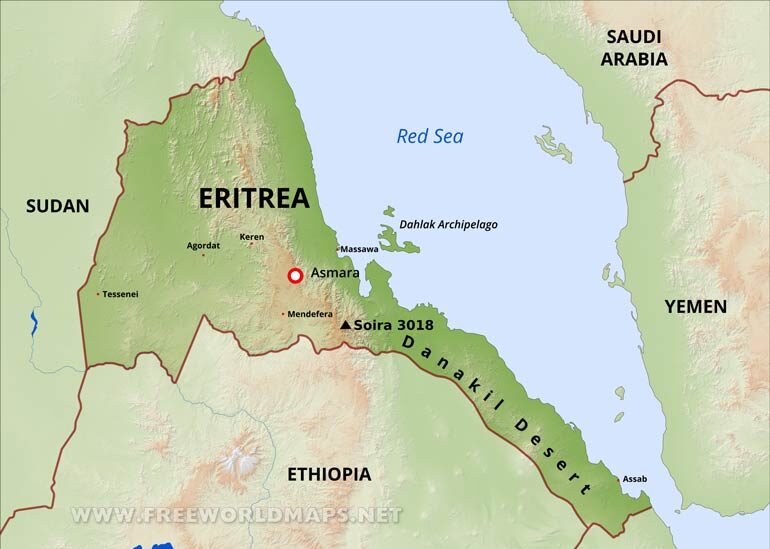
According to analyses by organizations such as the International Crisis Group and the Horn Institute, rising tensions between Eritrea and Ethiopia represent one of the most immediate threats. Three years after the end of the devastating Tigray war, which claimed hundreds of thousands of lives, fragile peace is unraveling. Both nations have mobilized troops along their shared border, exchanged accusations of incursions, and raised alarms at the United Nations. Ethiopia has accused Eritrean forces of infiltrating Tigray and supporting insurgent groups, including factions of the Tigray People’s Liberation Front (TPLF) and Amhara militias like Fano, aiming to undermine federal authority. Eritrea denies these claims, framing Ethiopia’s push for Red Sea access particularly through the port of Assab as an existential threat to its sovereignty.
Military buildups observed on both sides of the Eritrea-Ethiopia border, including mechanized units and heavy equipment, suggest preparations that could rapidly escalate into open conflict. A new war would not only devastate local populations but could also merge with Sudan’s ongoing civil war, creating a broader regional conflagration involving other actors such as Egypt, Gulf states, and others with stakes in the Red Sea.
Eritrea’s involvement in regional affairs, particularly Sudan, further fuels concerns. The country has been accused of aligning with the Sudanese Armed Forces (SAF) against the Rapid Support Forces (RSF), providing political, logistical, and potentially military support. This includes hosting or influencing armed groups and contributing to proxy dynamics amid Sudan’s brutal conflict. Such actions are seen as destabilizing, exacerbating refugee flows, resource competition, and cross-border violence that ripple across the Horn. International observers note that Eritrea’s strategy often involves leveraging alliances to counter perceived threats but this approach risks igniting wider instability.
Beyond geopolitics, human rights issues remain a central pillar of international scrutiny. Reports issued by the UN Human Rights Council and the UN Special Rapporteur on the situation of human rights in Eritrea paint a grim picture. Inside the country, serious violations including indefinite national service often described as forced labor, arbitrary detentions, enforced disappearances, and restrictions on freedoms are alleged to persist. The 2016 Commission of Inquiry previously concluded that such patterns may amount to crimes against humanity. As of 2025-2026, the Special Rapporteur has continued to highlight a lack of accountability and progress, urging renewed mandates for monitoring.
These domestic issues intersect with external behavior. Eritrea stands accused of supporting armed groups across the region and engaging in activities that heighten security risks. This dual concern internal repression and external adventurism has prompted calls for urgent diplomatic engagement. The UN and partners emphasize that unchecked escalation could lead to massive humanitarian suffering, with millions more displaced, economies shattered, and extremist groups gaining footholds in the chaos.
Diplomatic efforts are underway but face significant hurdles. The African Union, IGAD, and bilateral actors have been urged to facilitate dialogue. Key recommendations include de-escalating border tensions through verifiable troop withdrawals, addressing Ethiopia’s legitimate maritime access needs, and advancing inclusive political processes in Tigray. International actors, including the UN Security Council, have been encouraged to support mediation while maintaining pressure on human rights through resolutions and targeted measures.
Preventing another crisis demands coordinated action. The Horn of Africa’s interconnected security landscape means that developments in one area quickly affect neighbors. Eritrea’s policies, while rooted in its own security perceptions, are viewed by many as contributing to a dangerous cycle of mistrust and militarization. Without sustained diplomacy, dialogue, and accountability, the region risks sliding back into conflict with devastating human and strategic costs. Stakeholders must prioritize de-escalation, humanitarian access, and long-term stability initiatives to safeguard peace in this volatile but vital part of the world.