

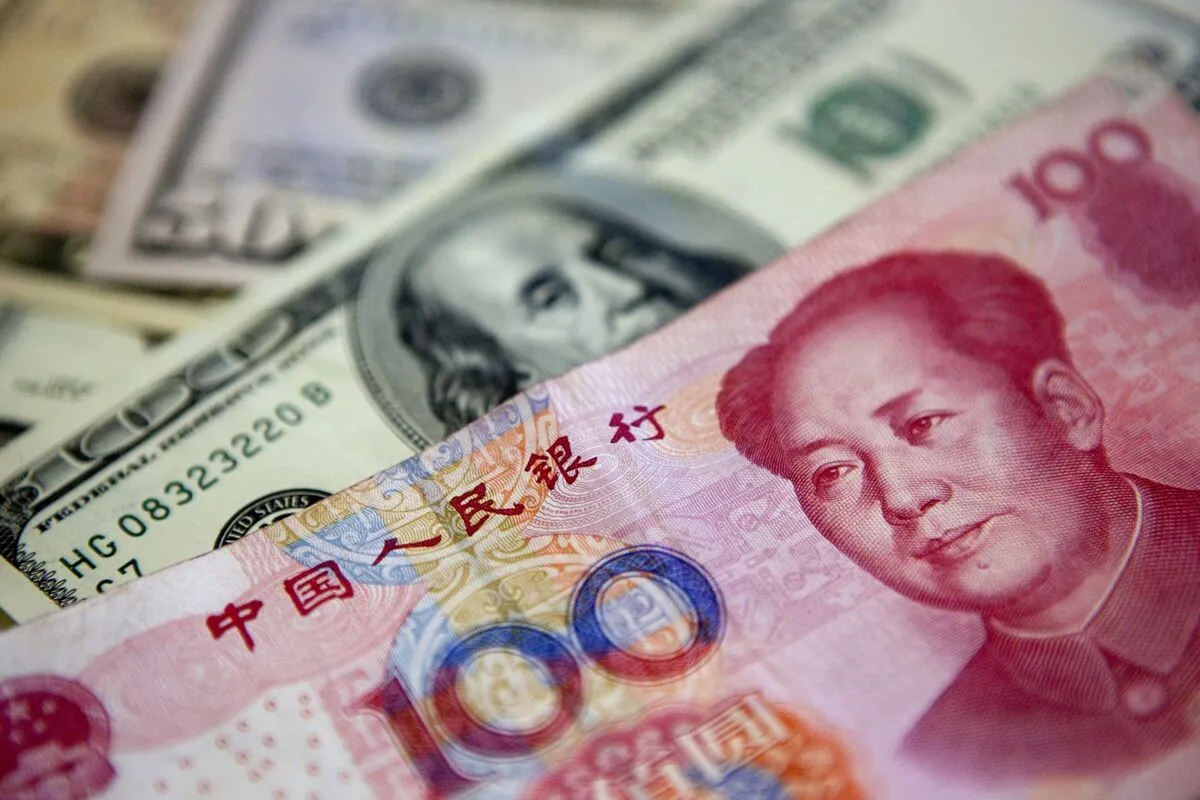
Nairobi, Kenya- Kenya is in talks with China to restructure part of its Standard Gauge Railway (SGR) debt by switching repayments from U.S. dollars to Chinese yuan, a move that could ease pressure on the country’s foreign reserves while deepening Africa’s exposure to Beijing’s currency.
The Treasury confirmed in late August that negotiations with Beijing are underway. The plan would see a portion of Kenya’s $3.6 billion SGR loan serviced in yuan instead of dollars. Analysts say the switch could reduce annual debt-service costs, given the strong dollar and high global interest rates.
But the potential swap is more than a technical adjustment it carries significant implications for Africa’s debt landscape, trade flows, and the global trend of de-dollarization.
Heavy Borrowing, Rising Costs
Kenya borrowed heavily during the 2010s to fund its flagship railway, largely from Chinese lenders. With the shilling under sustained pressure and U.S. rates elevated, repaying in dollars has become increasingly expensive.
“Think of it as refinancing in a cheaper currency you also use for imports,” one analyst told Bloomberg. Reuters likewise reported that Nairobi hopes the deal will ease dollar demand in the local market.
For China, the proposal serves its broader ambition: pushing the renminbi (RMB) into global circulation. If approved, the shift would mark the first time a large African infrastructure loan was restructured into yuan, potentially creating a precedent for other countries.
Africa’s Debt Puzzle
The Financial Times points out that such moves are part of a wider shift among emerging markets struggling with dollar debt. Africa’s external liabilities are roughly divided three ways:
Multilateral institutions like the World Bank hold about a third, usually at concessional rates near 1%.
Bilateral creditors, led by China, hold about 23%. Chinese loans alone total around $85 billion.
Private creditors, mostly Western banks and institutional investors, hold early 43%. These are the costliest debts, often exceeding 6% interest.
For Kenya, shifting to yuan is not a full exit from dollar obligations, but rather a strategy to balance between low-cost multilateral funds, expensive private loans, and Beijing’s bilateral leverage.
Trade Drives Currency
Currency choices are closely tied to trade. China has been Africa’s largest trading partner for 16 consecutive years. In 2024, China Africa trade reached nearly $295 billion. In the first five months
of 2025 alone, it hit $134 billion, up double digits year-on-year.
Given Kenya’s reliance on Chinese imports machinery, electronics, and infrastructure inputs repaying loans in yuan would reduce conversion costs and align debt servicing with trade realities.
Economists say such moves gradually build a “financial bridge” between African economies and China, potentially nudging banking systems, reserves, and payment mechanisms toward broader yuan adoption.
A Growing Yuan Footprint
Kenya is not alone. Several African central banks have increased RMB holdings in recent years, while trade settlements and bond issuances in yuan are on the rise globally.
This does not mean the dollar will be replaced anytime soon. But it does signal an emerging multi-currency environment where governments can weigh alternatives when financially advantageous.
For African finance ministers, the question is becoming sharper: If we borrow from China, import from China, and can repay in China’s currency at lower cost why carry the exchange risk of dollars?
The Bigger Picture
If Kenya finalizes its currency swap, it could set a template for other nations facing similar debt burdens.
For Africa, the move offers an opportunity to reduce costs, expand financial options, and negotiate better terms across multiple partners. For China, it represents a long-term strategy making the yuan not just relevant, but increasingly indispensable across the Global South.
As one Nairobi-based economist put it: “This is not a yuan takeover. It’s the start of choice replacing dependency.”